
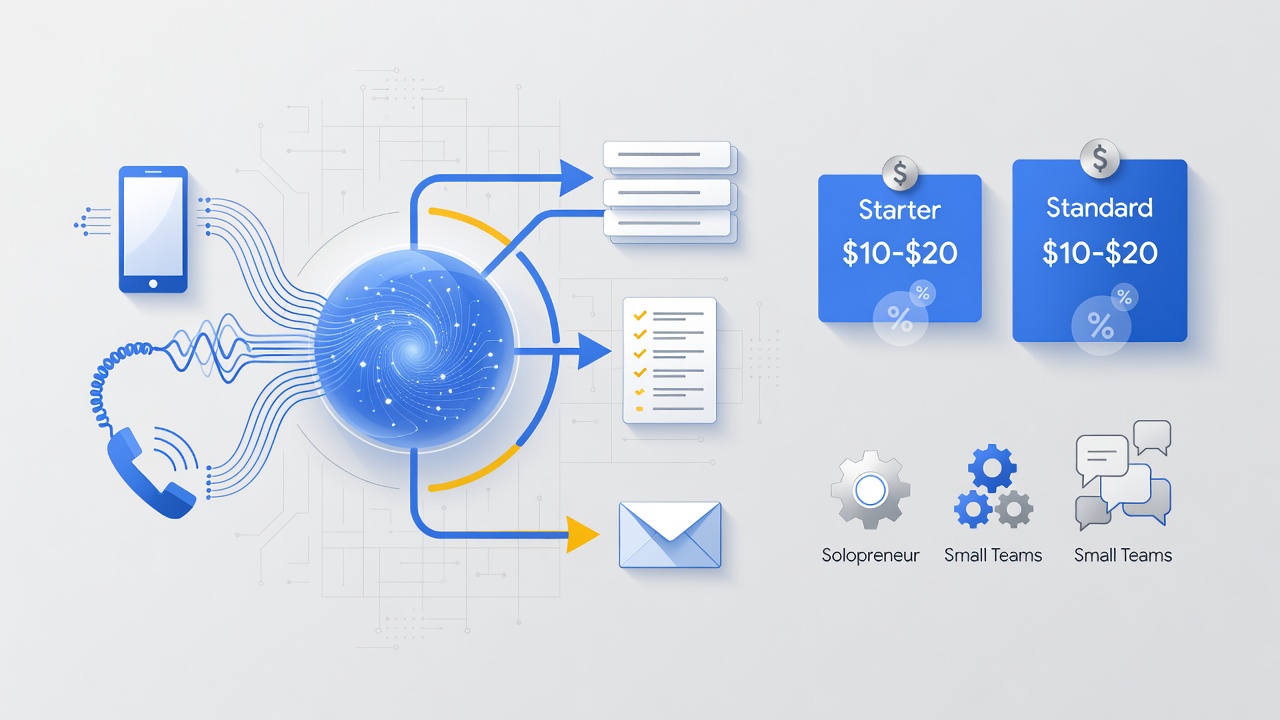
Google has extended its Gemini-powered note-taking capability from video meetings straight into phone conversations. The move pairs the new feature with fresh subscription options that let small operators grab professional telephony tools without a full Workspace commitment. And the pricing? It undercuts expectations.
The “Take notes for me” option works much like its counterpart in Google Meet. During an active Google Voice call a user taps the Notes button. The system records the conversation, transcribes it in real time, generates a summary of key points and lists action items. Once the call ends those outputs land in a Gmail message complete with links to the full transcript and audio file. The same details appear inside the Voice app next to the call log. Google Workspace Updates spelled out the mechanics in its June 16 announcement.
Participants hear a clear audio disclosure the moment the feature activates. “This call is being recorded and captured by AI,” the voice states. Notes stay private to the person who started the recording. If others on the line trigger their own session each receives a separate set of materials. The safeguard prevents accidental sharing of internal thoughts or side comments.
Right now the capability supports only English. Rollout began in mid-June for Workspace customers on Voice Standard or Premier add-ons and for those on the standalone Voice Standard plan. Admins control availability through the console. New users see it turned on by default. Existing accounts require explicit consent plus the Workspace Smart Feature Consent setting. The process keeps organizations in charge of data handling.
Jim Lundy, CEO of Aragon Research, welcomed the addition. “Automated note taking is an essential capability for modern meetings,” he said. “By extending this securely to phone calls, Google Voice empowers people on the go to instantly capture critical notes and action items.” Lundy predicted quick uptake among sales and service teams who spend hours on the road or between sites. The Google Workspace Blog carried his remarks on July 7.
But the real story sits in the pricing shift. Google opened Voice Starter and Voice Standard plans to anyone with a Gmail account. No Workspace subscription required. The change targets solopreneurs, consultants and side-hustle operators who need a reliable business number without extra overhead. Availability is U.S.-only for now with international markets expected soon.
Voice Starter delivers core premium features. Unlimited calls and texts. Call recording. Three-way conferencing. Desktop support. Inactive number protection. Twenty-four-hour customer help. The tier carries a $10 monthly tag.
Voice Standard adds the AI note-taking along with automated attendants and call routing. List price sits at $20 a month. New subscribers receive 50 percent off for the first six months dropping the cost to $10. That discount makes the AI-equipped plan cheaper than many basic mobile lines. Digital Trends highlighted the promotion in its July 10 coverage noting the evolution from a simple spam shield to a full productivity platform.
The timing aligns with Google’s broader AI pricing adjustments. Earlier this year the company slashed Google AI Plus to $4.99 monthly while doubling included storage. TechCrunch described the move as a warning shot in subscription price wars. Voice now rides the same wave. Businesses gain enterprise-grade call intelligence at consumer-friendly rates.
Consider a real-estate agent juggling showings. She hops between properties. Instead of scribbling details while driving she taps Notes and stays present with the client. After the call an email arrives with action items. Follow up on financing questions. Schedule the inspection. Send the listing agreement. The summary becomes a ready-made task list. No more lost details from hurried voice memos.
Consultants benefit too. Client calls stretch across time zones. Key objections or requirements can vanish from memory by the next morning. Gemini organizes the discussion into clear bullet points. The transcript offers searchable proof if disputes arise later. Sales teams close more deals when they review exact wording instead of relying on recollection.
Privacy questions linger of course. Recording laws vary by state. Some require two-party consent. Google built in the audible warning and per-user artifacts to address those concerns. Yet administrators must still train teams on when and how to activate the tool. One-size-fits-all policies won’t suffice.
Accuracy remains unproven at scale. The feature inherits Gemini’s transcription strengths seen in Meet. Those have improved steadily. Still background noise, accents or rapid overlapping speech can trip up any system. Early testers on X noted solid performance in quiet office calls but called for more real-world data. No independent benchmarks have surfaced yet.
Competitors watch closely. Otter.ai, Fireflies and others built businesses around meeting transcription. Many already integrate with phone systems through APIs. Google’s native approach removes friction. The notes live inside tools employees already use. No extra logins. No separate billing. That simplicity could pull users away from third-party services.
The standalone plans also erode a barrier that kept Google Voice somewhat niche. Previously businesses often bought it as an add-on inside Workspace. Now a freelancer can sign up with a personal Gmail and gain professional features at modest cost. The model mirrors how many SaaS companies grew their customer bases. Lower the entry point. Deliver immediate value. Watch adoption climb.
Google didn’t stop at notes. The July 7 blog post tied the AI launch to a larger push helping small operations scale. Automated attendants in the Standard plan let callers select departments or services without human gatekeepers. Call forwarding rules adapt to schedules. These capabilities once required dedicated PBX hardware or expensive cloud services.
Analysts see the combination as strategic. Voice has millions of users but lagged in AI features compared with Meet or Docs. Bringing Gemini to calls fills an obvious gap. It also gives Google another data moat. More transcribed conversations feed model training. Better models improve future products. The cycle accelerates.
Challenges remain. Enterprise customers may hesitate until multilingual support arrives. Compliance teams want clearer audit logs and retention controls. Integration with CRM systems beyond Gmail stays limited for now. Google will likely address those points in coming quarters.
Still the direction looks clear. Phone calls represent one of the last holdouts for manual documentation in knowledge work. Sales calls. Vendor negotiations. Internal coordination. Support tickets. Each generates information that traditionally lived in scattered notes or faded memories. AI changes the equation. The record becomes structured, searchable and shareable by design.
Early reaction on X mixed excitement with caution. Some users praised the hands-free workflow for field teams. Others worried about consent fatigue if every call starts with a robotic disclaimer. A few asked whether the feature would extend to inbound calls initiated by customers. Google has not yet detailed that scenario.
What matters most is the price point. Ten dollars a month for six months buys unlimited calls, AI summaries, routing tools and support. For many small operators that math works. The barrier to entry drops. The capability gap narrows between solo practitioners and larger firms. Google bets that once users experience reliable post-call notes they will keep paying full price afterward.
The rollout continues. Availability expands. Feedback rolls in. Refinements follow. Yet the core bet already stands. By making high-quality call intelligence both affordable and effortless Google aims to turn every phone conversation into structured business intelligence. The days of frantic scribbling during important calls may soon feel quaint.


 WebProNews is an iEntry Publication