
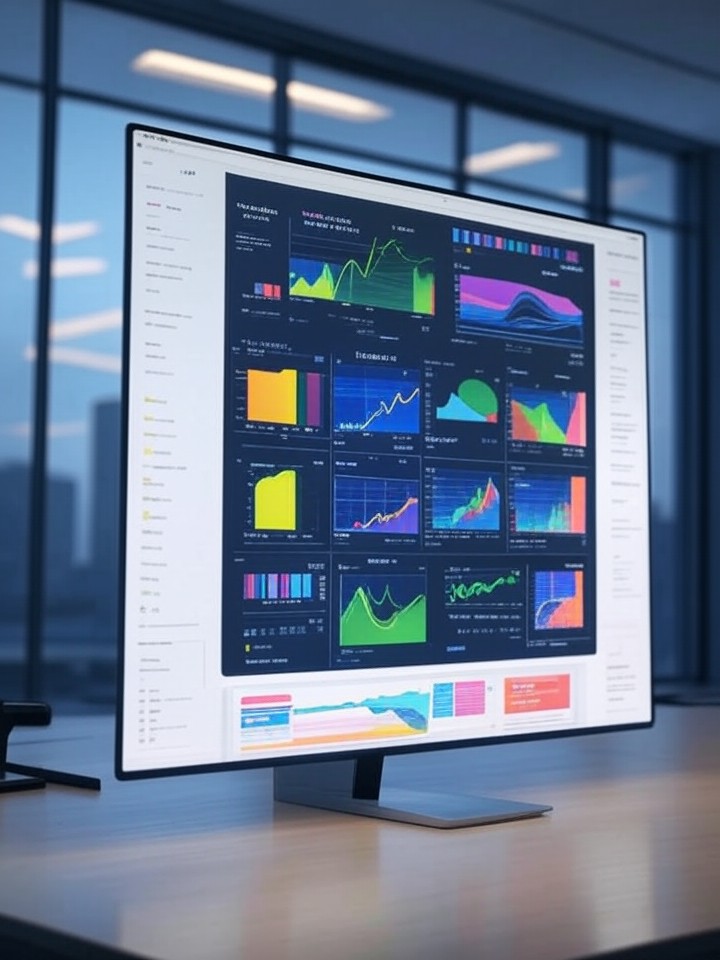
Gemini’s Insight Engine: Revolutionizing How We Decode Search Trends
Google has long been the gatekeeper of global search data, but its latest innovation marks a pivotal shift in how that information is accessed and analyzed. The company recently unveiled a revamped Explore page within Google Trends, infusing it with capabilities from its Gemini AI model. This update, announced in mid-January 2026, promises to automate the discovery and comparison of search trends, potentially transforming workflows for researchers, marketers, and journalists alike. By leveraging Gemini’s generative abilities, the platform now identifies related trends automatically, surfaces contextual insights, and even generates comparative analyses without manual input.
At its core, the new Explore page acts as an intelligent assistant that anticipates user needs. When you enter a search term, Gemini doesn’t just pull up historical data; it proactively suggests related topics, rising queries, and geographical patterns. For instance, querying “electric vehicles” might yield not only interest over time but also AI-generated comparisons to “hybrid cars” or “charging infrastructure,” complete with breakdowns of regional variations. This integration stems from Google’s broader push to embed AI across its ecosystem, building on advancements seen in products like Search and Pixel devices.
The rollout comes at a time when AI tools are increasingly expected to handle complex data interpretation. According to details shared in a Google Blog post, the redesign focuses on streamlining research processes that once required hours of manual sifting. Users can now compare up to five terms simultaneously—double the previous limit—and view expanded lists of rising queries, all powered by Gemini’s ability to process vast datasets in real time.
AI-Driven Automation Takes Center Stage
This isn’t merely a cosmetic update; it’s a fundamental reimagining of trend analysis. Gemini’s involvement means the platform can uncover “hidden connections” between topics, as described in coverage from TechCrunch. For professionals in content creation or market research, this could mean spotting emerging patterns in consumer behavior faster than ever. Imagine a journalist tracking election-related searches: the AI might automatically link queries about candidates to broader themes like economic policy or social issues, providing a layered view that informs deeper reporting.
Beyond automation, the update enhances personalization. Drawing from Google’s ecosystem, Gemini tailors suggestions based on contextual understanding, though it stops short of integrating personal user data in this iteration. This aligns with recent developments in Google’s AI strategy, where models like Gemini 2.5 Pro have introduced enhanced reasoning modes, as highlighted in announcements from last year’s Google I/O event. The Trends integration builds on that foundation, making sophisticated analysis accessible without requiring advanced technical skills.
Critics, however, point out potential limitations. While the AI excels at pattern recognition, it relies on Google’s vast but not infallible search data. Misinterpretations could arise from biased datasets or algorithmic quirks, a concern echoed in discussions on platforms like X, where users have speculated about the implications for data accuracy in an AI-augmented world. Nonetheless, early adopters praise the time savings, with some estimating reductions in research time by up to 50%.
From Data Overload to Actionable Intelligence
The technical underpinnings of this update reveal Google’s aggressive investment in multimodal AI. Gemini, which evolved from earlier models like PaLM, now processes text, images, and data streams with remarkable fluency. In the Trends context, this means generating visual charts and narrative summaries that explain spikes in search interest. For example, a surge in “sustainable fashion” queries could be dissected into contributing factors like celebrity endorsements or environmental events, all synthesized by the AI.
Integration with other Google tools amplifies its utility. As noted in a report from Dataconomy, the revamped page is desktop-focused for now, but hints at future expansions to mobile and app integrations. This could pave the way for seamless workflows where Trends data feeds directly into tools like Google Workspace or Analytics, enabling real-time decision-making in business environments.
Industry insiders see this as part of a larger pattern in Google’s AI evolution. Posts on X from technology analysts, such as those discussing Gemini’s role in personal intelligence features, underscore how these updates are interconnected. One recent X thread highlighted Gemini’s new “Personal Intelligence” capability, which connects to apps like Gmail and Photos for tailored responses— a concept that could eventually extend to Trends for hyper-personalized trend forecasting.
Competitive Edges and Market Implications
In the broader arena of AI-powered analytics, Google’s move positions it ahead of rivals. Competitors like SEMrush or Ahrefs offer trend tools, but none match the scale of Google’s proprietary data. The Gemini infusion adds a layer of intelligence that could disrupt established players, forcing them to accelerate their own AI adoptions. As one X post from a market analyst put it, this could lead to Gemini achieving dominant market shares in AI-assisted research, akin to Google’s stronghold in search.
Financially, the update ties into Google’s revenue streams. By making Trends more engaging, it encourages deeper user interaction, which in turn boosts ad impressions across the ecosystem. Analysts from firms like Deepwater Asset Management, referenced in X discussions, predict that AI enhancements will drive growth in Google’s cloud and advertising segments throughout 2026. This is supported by Google’s 2025 year-in-review, which touted breakthroughs in AI models and robotics as key to future innovations.
Yet, ethical considerations loom large. Privacy advocates worry about the implications of AI analyzing search trends at scale, potentially revealing sensitive societal shifts. Google has emphasized that the tool anonymizes data, but transparency in how Gemini processes information remains a point of debate. Coverage in The Verge notes the expanded query comparisons as a boon for users, but also calls for vigilance on data usage.
Innovation’s Ripple Effects Across Industries
The impact on specific sectors is already evident. In marketing, brands can use the AI to predict viral trends, adjusting campaigns on the fly. A hypothetical query on “AI ethics” might reveal rising interest in subtopics like bias mitigation, guiding companies to address consumer concerns proactively. Journalists, meanwhile, gain a tool for contextualizing stories, as Gemini’s summaries provide narrative threads that enrich reporting.
Education and research fields stand to benefit too. Academics could leverage the platform for studying cultural shifts, with AI handling the grunt work of data correlation. This democratizes access to insights that were once the domain of data scientists, potentially accelerating discoveries in social sciences.
Looking ahead, Google’s roadmap suggests further enhancements. Recent X buzz around Gemini’s integration with Siri, as reported in outlets like MacRumors, hints at cross-platform expansions that could bring Trends-like features to new audiences. If Gemini continues to evolve, incorporating real-time web crawling or advanced predictive modeling, it could redefine how we understand collective human curiosity.
Strategic Visions and Future Trajectories
Google’s executives have framed this update as a step toward “personal intelligence,” a theme echoed in their latest blog posts. By connecting Gemini to user apps, the company aims for more intuitive interactions, and Trends serves as a testing ground for these ambitions. Insiders speculate that future versions might include voice-activated queries or augmented reality visualizations of trend data.
Challenges persist, including competition from open-source AI models and regulatory scrutiny. In Europe, for instance, data protection laws could influence how Gemini handles trend analysis. Despite this, optimism prevails, with X users forecasting that Gemini will catch up to leaders like ChatGPT in user adoption by year’s end.
Ultimately, this Gemini-powered overhaul of Google Trends exemplifies how AI is weaving into the fabric of information discovery. It not only enhances efficiency but also invites us to rethink the boundaries of data interpretation, setting the stage for a new era where insights emerge not from queries alone, but from intelligent, anticipatory systems.
Evolving Ecosystems and User Empowerment
Delving deeper into user experiences, early feedback from beta testers—shared across tech forums and X—paints a picture of empowerment. One marketer recounted how the AI uncovered unexpected correlations between “remote work” trends and “mental health” searches during economic downturns, informing targeted wellness campaigns. Such anecdotes illustrate the tool’s potential to surface nuanced insights that manual analysis might overlook.
Technologically, Gemini’s architecture allows for scalable processing, handling millions of queries without lag. This is crucial for high-volume users like news organizations, where real-time trend monitoring can mean the difference between breaking a story or missing it. As detailed in BitcoinWorld, the update fundamentally changes research paradigms, saving hours while revealing hidden patterns.
Moreover, the open accessibility of Trends—free to all users—ensures broad adoption. This contrasts with premium analytics services, positioning Google as a democratizer of data intelligence. Educators, for one, could integrate it into curricula, teaching students to critically evaluate AI-generated insights.
Broader Societal Reflections
On a societal level, this innovation raises questions about information equity. While it empowers those with internet access, it also amplifies Google’s influence over how trends are perceived. If Gemini’s algorithms favor certain narratives, it could shape public discourse subtly. Discussions on X highlight this double-edged sword, with some users lauding the personalization while others caution against over-reliance on AI curation.
In creative industries, the tool sparks new possibilities. Content creators might use it to gauge audience interests, crafting videos or articles that align with emerging waves. For example, a filmmaker querying “sci-fi trends” could discover rising fascination with AI dystopias, inspiring timely productions.
As Google continues to iterate, incorporating feedback from these diverse applications, the Explore page could evolve into a cornerstone of digital intelligence. Its success will likely influence future AI integrations, blurring lines between search, analysis, and creation.
Pioneering Paths in AI Integration
Reflecting on Google’s trajectory, this update builds on a series of 2025 announcements, including expansions in generative capabilities as per the Gemini Apps release notes. These incremental improvements have culminated in a robust system that’s now transforming legacy tools like Trends.
For industry leaders, the key takeaway is adaptability. Companies must now consider how AI like Gemini can enhance their data strategies, lest they fall behind. X posts from investors predict that this will bolster Google’s stock, given its implications for cloud computing and ad tech.
In essence, the Gemini-enhanced Trends Explore page isn’t just an update—it’s a harbinger of AI’s deepening role in deciphering human intent through data. As we navigate this shift, the balance between innovation and responsibility will define its lasting impact.


 WebProNews is an iEntry Publication