
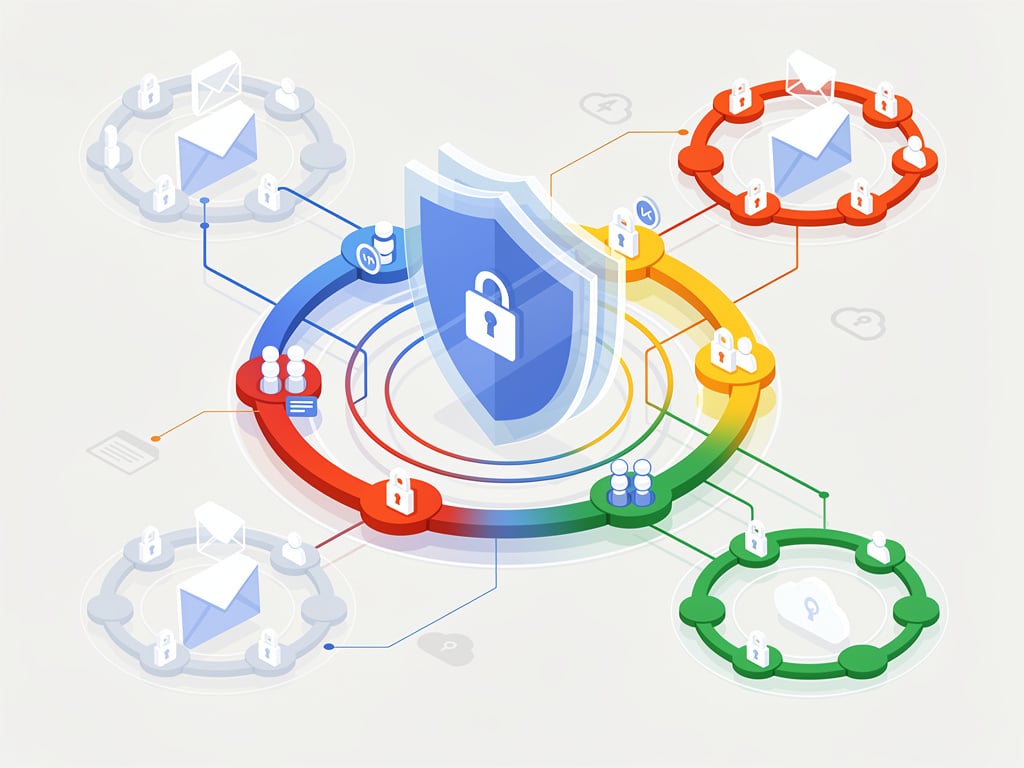
Google is overhauling how organizations label and manage Google Groups. The changes clamp down on loose membership rules that once let external users slip into supposedly internal email lists and collaboration spaces.
The update, detailed in an official announcement, introduces stricter definitions for internal and external groups. No longer can admins casually add outsiders to an internal group or rely on nested subgroups to bypass restrictions. Existing setups get automatically reclassified based on current members. Access stays intact for now. But the guardrails tighten going forward. (Google Workspace Updates, June 24, 2026)
Admins see clearer signals. An external icon now appears next to groups that permit outside members. The same marker flags individual external participants and any indirect members pulled in through nesting. These visual cues aim to cut confusion in large enterprises where group memberships span thousands of users and multiple layers of subgroups.
Deeper enforcement arrives with concrete membership limits.
Under the new rules, any group set to block external members can contain only people inside the organization. Switch the setting to “No” and external participants get permanently removed. Nested external members stay in their child groups but get filtered out of the parent. Emails sent to the parent skip them. Files shared with the parent stay off limits. Chat spaces exclude them too.
One exception lingers. Calendar invites still reach filtered users for the time being. API queries also surface the full list until applications catch up. Google says broader filtering will expand across Workspace tools in coming months. (Google Workspace Admin Help)
The shift responds to years of feedback from security teams. Enterprises complained that internal labels offered little real protection. An internal group could inherit external members through a single nested list. Or an admin could override the setting on a whim. Those paths close now.
Rollout began this week. All Google Workspace customers receive the updates by July 1. Rapid release domains see it first. Scheduled domains follow shortly after. No action is required from end users. Admins must review their groups and adjust classifications where the automatic mapping doesn’t match policy.
Organizations with heavy reliance on nested groups face the biggest lift. A top-level internal group that pulls in an external project team will flip to external classification to preserve access. Admins can then flip it back to internal. But that move wipes direct external members and filters indirect ones. Reverting later restores indirect access. Direct members need manual re-addition. The process demands care.
Google also refined the admin console. The old toggle “Allow members outside your organization” becomes “Allow external members in the group.” A new sub-setting decides whether regular users or only admins can add outsiders. The tighter option defaults in many cases. API behavior adjusted too. Attempts to add external members to an internal group now flip the setting automatically rather than failing. This prevents breakage for identity-synced directories and third-party connectors.
These tweaks arrive amid broader privacy pressure. Regulators worldwide have ramped up enforcement. GDPR fines topped €5 billion last year. The EU AI Act takes full effect in August 2026 with strict rules on high-risk data systems. U.S. states layer on their own requirements. Enterprises hunt for simpler ways to classify data flows and limit exposure. (Kalles Group, January 29, 2026)
Google’s move mirrors steps taken by other platforms. Meta recently imposed fresh limits on sensitive attributes in advertising audiences, blocking certain health and finance data from custom segments. The pattern is clear. Collaboration tools that once prioritized ease now add friction to protect sensitive information. (LinkedIn analysis of Meta update)
Security experts say the Google Groups changes address a long-standing blind spot. Nested groups often hid external participants from plain view. Email digests and group archives could expose internal discussions to unintended eyes. The new filtering and placeholder messages in Google Groups reduce that risk. Users now see a neutral notice instead of full content when they lack proper access.
Yet challenges remain. Large organizations with complex group hierarchies may need weeks to audit and retune. Service accounts, used heavily in automation, receive the same internal or external label based on their associated customer ID. The Classroom Teachers group defaults to internal but flips external if it already contains outsiders.
Google first signaled these plans back in February. Today’s blog post marks the start of general availability. Documentation emphasizes preparation. Admins should examine group settings now, test key workflows, and document any policy exceptions. The Admin SDK and Groups Settings API both support the new classification fields for scripting bulk updates.
But the real test comes in daily use. Teams that once forwarded sensitive project lists to contractors through a shared group must now create explicitly external lists. Marketing departments that mixed internal staff with agency partners face clearer separation. The friction is intentional. So is the visibility.
Analysts expect similar moves from other enterprise software providers. As data classification becomes table stakes for compliance, the old assumption that “internal” means safe no longer holds without technical enforcement. Google has chosen to enforce it at the group layer, one of the most common sharing mechanisms inside Workspace.
The changes won’t eliminate every risk. Determined users can still create external groups and invite the wrong people. Social engineering and misconfiguration remain threats. Yet the update raises the bar. It forces explicit choices about who belongs where. And it gives administrators better tools to spot and correct problems before data leaves the building.
For IT leaders mapping their 2026 compliance roadmap, this serves as both warning and opportunity. Warning that legacy group structures may hide exposures. Opportunity to tighten controls without ripping out existing collaboration patterns. The automatic classification helps. The visual indicators help more. The permanent removal of members when tightening settings sends the clearest signal yet.
Google didn’t invent the problem. But it has now built a more honest system for labeling who can see what. In an era of heightened scrutiny over data handling, honest labeling matters. So does enforcement. Both just got stricter inside Google Workspace.


 WebProNews is an iEntry Publication