
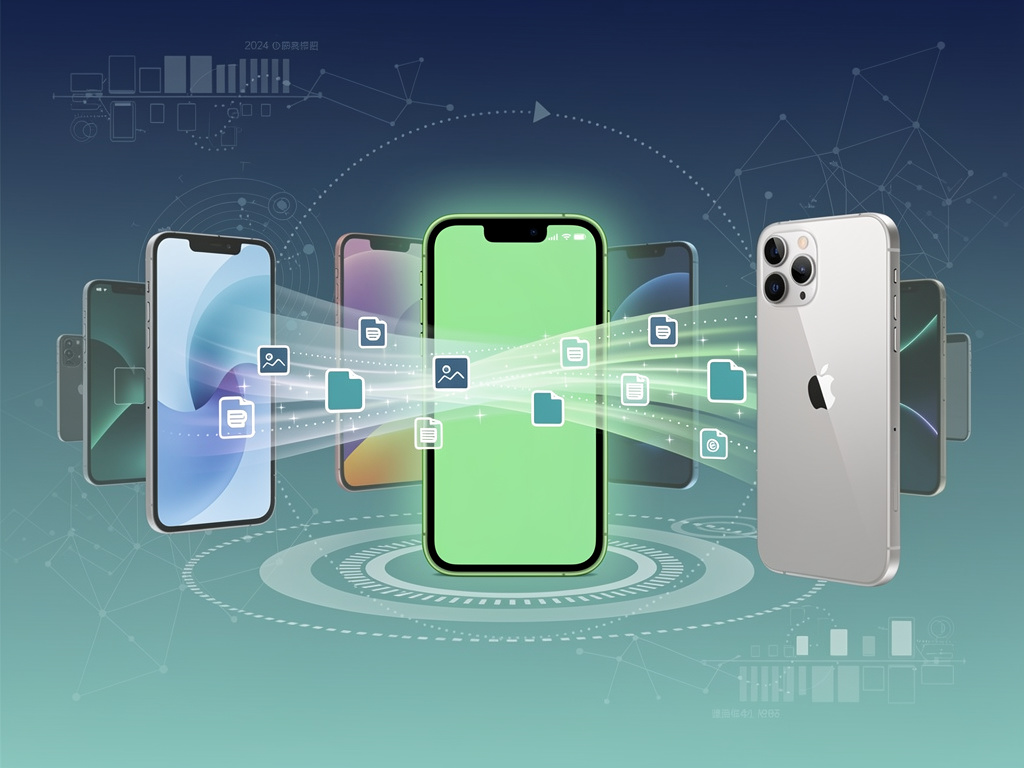
Google just broadened the reach of its Quick Share tool. The feature now lets users on a widening list of Android handsets swap files directly with iPhones through Apple’s AirDrop system.
The expansion arrived as part of the June 2026 Android Drop. It follows an initial rollout limited mostly to recent Pixel and Galaxy S26 models. Suddenly, owners of older flagships and devices from OnePlus, Xiaomi, Vivo, OPPO and HONOR gain the same ability.
Broader Device Support Reshapes Cross-Platform Sharing
Lists published Tuesday show support stretching back to the Galaxy S24 series, across multiple Z Fold and Flip generations, and into midrange Pixels. New additions include the OnePlus 15, Xiaomi 17T Pro, Vivo X300 lineup, HONOR Magic V6 and several OPPO Find X9 variants. MacRumors first detailed the updated compatibility matrix drawn from Google’s own Quick Share website.
Google’s official blog post for the June Android Drop confirms the progress. It ties the change to easier everyday tasks such as sharing photos with friends on iOS without switching to messaging apps or email. Google’s June Android Drop announcement highlights the feature alongside new Google Photos outfit planning and scam-call detection tools.
Yet the real story sits in the numbers. Analysts following the rollout count more than 15 distinct models now active, with additional devices such as the Motorola Razr Fold 2026, OPPO Find X8 series and HONOR Magic 8 Pro slated for the coming months. 9to5Google mapped the full current roster, noting Samsung’s broad inclusion of both 2026 and 2025 Galaxy devices.
The mechanics remain straightforward. On Android, users flip on the “Share with Apple devices” toggle. iPhone recipients set AirDrop to Everyone for 10 Minutes. Transfers then appear inside the native AirDrop interface on iOS. Reverse direction works the same. Android phones show up in iPhone AirDrop sheets once Quick Share receive mode activates.
Not every handset qualifies for direct peer-to-peer exchange. Google supplies a QR-code fallback that routes files through the cloud. The workaround keeps non-compatible phones in the loop. It also reveals the limits of current hardware requirements. Bluetooth, Wi-Fi Direct and specific firmware all factor in.
Industry observers see momentum. Last year Google launched basic interoperability with Pixel 10 phones. Eric Kay, Google’s vice president of engineering for Android, signaled early that 2026 would bring far wider availability. Ars Technica connected the latest announcement to that earlier roadmap.
Android Authority tracked the steady expansion. Its coverage notes the June timing aligns with prior promises and adds that Xiaomi separately confirmed support for its 17T Pro. Android Authority’s June 2026 feature roundup places the AirDrop growth alongside other system-level updates.
Reactions on X reflect mixed excitement. Some users welcome fewer workarounds when trading vacation photos or documents with iPhone colleagues. Others point to the fragmented Android experience. Support still depends on manufacturer cooperation and timely software updates. A single flagship from two years ago may work while its budget cousin does not.
The shift carries competitive weight. Apple built AirDrop into a closed, polished experience that kept iPhone owners inside its orbit. Google spent years refining Nearby Share, later rebranded Quick Share in partnership with Samsung. Interoperability with AirDrop marks a different strategy. Instead of forcing users to pick sides, the companies now allow direct transfers without cloud intermediaries in most cases.
Privacy questions linger. Direct transfers avoid uploading files to servers. Yet the 10-minute open window on iOS and the QR code option both introduce temporary exposure. Google has not published detailed security audits of the cross-platform handshake. Nor has Apple commented publicly on the integration, which relies on reverse-engineering aspects of AirDrop behavior.
Market impact could prove significant. File sharing ranks among the most frequent pain points when colleagues or families straddle Android and iOS. Removing friction may accelerate device switching in either direction. It also pressures remaining holdouts among Android vendors to implement the necessary firmware and Play Services updates.
Further growth looks likely. Google continues to partner with manufacturers on hardware certification. The Play Store extension that decouples Quick Share from core system services should speed future rollouts. PCMag noted in May that more than a dozen additional phones had already been flagged for near-term support. PCMag’s May report on upcoming devices anticipated much of what arrived this week.
Still, full parity remains distant. Older Android phones, budget models and devices from smaller brands sit outside the current wave. Fragmentation that has long defined Android persists even in this new capability. Users must still check compatibility lists or wait for manufacturer announcements.
But the trajectory is clear. What began as a Pixel-only experiment now touches flagship lineups from nearly every major Android maker. The barrier between the two dominant mobile platforms just lowered another notch. For millions of users who live in mixed-device households or workplaces, that change will register immediately the next time they need to share a document, a photo or a video.
Google shows no sign of slowing. Additional phones enter the pipeline in coming months. Each wave enlarges the pool of Android devices that can trade files with iPhones as easily as they do with one another. The result may not transform the industry overnight. It does, however, remove one persistent source of everyday annoyance for a growing number of smartphone owners.


 WebProNews is an iEntry Publication