
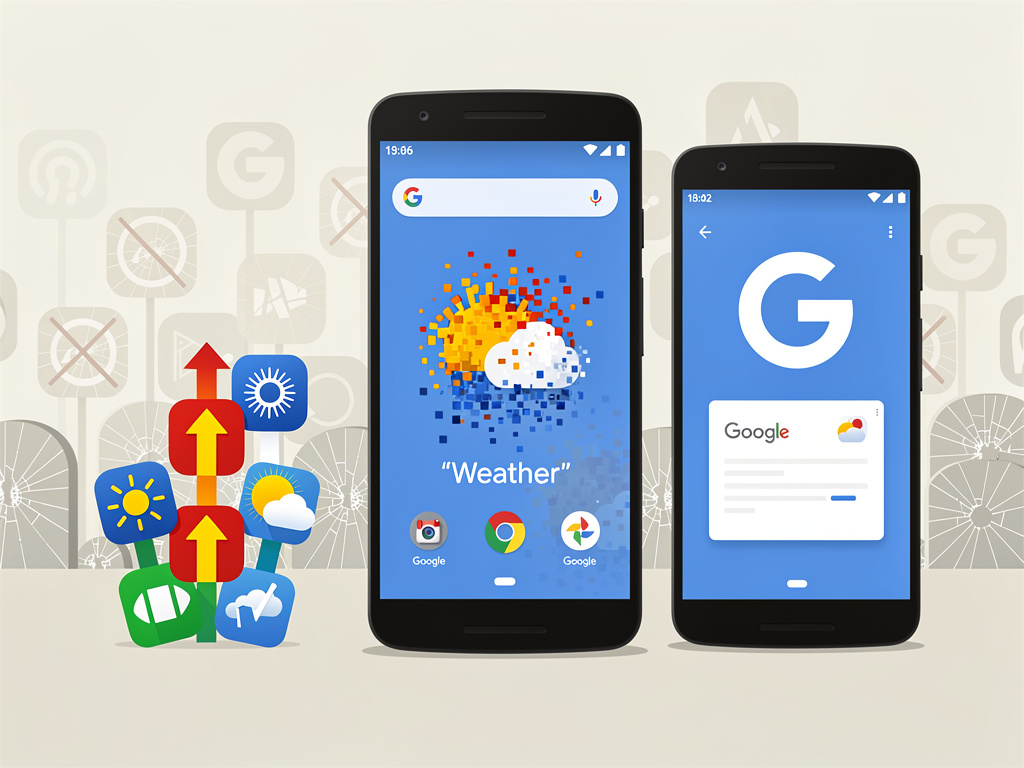
For years, millions of Android users have relied on a quirky, somewhat hidden Google Weather app that lived as a shortcut on their home screens. Now, Google is officially killing it off, folding its functionality into the broader Google app and leaving behind a trail of frustrated users who valued the standalone experience. The move, which has been rolling out gradually, marks the end of one of Android’s most quietly beloved utilities — and raises fresh questions about Google’s product strategy and its habit of retiring services that people actually use.
As first reported by Android Police, the Google Weather app — technically a Progressive Web App (PWA) that could be installed as a home screen shortcut — is being phased out in favor of weather information served through the main Google app. Users who attempt to open their existing Weather app shortcut are now being redirected to weather results within the Google app, and the standalone icon has begun disappearing from devices entirely.
A Beloved Tool That Was Never Quite Official
The Google Weather app occupied an unusual place in the Android world. It was never distributed through the Google Play Store as a traditional standalone application. Instead, users could access it by searching for “weather” in Google and then adding the resulting page to their home screen, effectively creating a PWA shortcut. Despite its unconventional origins, the app developed a loyal following thanks to its clean design, charming frog mascot (named “Froggy” by fans), and quick-loading interface that delivered hyperlocal forecasts without unnecessary clutter.
The app featured animated weather scenes, hourly and 10-day forecasts, and air quality information — all wrapped in a visually appealing package that many users preferred over third-party weather apps. Google even updated its design periodically, most recently giving it a Material You makeover that aligned with Android’s broader design language. For a product that Google never formally promoted, it punched well above its weight in terms of user satisfaction.
The Transition to the Google App: What’s Changing
According to Android Police, the weather experience is now being consolidated into the Google app itself. When users tap on their old Weather app shortcut, they are taken to a weather card within the Google app rather than the standalone PWA. The weather information available through this channel is largely the same — forecasts, hourly breakdowns, precipitation maps — but the experience of accessing it has fundamentally changed.
The key difference is speed and focus. The standalone Weather app launched directly into weather data with no distractions. The Google app, by contrast, is a multi-purpose tool that handles search, the Discover feed, and numerous other functions. Users who valued the Weather app’s single-purpose simplicity are finding the transition jarring. Opening the Google app to check the weather means contending with a heavier application that loads more slowly and presents weather as just one of many features rather than the primary focus.
User Backlash and the Google Graveyard Problem
The retirement of the Weather app has reignited a long-running criticism of Google: the company’s willingness to kill products that have devoted user bases. The informal “Google Graveyard” — a running tally maintained by enthusiasts at Killed by Google — lists hundreds of products and services that the company has discontinued over the years, from Google Reader to Inbox by Gmail to Google Play Music. Each retirement follows a similar pattern: a useful product is absorbed into a larger Google service, and users who preferred the original are left to adapt or find alternatives.
Online forums and social media have seen a wave of complaints from Weather app loyalists. Many users on Reddit and X (formerly Twitter) have expressed frustration not just at losing the app, but at the lack of formal communication from Google about the change. There was no blog post announcement, no in-app notification explaining the transition, and no timeline published in advance. Users simply found one day that their weather shortcut no longer worked as expected — a pattern that has become all too familiar with Google product sunsets.
The Pixel Weather App Adds Another Layer of Complexity
Complicating matters further is the existence of a separate, dedicated Weather app that ships exclusively on Google’s Pixel phones. This app, which is built into the Pixel experience and features the same beloved Froggy character, remains available and functional for Pixel owners. It offers a polished, standalone weather experience with detailed forecasts, animated backgrounds, and tight integration with the Pixel’s At a Glance widget.
The existence of this Pixel-exclusive app has created a two-tier system that many Android users find frustrating. Those who own Pixel devices retain access to a premium, dedicated weather application, while the broader Android user base — which includes hundreds of millions of Samsung, OnePlus, Motorola, and other device owners — loses their standalone option and is funneled into the Google app instead. This disparity has led some commentators to accuse Google of using software features as a competitive advantage for its own hardware line, a strategy that mirrors Apple’s approach with exclusive iOS features on iPhones.
What Google Gains From the Consolidation
From Google’s perspective, the consolidation makes strategic sense even if it alienates some users. Maintaining a separate PWA for weather requires dedicated engineering resources, and folding the functionality into the Google app simplifies the company’s product portfolio. It also drives more traffic and engagement to the Google app, which is a critical platform for the company’s advertising business. Every user who opens the Google app to check the weather is also a user who might scroll through the Discover feed, click on a news article, or initiate a search — all of which generate advertising revenue.
There may also be technical motivations at play. PWAs, while useful, have limitations compared to native applications. They can be slower to load, have restricted access to device hardware, and are more difficult to update consistently across the fragmented Android device market. By moving weather into the Google app, the company gains more control over the experience and can iterate on features more rapidly without worrying about PWA-specific constraints.
Third-Party Weather Apps Stand to Benefit
The demise of Google’s standalone Weather app could prove to be a windfall for third-party weather applications. Apps like Weather Underground, AccuWeather, The Weather Channel, and the increasingly popular Carrot Weather are all positioned to absorb users who are dissatisfied with the Google app’s weather experience. Open-source options like Breezy Weather have also been gaining traction among privacy-conscious Android users who prefer apps that don’t track their data.
For years, the Google Weather PWA served as a “good enough” option that kept many users from exploring third-party alternatives. With that option now gone, and the replacement experience embedded within a larger, less focused app, the barrier to switching has been significantly lowered. Weather app developers who have been competing against a free, well-designed Google product may suddenly find themselves with a larger addressable market.
A Pattern That Raises Broader Questions About Google’s Relationship With Users
The Weather app’s retirement is a relatively small event in the grand scheme of Google’s operations, but it speaks to a broader tension in the company’s product philosophy. Google has long been praised for its willingness to experiment and launch new products, but the flip side of that experimentation is a willingness to abandon those products when they no longer align with corporate priorities — regardless of how users feel about them.
This pattern has real consequences for user trust. Every time Google kills a beloved product, it reinforces a narrative that the company’s services are unreliable and impermanent. Users who have been burned before become reluctant to invest time and attention in new Google offerings, creating a vicious cycle that undermines the company’s ability to build lasting user relationships. The Weather app may seem like a minor casualty, but for the millions of users who relied on it daily, it represents yet another reason to be skeptical of Google’s long-term commitments.
For now, Android users who want a dedicated weather experience have two options: buy a Pixel phone, or turn to the thriving market of third-party weather apps. Either way, the days of tapping a friendly frog icon on a non-Pixel Android home screen and getting a fast, focused weather forecast are over. Google has made its choice — and as usual, users are the ones left adapting to it.


 WebProNews is an iEntry Publication