
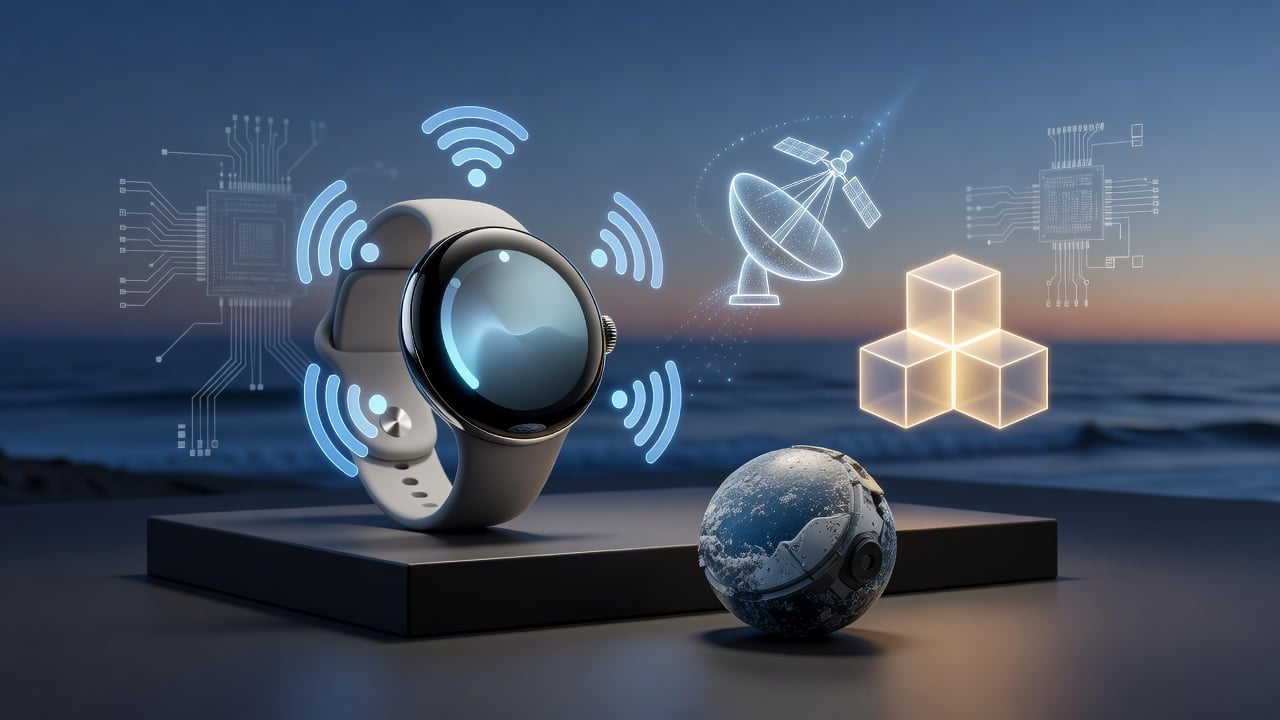
Google’s next smartwatch just cleared a key regulatory hurdle. Four variants of what appears to be the Pixel Watch 5 surfaced in Federal Communications Commission documents this week. The listings confirm hardware support for satellite-based emergency messaging. They also hint at a broader shift in how Google structures its wearable lineup.
The models carry the identifiers G0F3Y, G1XJ6, G25QD and GFW3R. Android Authority first reported the FCC approvals on June 29, 2026. None of the filings mention “Pixel Watch” by name. Yet the pattern matches prior generations exactly. Google submitted the applications back in April. Clearance now sets the stage for an announcement as soon as August.
But the real story lies in the technical disclosures. All four variants include LTE connectivity alongside Wi-Fi. Previous Pixel Watches offered distinct Wi-Fi-only and cellular editions. This time every listed device supports both. Droid Life analyzed the exhibits and noted the absence of any purely Wi-Fi model. The change raises immediate questions. Does Google plan to ship every Pixel Watch 5 with cellular capability? Or does the filing preview a new Pro tier with two case sizes?
Satellite connectivity stands out as the clearest upgrade. The documents reference NTN Band 23 and Band 255. These enable emergency SOS features via satellite. The capability first appeared on the Pixel Watch 4. Its inclusion here signals that Google intends to make the function standard rather than optional. Short bursts. Clear intent. The watch will keep users covered even without a phone or cellular signal.
FCC Details Paint a Picture of Continuity With Targeted Improvements
Testing data also reveals practical details. Specific absorption rate measurements were performed with both metal and non-metal watch straps. The filings list seven or eight strap variants. Such thoroughness matches how Google prepared earlier models for wrist-worn use. UWB, NFC, Bluetooth and standard Wi-Fi all appear. No 5G support shows up. The focus remains on LTE for now.
Design appears largely unchanged from the Pixel Watch 4. A prototype recovered from the ocean floor in late May offered the first real glimpse. Game developer Randy Pitchford shared photos on X after a friend found the device while scuba diving near St. Martin in the Caribbean. The back plate clearly reads “Google” and “Pixel Watch 5.” Sensor labels list SpO2, EDA, skin temperature, heart rate and UWB. The unit still displayed the correct time on residual battery power. It survived saltwater exposure well enough to prove IP68 resistance. The5KRunner documented the unusual leak in early June. Pitchford later updated his post. The owner had contacted him. The watch was returned. Google stayed silent.
That ocean find arrived just weeks before the BIS certification in India listed the same four model numbers. The sequence feels familiar. Leaks accelerate. Regulators move. Launch nears. And this one carries extra weight. The prototype matched the expected 41-millimeter and 45-millimeter sizes. It suggested continued use of a domed Actua 360 display. Thinner bezels could appear. Yet the overall shape stayed true to the 2025 redesign.
Inside, bigger changes may wait. Multiple reports point to Google’s first custom Tensor chip for wearables. The move would replace the Qualcomm Snapdragon W5 found in recent models. Battery life has long drawn criticism. The Pixel Watch 4 manages roughly 24 hours with the always-on display active. A purpose-built processor could extend that toward 36 hours or more. Performance gains would follow. On-device AI features might run faster. Health algorithms could become more sophisticated.
Health tracking itself gains new context. Google rebranded the Fitbit app as Google Health in May 2026. The Pixel Watch 5 will launch with that platform as its native home. It integrates data from Pixel devices, Fitbit hardware, Health Connect on Android, Apple Health on iOS and services such as Strava or Oura. A paid Premium tier already exists. Users gain access to advanced insights immediately upon setup.
Patents hint at even more ambitious monitoring. One filing describes tools for blood pressure and arterial stiffness detection. Whether these deliver calibrated readings like Samsung’s approach or alert-based warnings like Apple’s remains unclear. Either way the direction points toward richer cardiac data. The Pixel Watch has always emphasized Fitbit-derived metrics. Now it appears ready to expand that foundation.
Timing looks set. Google follows a consistent cadence. It unveils new Pixel hardware each August alongside phones. The watches then reach shelves in October. The Pixel Watch 4 followed that script after its own FCC filing in July 2025. The Pixel Watch 3 did the same. 9to5Google noted the latest filings surfaced just months before the expected Made by Google event. Expect the full reveal then. Pricing speculation remains muted. The prior model started at $349. A similar figure seems likely absent major redesign costs.
Yet challenges persist. Battery endurance still trails Apple Watch and some Samsung rivals. The switch to an in-house chip addresses that directly. Software integration with the Google Health app could differentiate the experience further. And the decision to equip all variants with LTE might simplify inventory. Or it could signal a premium positioning that narrows the entry point. The filings leave both interpretations open.
Competitive pressure continues to mount. Samsung iterates its Galaxy Watch line with blood pressure cuffs and advanced sleep coaching. Apple refines its ecosystem lock-in. Google counters with Fitbit’s massive user base and now deeper hardware control. The Tensor transition represents a bet on vertical integration. Success depends on execution. Early FCC data shows Google has the connectivity pieces in place. The ocean prototype suggests the exterior remains a known quantity. What matters next is how the new silicon performs in real daily use.
Industry watchers will parse every subsequent leak. BIS and FCC documents already delivered model counts, connectivity options and emergency features. The Tensor rumor adds performance expectations. Health app changes confirm the software foundation. Together they sketch a device that builds methodically on its predecessor rather than starting over. Refinement over reinvention. That approach has served Google well in phones. Now it faces the test in a crowded wearable market.
One thing feels certain. The Pixel Watch 5 won’t arrive quietly. Between the bizarre prototype recovery, uniform LTE support and satellite confirmation, Google already holds attention. When the company steps on stage this summer the hardware will face immediate scrutiny. Battery tests. Health accuracy. AI responsiveness. The FCC filings mark the beginning of that evaluation period. The real answers come later. But the outline grows sharper with each new document.


 WebProNews is an iEntry Publication