
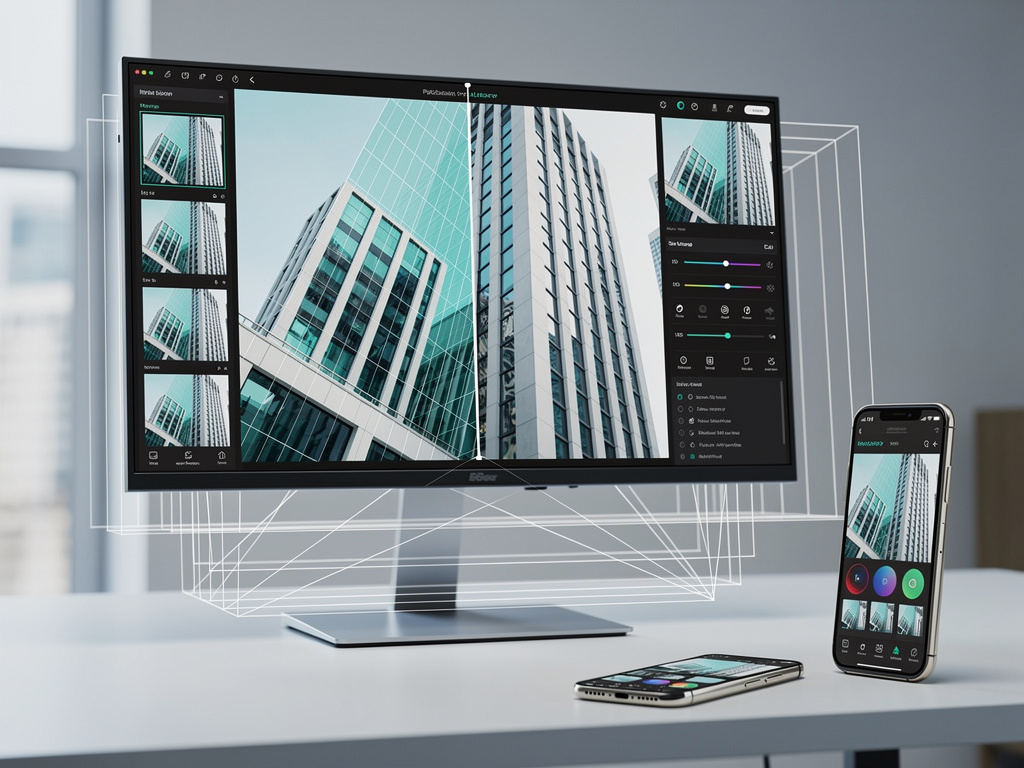
In the ever-evolving world of digital imaging, Google Photos has long stood as a cornerstone for users seeking seamless photo management and editing. But for months, a key feature’s absence left many frustrated: the perspective correction tool, which allows users to straighten skewed images, such as those taken at awkward angles from buildings or documents. Now, as of late 2025, Google has reinstated this functionality, addressing a chorus of user complaints that echoed across forums and social media. This move not only revives a beloved editing option but also signals Google’s responsiveness to feedback in a competitive market dominated by AI-driven enhancements.
The tool’s disappearance traces back to early 2025, when Google inexplicably removed it during an app update, sparking immediate backlash. Photographers and casual users alike lamented the loss, as it forced them to rely on third-party apps for basic adjustments like correcting converging lines in architectural shots. According to reports from Android Authority, the reinstatement comes after a “long few months without it,” with the feature quietly rolling out in recent updates to the Android version of the app. This isn’t just a simple rollback; Google has refined the tool, integrating it more smoothly with its suite of AI-powered editors like Magic Eraser and Photo Unblur.
Industry insiders note that this update aligns with broader trends in photo editing software, where manual controls are making a comeback amid the rise of generative AI. Users can now access the perspective correction by navigating to the crop menu, where sliders allow precise adjustments to horizontal and vertical alignments. It’s a subtle yet significant enhancement, particularly for professionals who deal with real estate photography or scanned documents, ensuring images appear level and professional without distortion.
Reviving User Trust Through Iterative Improvements
The timing of this feature’s return coincides with Google’s annual Recap for 2025, a personalized highlight reel that leverages AI to curate users’ photo libraries. As detailed in a post on the official Google Blog, the Recap includes new stats like selfie counts and hobby insights powered by Gemini AI, but the perspective tool’s revival adds a layer of depth to the editing ecosystem surrounding it. Imagine compiling a year’s worth of memories, only to fine-tune skewed vacation photos before sharing— this integration makes the process more intuitive.
Feedback from the tech community has been overwhelmingly positive, with posts on X highlighting how the tool’s absence disrupted workflows. One prominent thread emphasized its utility for correcting distortions in wide-angle shots, a common issue with smartphone cameras. Google’s decision to bring it back, as reported by Forbes, includes a “hidden trigger” in the interface, requiring users to tap into the crop section to reveal the controls. This design choice, while confusing at first, prevents clutter in the main editing menu, catering to both novices and experts.
Moreover, the update extends beyond mere restoration. Google has enhanced the tool’s precision, using machine learning to suggest optimal corrections based on image content. For instance, if a photo features a tall building, the app might auto-detect and propose adjustments to vertical lines, reducing the need for manual tweaks. This blends traditional editing with AI assistance, a hybrid approach that’s becoming standard in apps like Adobe Lightroom, but Google’s version remains free for most users.
Balancing AI Innovation with Manual Control
Diving deeper, the perspective correction tool’s evolution reflects Google’s strategic pivot in response to competitors. Apple’s Photos app has long offered similar straightening features, integrated with its computational photography pipeline. Google’s delay in reinstatement, as covered by Android Headlines, stemmed from an initial focus on flashy AI tools like Magic Editor, which uses generative fills to alter scenes dramatically. Yet, user surveys revealed a demand for foundational edits, prompting this course correction.
In practical terms, the tool now supports batch processing, allowing users to apply perspective fixes to multiple images at once—a boon for event photographers sorting through hundreds of shots. Combined with Google Photos’ unlimited storage for compressed images, this makes it a powerful hub for both storage and refinement. Industry analysts point out that such features lower the barrier for entry-level creators, democratizing high-quality editing that once required expensive software.
Looking at the broader ecosystem, integrations with third-party apps like CapCut have been spotlighted in the 2025 Recap rollout. As noted in coverage from The Times of India, users can export edited photos directly to CapCut for video montages, where perspective-corrected images ensure seamless transitions. This connectivity underscores Google’s push toward a unified creative workflow, blending stills with motion content.
User Feedback Driving Feature Evolution
The reinstatement wasn’t without its challenges. Early beta testers reported glitches, such as over-correction leading to unnatural distortions, but recent patches have ironed these out. Posts on X from tech enthusiasts praise the improved accuracy, with one viral thread comparing before-and-after examples of document scans, showing how the tool eliminates keystone effects for clearer text. This community-driven refinement process highlights Google’s agile development model, where app updates are informed by real-time user data.
Comparatively, rivals like Samsung’s Gallery app offer advanced perspective tools with AR overlays for live previews, but Google’s version excels in cloud syncing, ensuring edits are preserved across devices. For enterprise users, this means consistent access to corrected images in collaborative environments, such as Google Workspace integrations. The feature’s return also ties into privacy enhancements, as local processing minimizes data sent to servers, aligning with growing concerns over AI ethics.
Furthermore, Google’s documentation reveals plans for future expansions, potentially incorporating 3D perspective adjustments for immersive media like spatial photos. While not yet live, this hints at compatibility with emerging hardware, such as AR glasses, where accurate spatial mapping is crucial. Insiders speculate this could position Google Photos as a frontrunner in mixed-reality content creation.
Competitive Pressures and Market Positioning
Amidst these advancements, the perspective tool’s revival comes at a pivotal moment for Google. With AI innovations dominating headlines, from Nano Banana’s experimental edits mentioned in WebProNews to rivals’ generative tools, maintaining core functionalities is key to user retention. Data from app analytics shows a dip in engagement post-removal, with some users migrating to alternatives like Snapseed—ironically, another Google product.
The economic angle is compelling too. By keeping advanced editing free, Google bolsters its ad-supported model, where enhanced user experiences drive more time spent in the app, indirectly boosting ad revenue. For premium subscribers via Google One, additional perks like expanded storage complement these tools, creating a tiered value proposition. This strategy contrasts with subscription-heavy competitors, offering a more accessible entry point.
On the innovation front, the tool now leverages device hardware acceleration, ensuring smooth performance even on mid-range Android phones. Tests on devices like the Pixel 9 demonstrate sub-second processing times, making it viable for on-the-go edits. This hardware-software synergy is a hallmark of Google’s ecosystem, fostering loyalty among Android users.
Future Horizons in Photo Editing
As we peer into 2026, experts anticipate further integrations, such as combining perspective correction with style transfers for artistic effects. Imagine straightening a photo and then applying a painterly filter in one flow—possibilities that could redefine casual creativity. Coverage from Moneycontrol emphasizes how the 2025 Recap’s personalization tools, including content exclusion, pave the way for more tailored editing experiences.
User adoption metrics will be telling. If the reinstated tool sees high engagement, it could influence Google’s roadmap, perhaps leading to desktop versions for web users. Currently limited to mobile, expanding to browsers would bridge gaps for professionals using Chromebooks or PCs.
In essence, this update encapsulates Google’s balancing act: honoring user demands while pushing AI boundaries. For industry watchers, it’s a reminder that even giants must listen to their base to stay relevant in a fast-paced digital realm.
Strategic Implications for Developers and Users
For app developers, the perspective tool’s code—partially open-sourced through Android’s AOSP—offers insights into efficient image manipulation algorithms. This could inspire similar features in indie apps, fostering a richer environment of tools. Meanwhile, educators using Google Photos for visual aids benefit from easier corrections of classroom materials, enhancing accessibility.
Privacy advocates appreciate that adjustments are processed offline when possible, reducing metadata exposure. This aligns with Google’s recent commitments to data minimization, as seen in updated privacy policies.
Ultimately, the feature’s return strengthens Google Photos’ position as a versatile platform, blending nostalgia with cutting-edge tech. As users explore the 2025 Recap, complete with Gemini-driven insights from My Mobile India, the perspective tool ensures every memory is presented at its best angle.
Industry-Wide Ripples and User Empowerment
The ripple effects extend to content creators on platforms like YouTube, where corrected thumbnails can boost click-through rates. Social media influencers, often dealing with impromptu shots, find the tool invaluable for quick polishes before posting.
Comparisons with historical updates, such as the 2023 introduction of Magic Editor detailed in X posts from Google, show a pattern of iterative enhancement. Back then, generative AI took center stage, but now, foundational tools are reclaiming spotlight.
For the average user, this means more control over their digital archives, empowering them to curate perfect albums without external help. As Google continues to refine, the line between amateur and pro editing blurs further.
Navigating Challenges and Opportunities Ahead
Challenges remain, like ensuring compatibility across all Android versions, but Google’s track record suggests swift resolutions. Opportunities abound in emerging markets, where affordable smartphones make such features transformative for budding photographers.
Integration with other Google services, like Maps for geo-tagged photo corrections, could be next, enhancing travel documentation.
In closing, this development reaffirms Google Photos’ role as an indispensable tool, evolving through user-centric innovations that promise even greater capabilities in the years ahead.


 WebProNews is an iEntry Publication