
Reviving Nuclear Ghosts: Google’s Bold Bet on Atomic Power in Tornado Alley
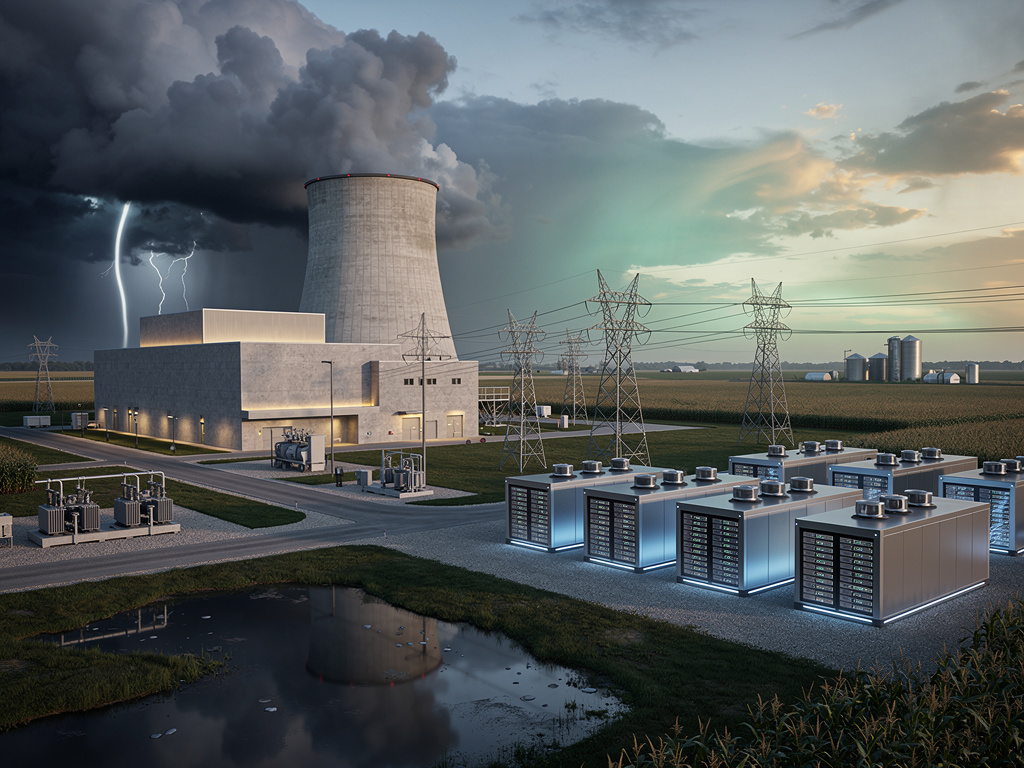
In the heart of Iowa, where vast cornfields stretch under expansive skies prone to ferocious storms, a shuttered nuclear power plant is poised for an unlikely resurrection. The Duane Arnold Energy Center, once the state’s sole atomic facility, was forced into early retirement by a devastating derecho in 2020—a straight-line windstorm that ravaged the Midwest with hurricane-force gusts. Now, tech giant Google, in partnership with energy provider NextEra Energy, plans to revive this dormant reactor to fuel its burgeoning data centers. This move underscores a broader resurgence in nuclear energy, driven by the insatiable power demands of artificial intelligence and cloud computing, but it also raises pointed questions about safety in regions vulnerable to extreme weather.
The Duane Arnold plant’s history is a cautionary tale of nature’s fury clashing with human engineering. Commissioned in 1974, the facility operated for nearly half a century before the 2020 derecho inflicted severe damage, including the toppling of cooling towers and disruption to transmission lines. The storm’s impact was so profound that it accelerated the plant’s decommissioning, originally slated for later that year. According to a detailed report from Wired, the event highlighted vulnerabilities in nuclear infrastructure, yet experts like Allison Macfarlane, a former chair of the Nuclear Regulatory Commission, argue that such incidents, while serious, did not pose immediate public health risks. The reactor’s containment structures held firm, preventing any radioactive release.
Google’s interest in Duane Arnold stems from its aggressive push to secure clean, reliable energy sources amid skyrocketing demands from AI operations. Data centers, the backbone of modern digital services, consume electricity on a scale comparable to small cities. With projections indicating that AI could drive U.S. electricity demand up by 15% in the coming decade, companies like Google are turning to nuclear power for its low-carbon footprint and steady output. The partnership with NextEra, announced in late 2024, aims to bring the plant back online by the early 2030s, potentially supplying hundreds of megawatts directly to Google’s nearby facilities.
The Intersection of Tech Ambitions and Energy Realities
This revival is part of a larger trend where Big Tech is revitalizing nuclear assets across the U.S. For instance, Microsoft has inked deals to draw power from the infamous Three Mile Island site in Pennsylvania, which is also being rebooted for data center needs. Similarly, Amazon and Oracle have pursued nuclear-powered solutions, signaling a shift away from intermittent renewables toward more dependable baseload sources. As noted in a CNBC article from October 2024, Google and NextEra’s collaboration is specifically tailored to meet the surging energy requirements of AI, with the Duane Arnold project expected to provide a stable supply that solar or wind alone might struggle to match in consistency.
Critics, however, point to the inherent risks of situating nuclear operations in “Tornado Alley,” a swath of the central U.S. notorious for severe weather. Iowa experiences an average of 50 tornadoes annually, and the 2020 derecho was a stark reminder of how such events can compromise infrastructure. Edwin Lyman, director of nuclear power safety at the Union of Concerned Scientists, has expressed concerns in various analyses that while nuclear plants are designed to withstand high winds, the increasing intensity of storms due to climate change could test these limits. The Wired piece elaborates on how the derecho’s 140 mph winds bent transmission towers and felled trees, isolating the plant from the grid and forcing an emergency shutdown.
Despite these worries, proponents argue that modern nuclear designs incorporate robust safeguards. The Duane Arnold reactor, a boiling water model similar to those at Fukushima, has undergone upgrades over the years to enhance resilience. A report from Inside Climate News, published in December 2025, echoes this by stating that the plant’s revival will include additional fortifications against extreme weather, drawing lessons from the 2020 incident. Google has emphasized its commitment to safety, pledging investments in advanced monitoring and backup systems to mitigate risks.
Navigating Regulatory Hurdles and Public Sentiment
Reviving a decommissioned nuclear plant is no small feat, involving a labyrinth of regulatory approvals from the Nuclear Regulatory Commission (NRC). The process requires demonstrating that the facility can operate safely under current standards, which have evolved since Duane Arnold’s original licensing. According to TechCrunch’s coverage in October 2025, Google’s initiative with NextEra involves not just reactivation but potential modernization, possibly incorporating small modular reactors (SMRs) in the future to bolster capacity and safety.
Public sentiment in Iowa remains mixed. Local communities benefited economically from the plant during its operational heyday, with jobs and tax revenues supporting schools and infrastructure. The shutdown led to economic ripples, and the prospect of revival has sparked optimism among some residents. However, environmental groups and storm survivors voice apprehensions about radiation risks amplified by natural disasters. Posts on X (formerly Twitter) from users like those in financial and tech circles highlight enthusiasm for nuclear’s role in sustainable energy, with one widely viewed post from the Financial Times in October 2024 noting Google’s pioneering deal for new reactors to power data centers.
Broader industry discussions on X reveal a surge in interest for nuclear revival, with accounts like Morning Brew summarizing Big Tech’s moves: Amazon acquiring nuclear-powered centers, Microsoft tapping Three Mile Island, and Oracle designing reactor-fueled facilities. These sentiments underscore a consensus that nuclear is “back” as a viable option for carbon-free power, especially as AI demands escalate. Yet, skeptics on the platform question the timelines, pointing to historical delays in nuclear projects.
Economic Incentives and Technological Synergies
Economically, the Duane Arnold reboot makes sense for Google, which faces mounting pressure to achieve net-zero emissions by 2030. Nuclear energy offers a high-capacity factor—operating at full power over 90% of the time—far surpassing renewables’ variability. A Reuters article from December 2025 details how Big Tech is adopting an “all-of-the-above” strategy, blending nuclear with gas and renewables to ensure reliable supply. Google’s CEO Sundar Pichai has publicly advocated for atomic power, as referenced in Zerohedge posts on X, emphasizing its necessity for AI’s energy-intensive computations.
Technologically, integrating nuclear with data centers could pioneer new models of energy efficiency. Google’s plans include co-locating facilities to minimize transmission losses, a strategy echoed in a December 2025 CNBC piece where NextEra commits to 15 gigawatts of new power for data centers by 2035. This direct linkage reduces grid strain, a critical factor as U.S. infrastructure grapples with demand spikes. Moreover, advancements in SMRs, which Google is funding separately for deployment by 2030, promise modular, safer reactors that could complement Duane Arnold’s revival.
Challenges persist, including waste management and decommissioning costs from the plant’s prior shutdown. The 2020 derecho not only damaged infrastructure but also complicated the site’s cleanup, with radioactive materials still on-site. Experts cited in Route Fifty’s December 2025 report warn that reopening could exacerbate these issues if not handled meticulously, potentially leading to environmental liabilities.
Global Implications and Future Trajectories
Looking globally, Google’s Iowa venture could set precedents for nuclear adoption in other weather-vulnerable regions. In Europe and Asia, where data center growth mirrors the U.S., similar debates rage over balancing energy needs with climate resilience. A New York Times article from November 2025 on the Three Mile Island revival for Microsoft highlights federal support, including a $1 billion loan, suggesting policy winds favoring nuclear comebacks.
Industry insiders see this as a pivotal moment for energy innovation. Duncan S. Campbell’s X post from December 2024 discusses Google’s parallel investments in solar and batteries for data centers, indicating a hybrid approach that could mitigate nuclear’s risks. This diversification ensures redundancy, crucial in tornado-prone areas where grid failures are common.
Ultimately, the Duane Arnold project’s success hinges on technological upgrades and community buy-in. As climate change intensifies storms, nuclear operators must adapt designs for greater durability. Google’s bold step, while fraught with challenges, exemplifies how tech’s energy hunger is reshaping power generation, potentially ushering in a new era of atomic reliability tailored for the digital age.
Balancing Risks with Innovation in High-Stakes Energy Plays
Delving deeper into safety protocols, the NRC’s post-Fukushima mandates have strengthened U.S. reactors against external hazards. For Duane Arnold, this means enhanced flood barriers and wind-resistant structures, as outlined in Wired’s analysis. Yet, the 2020 event, described as one of the most significant in U.S. nuclear history by experts like David Lochbaum, underscores that even non-catastrophic disruptions can lead to costly shutdowns.
Financially, the revival is buoyed by tax incentives under the Inflation Reduction Act, which supports clean energy projects. NextEra’s expanded deal with Google, per a Reuters update in December 2025, aims to add capacity nationwide, positioning the duo as leaders in tech-energy fusion.
In the realm of sustainability, nuclear’s revival aligns with global decarbonization goals. Posts on X from environmental accounts like Earth Accounting in December 2025 reflect ongoing debates, with some praising the low-emission benefits while others highlight tornado risks. This discourse illustrates the nuanced path ahead, where innovation must outpace perils.
As Google forges ahead, the Iowa project could redefine how tech giants power their empires, blending atomic heritage with cutting-edge demands in a region where the winds of change blow fiercely.


 WebProNews is an iEntry Publication