
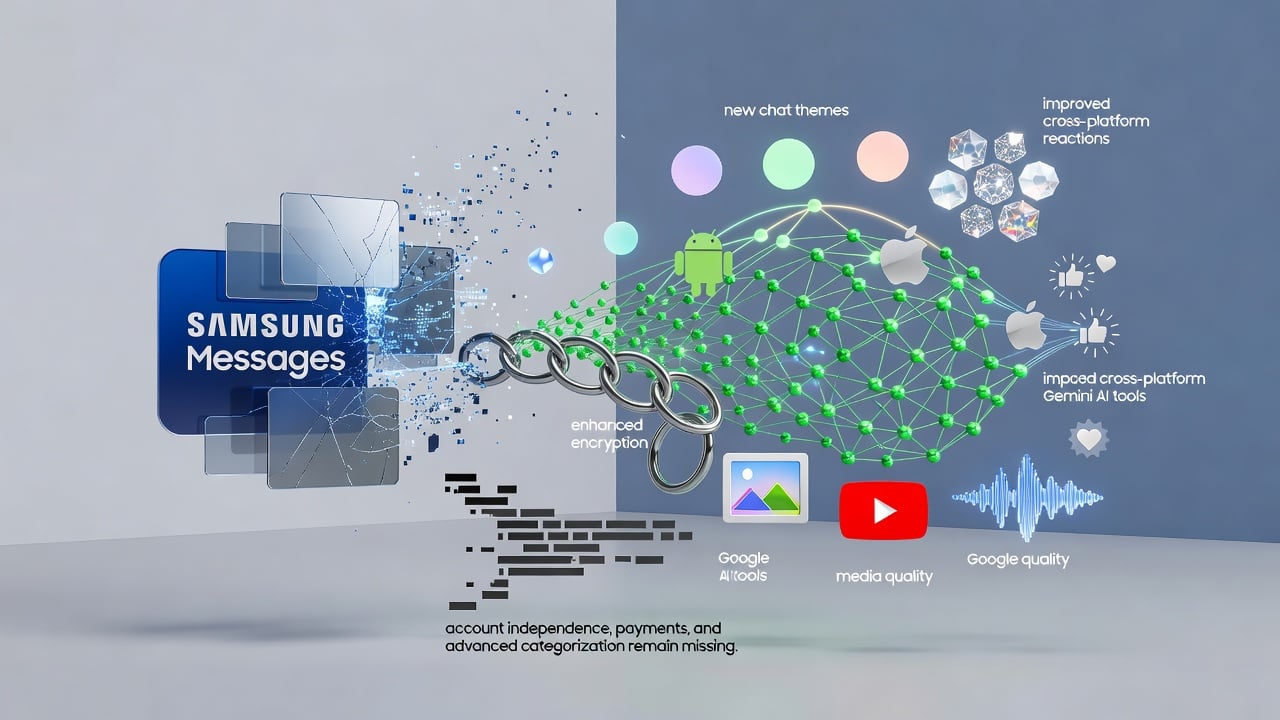
Google Messages stands on the verge of dominating Android texting. Samsung’s decision to retire its own app in July 2026 forces millions of users onto Google’s platform. The shift comes as RCS adoption accelerates across devices from Pixels to iPhones. But can it truly stand in for what users loved about Samsung’s offerings or Apple’s polished iMessage?
The transition feels abrupt for some. Samsung confirmed the end of its Messages app effective July 6. Users now see prompts to switch. Their chat history transfers automatically. Google Messages becomes the default. And with that comes a raft of RCS capabilities that Samsung once handled separately. iClarified reported the move aligns Android devices under one RCS standard. It also highlights features like Gemini AI for smart replies and photo remixing.
Yet the original MakeUseOf article from July 24, 2026, laid out clear gaps. Google Messages still needs account-based cloud messaging independent of a SIM card. iMessage ties to an iCloud account. No phone number required. Google once offered similar flexibility with Hangouts and Google Chat. Bringing it back would let users message from tablets or computers without cellular service. Simple. Effective.
Customization lags too. Samsung Messages allowed deep theming. Users picked colors and styles per conversation. Apple added chat backgrounds in recent iOS updates. Google offers light and dark modes. Nothing more. A new “Chat themes” option rolling out changes that. Each thread gets its own color palette and wallpaper. Even a personal photo. 9to5Google noted this in its June 2026 roundup. The feature replaces a basic color toggle. It narrows the personalization gap. Still, folders and advanced sorting remain missing.
Then there are apps and games. iMessage built an entire mini ecosystem. GamePigeon lets friends play within chats. Google already sees its Photos and Maps integrations appear in iMessage on the other side. Why not expand that inside Messages? Peer-to-peer payments present another opportunity. Apple Cash flows through iMessage with ease. Google has the expertise from GPay. Integration could match or surpass it. No technical hurdles stand in the way. Only priorities.
Message categorization tools matter for power users. Google added a trash folder. Progress. Samsung offered custom categories and folders reminiscent of Gmail. Users sorted bills, receipts, promotions. Google Messages could adopt similar logic. It would organize the flood of daily texts. The MakeUseOf piece argued these five additions would let Google Messages replace both competitors. Without them, it falls short.
Recent developments show momentum. Samsung’s exit accelerates RCS standardization. PhoneArena detailed how the swap isn’t flawless. Some settings don’t carry over perfectly. Users must adjust. Yet the benefits outweigh the friction. High-quality media sharing. Typing indicators. Read receipts. All standard now.
Cross-platform gains prove significant. Apple brought RCS to iOS 18. Interactions between iPhones and Android devices improved. Full-resolution photos and videos cross the divide. No more compression. Reactions appear as emojis instead of text fallbacks. iOS 27 beta even added inline replies and expanded Photomoji support. SammyFans covered the June 2026 update. It draws on the RCS 2.7 Universal Profile. Future additions like message editing could follow.
End-to-end encryption marks a key privacy win. Apple and Google jointly enabled it for RCS. The rollout began in 2025 updates. Messages stay protected when both sides use compatible apps. Google Messages supports it between its users. Not every RCS conversation qualifies yet. But the foundation exists. Android Authority tested the experience in December 2025. Reactions popped up instantly. Videos arrived sharp. Green bubbles persist. Social stigma around Android devices lingers. Quality improvements soften the blow.
AI features add another layer. Gemini powers suggestions and image tools inside chats. Scam detection and spam filtering strengthened. Samsung highlighted these in its switch announcement. Users gain smart replies. Photo remixing lets them edit images on the fly. Sync works across phones, tablets and watches. Continuity feels more complete.
But. Challenges remain. Some users report RCS toggling between modes. Threads split. Delivery fails intermittently after iOS updates. Apple discussion forums fill with complaints. One user on Verizon fixed it by forcing a photo send over WiFi. Others disabled RCS entirely. Google Messages occasionally shows “RCS chats aren’t available” even on supported devices. Carrier quirks play a role. Verizon, T-Mobile and Google Fi see varying success.
Web version updates add convenience. QR code pairing disappears in some regions. Direct sign-in simplifies access. These small refinements accumulate. They make the app feel more mature. Less like a carrier afterthought.
Industry watchers see broader implications. RCS pushes past SMS limits without requiring users to adopt separate apps. WhatsApp and Signal dominate encrypted chats. RCS aims for universal reach. Platform agnostic by design. It works on Android natively. iPhones joined the fold. Twilio’s February 2026 analysis compared the two. Twilio noted similar feature sets. Rich media, receipts, typing, reactions, groups. Encryption varies. iMessage offers it always. RCS depends on the client.
Google’s approach emphasizes default simplicity. Most US carriers preinstall Messages. Samsung’s move removes choice for its customers. Automatic shift to the dock on Android 14 and higher. History migrates. For many, the change passes unnoticed. Better media. Fewer blurry videos. That alone satisfies.
Power users want more. The five features from MakeUseOf resonate. Account independence would help travelers. No SIM needed abroad. Customization keeps conversations visually distinct. Apps and games boost engagement. Payments turn chats into transaction hubs. Smart folders tame notifications.
Google iterates quickly. Chat themes arrived this summer. Long-press menus redesigned. Read receipts got a refresh. Each update chips away at the gaps. Samsung’s discontinuation adds urgency. The company once competed with unique tools. Now it bets on Google to carry the torch.
Interoperability tests continue. iOS 26 and 27 betas reveal ongoing tweaks. Reactions. Replies. Media quality. Each cycle brings Android and iPhone users closer. No more “why is this blurry?” moments. The experience approaches what same-platform users expect.
Security gains matter too. Enhanced spam filters. Scam warnings. AI scans links and senders. Users report fewer unwanted messages. Enterprise features emerge. Archival tools for RCS on managed devices. Compliance matters in regulated industries. CellTrust promoted such capabilities recently.
Adoption numbers tell part of the story. Billions of messages travel over RCS monthly. Carriers report higher engagement. Rich features encourage more frequent use. Typing indicators create real-time connection. Read receipts reduce follow-up texts. Small conveniences compound.
Competition looms. Third-party apps offer alternatives. None match RCS depth on Android. Google holds the keys. Its updates dictate the pace. Samsung’s exit consolidates that control. One app to rule Android messaging.
Future holds promise. Message editing. Unsending. Expanded AI. Deeper customization. Payments. The list aligns with what critics requested. Google listens. Rollouts come in waves. Beta testers see them first. Stable channels follow.
One outcome seems clear. The days of fragmented Android messaging end. Samsung Messages joins a growing list of discontinued apps. Google Messages inherits the users. The responsibility. And the opportunity to close those final gaps. When it does, replacement becomes reality. Not just default.


 WebProNews is an iEntry Publication