
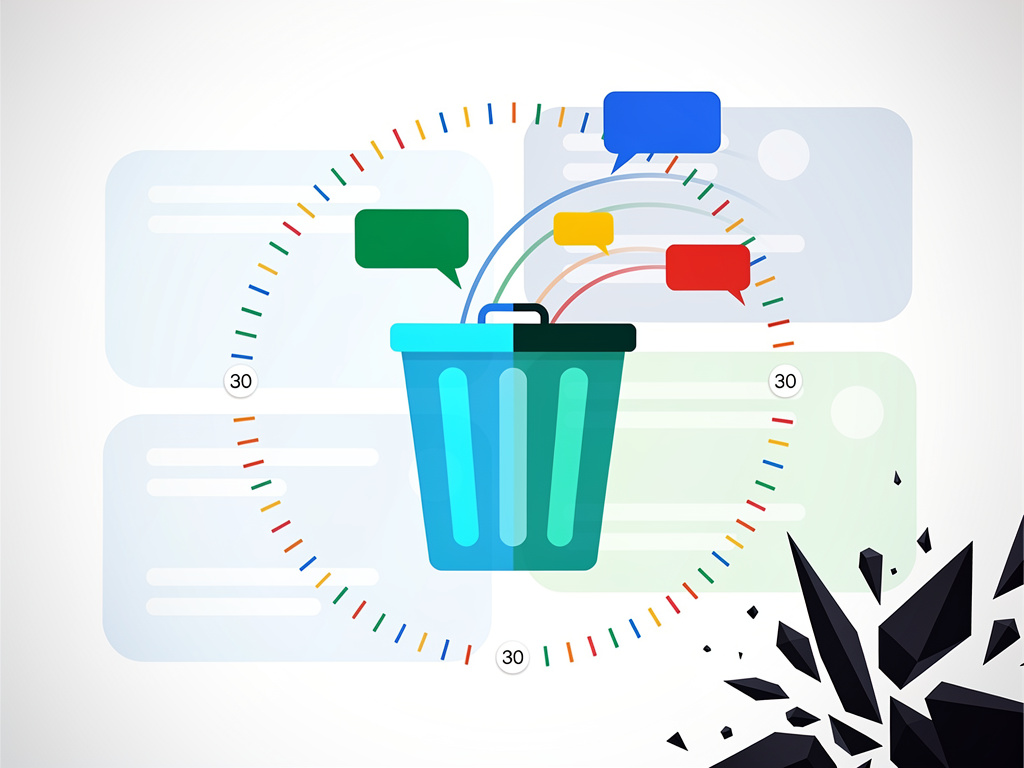
It took years. But Google Messages, the default texting app on most Android phones worldwide, has finally rolled out a trash folder — a feature so basic that its absence had become a quiet embarrassment for one of the world’s largest software companies.
The update, which began reaching users broadly in late June 2025, lets people recover accidentally deleted messages within a 30-day window before they’re permanently erased. That’s it. No artificial intelligence wizardry. No flashy new interface. Just a safety net that email clients have offered since the 1990s.
And yet, this small addition tells a much larger story about the state of messaging on Android, Google’s long and often frustrating campaign to modernize texting, and why the most mundane features sometimes matter the most.
A Feature That Should Have Existed From Day One
As Android Authority first reported, the trash folder in Google Messages works exactly as you’d expect. When you delete a conversation or individual message, it moves to a “Trash” section accessible from the app’s main menu. Messages sit there for 30 days. After that, they’re gone for good. Users can also manually empty the trash or restore messages at any time during that window.
Simple. Overdue.
Google had been testing this functionality in beta builds for months. Code references to a trash feature appeared in APK teardowns as far back as late 2024, with various Android-focused publications tracking its progress through successive beta releases. The feature finally began appearing for stable-channel users in recent weeks, though as is typical with Google’s staged rollouts, not everyone has it yet.
The reaction from the Android community has been a mixture of relief and exasperation. On forums and social media, users have pointed out that Apple’s iMessage has had a similar “Recently Deleted” folder since iOS 16 in 2022. Samsung’s own Messages app, which runs on top of Android, implemented trash recovery even earlier. Google Messages — the app Google actively pushes as the standard Android messaging client — was the laggard in its own house.
For an app with over a billion installations, that gap was hard to justify. Accidental deletions happen constantly. A stray tap, a hasty swipe, a moment of distraction — and an entire conversation thread could vanish with no way to get it back. Business confirmations. Sentimental texts. Two-factor authentication codes. All gone in an instant.
Now there’s a fallback. It’s not exciting. But it’s necessary.
The implementation mirrors what Google already does in other products. Gmail has long sent deleted emails to trash with a 30-day retention period. Google Photos does the same with deleted images. Google Drive, too. The pattern was well-established across Google’s own product line, which made its absence in Messages all the more conspicuous.
The Bigger Picture: Google’s Messaging Identity Crisis
To understand why something as elementary as a trash folder took this long, you have to understand Google’s tortured history with messaging apps. The company has launched, rebranded, merged, and killed more messaging products than most people can count. Google Talk. Google+ Hangouts. Allo. Duo. Google Chat. Android Messages, rebranded to Google Messages. The graveyard is extensive.
Each pivot consumed engineering resources and reset user expectations. Google Messages in its current form only became the company’s clearly designated default SMS and RCS app in the last few years, after Google finally committed to the Rich Communication Services protocol as its answer to iMessage. That commitment meant pouring development effort into RCS features — read receipts, typing indicators, high-resolution media sharing, end-to-end encryption — rather than basic quality-of-life improvements like message recovery.
The priorities made strategic sense at the time. Google was waging a public pressure campaign against Apple to adopt RCS, even launching a website called “Get The Message” aimed squarely at Cupertino. Apple eventually relented, adding RCS support in iOS 18 in late 2024, though with notable limitations and without the green-versus-blue bubble distinction going away.
But while Google was focused on the protocol war, everyday usability features fell behind. The trash folder is the most visible example, but it’s not the only one. Users have long requested better search functionality within conversations, more granular notification controls, and improved organization tools for managing high-volume message threads.
Recent reporting from multiple Android-focused outlets suggests Google is now shifting more resources toward these kinds of refinements. The company has been rolling out a series of smaller updates to Google Messages throughout 2025, including UI tweaks, better Gemini AI integration for suggested replies, and improved spam filtering. The trash folder fits into this broader pattern of catching up on basics while simultaneously pushing forward on AI-powered features.
There’s also the competitive pressure from third-party messaging apps. WhatsApp, Telegram, and Signal all offer various forms of message management that Google Messages has lacked. In markets like India, Brazil, and much of Europe, WhatsApp is the dominant messaging platform regardless of phone brand. Google Messages’ relevance depends heavily on the U.S. market, where SMS and RCS remain the default communication method for many users. Losing ground on basic features in that core market isn’t something Google can afford.
So the trash folder isn’t just a checkbox feature. It’s a signal that Google is paying attention to the fundamentals again.
What Comes Next for Google Messages
The trash folder rollout coincides with a period of unusually active development for Google Messages. The app has received multiple updates in 2025, and beta teardowns continue to reveal features in the pipeline.
Among the most anticipated: deeper Gemini AI integration that goes beyond suggested replies to include message summarization and smart categorization. Google has been embedding its Gemini models across its product line aggressively this year, and Messages is no exception. There are also indications of improved media handling, including better support for high-quality video sharing over RCS and more intuitive gallery management within conversation threads.
On the RCS front, the protocol continues to mature. Google and the GSMA have been working on interoperable end-to-end encryption standards that would apply across carriers and platforms. If successful, this would address one of the lingering criticisms of RCS compared to apps like Signal — that encryption isn’t universal or guaranteed in all RCS implementations.
But none of those future features will matter if users don’t trust the app with the basics. And trust, in a messaging app, is built on reliability. On knowing that your messages are safe. That a mistake won’t cost you an important conversation. That the app respects the value of the data flowing through it.
A trash folder won’t make headlines the way a Gemini-powered feature will. It won’t appear in a keynote presentation at Google I/O. But for the millions of people who’ve accidentally deleted a message and felt that sinking feeling of irreversible loss, it’s the update that actually matters.
Sometimes the most important product improvements are the boring ones. Google, after years of chasing the next big thing in messaging, seems to finally understand that.


 WebProNews is an iEntry Publication