
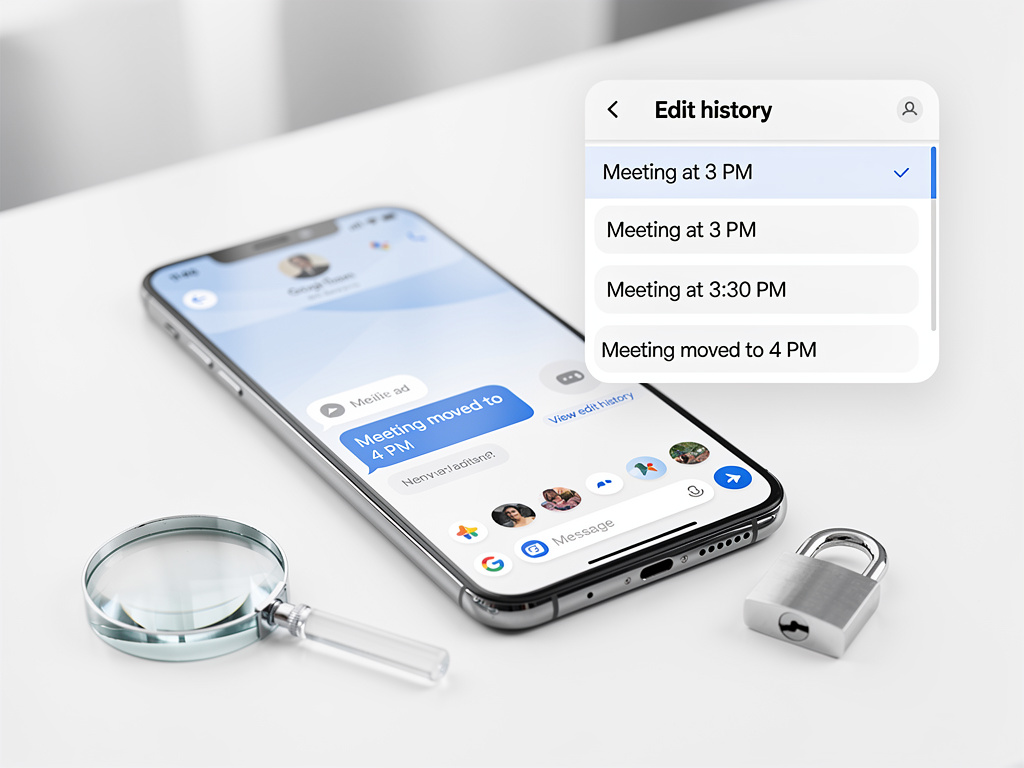
Google’s messaging platform is poised to introduce a feature that could fundamentally alter how users interact with digital communications, addressing a growing concern among privacy advocates and everyday users alike. The tech giant appears ready to implement edit history tracking in Google Messages, a move that would allow recipients to view the original content of modified messages—a capability that has sparked considerable debate within the technology industry about transparency, accountability, and the nature of digital conversation.
The development, first reported by Android Central, represents a significant philosophical shift in how messaging platforms handle post-send modifications. Unlike the current implementation where edited messages display only their final version with a small “edited” label, the proposed system would maintain a complete record of all changes, accessible to all conversation participants. This approach mirrors features already present in workplace communication tools like Slack and Microsoft Teams, but represents new territory for consumer-facing messaging applications that have traditionally prioritized simplicity over comprehensive audit trails.
The timing of this potential rollout coincides with broader industry discussions about digital communication integrity. As messaging platforms have evolved from simple text delivery systems into complex multimedia communication hubs, the question of message mutability has become increasingly contentious. The ability to edit messages was initially celebrated as a quality-of-life improvement, allowing users to correct typos and clarify statements without the clutter of follow-up corrections. However, the feature’s implementation without transparent version control has raised concerns about potential misuse, particularly in contexts where message content carries legal, professional, or interpersonal significance.
The Technical Architecture Behind Message Modification Tracking
Implementing edit history functionality requires substantial backend infrastructure changes. Each message modification must be timestamped, stored, and made retrievable without significantly impacting application performance or user experience. The technical challenge extends beyond simple data storage—the system must efficiently sync edit histories across multiple devices, handle offline edits, and manage storage constraints on both client and server sides. For Google, which processes billions of messages daily through its RCS-powered Messages platform, the computational overhead of maintaining comprehensive edit logs represents a non-trivial engineering undertaking.
The feature’s architecture likely builds upon Google’s existing message synchronization infrastructure, which already handles read receipts, typing indicators, and end-to-end encryption for RCS conversations. However, adding edit history introduces new complexity around encryption key management. If messages are end-to-end encrypted, each version of an edited message must be encrypted and decrypted independently, potentially multiplying the cryptographic operations required for a single conversation thread. This technical reality may explain why the feature has taken considerable time to develop and deploy, despite user requests dating back to the initial introduction of message editing capabilities.
Industry Precedents and Competitive Positioning
Google’s move follows established patterns in enterprise communication platforms, where edit transparency has long been standard practice. Slack pioneered visible edit histories in workplace messaging, displaying a clear “(edited)” indicator that, when clicked, reveals all previous versions of a message along with modification timestamps. Microsoft Teams adopted a similar approach, recognizing that workplace communications often carry legal and compliance implications that necessitate complete audit trails. Discord, popular among gaming communities and increasingly used for professional collaboration, also maintains edit histories, though with a slightly different user interface approach.
The consumer messaging space, however, has been slower to adopt such transparency measures. WhatsApp, owned by Meta, introduced message editing in 2023 but does not display edit history to recipients, showing only that a message has been modified. Telegram offers message editing with a visible indicator but similarly does not expose previous versions to other users. Apple’s iMessage allows message editing with a visible history, but only for a limited 15-minute window after sending, after which messages become immutable. Google’s reported approach would position Messages as one of the most transparent consumer messaging platforms regarding post-send modifications, potentially setting a new industry standard.
Privacy Implications and User Agency
The introduction of edit history visibility raises complex questions about user expectations and privacy in digital communications. Proponents argue that transparent edit histories protect recipients from potential manipulation, particularly in contexts where message content might be altered to misrepresent previous statements or agreements. This concern has particular relevance in situations involving harassment, where perpetrators might edit threatening messages after sending them, or in business contexts where message content could have contractual implications. The ability to review original message content provides recipients with a form of protection against such manipulation.
Critics, however, contend that comprehensive edit histories could create new privacy concerns and social anxieties. Users who edit messages to correct genuine mistakes or rephrase awkward statements might feel self-conscious knowing that recipients can scrutinize every iteration of their communication. This could potentially discourage message editing altogether, leading users to either send imperfect messages or resort to deleting and resending, which creates its own set of complications. The psychological impact of permanent edit visibility could subtly alter how people communicate, potentially making digital conversations feel more formal and less forgiving of human error.
Business and Legal Ramifications
For businesses increasingly relying on consumer messaging platforms for customer service and sales communications, edit history features carry significant implications. Companies must now consider that any modifications to messages sent to customers will be visible and potentially scrutinized. This transparency could serve as a double-edged sword: while it may increase customer trust by demonstrating that businesses cannot retroactively alter their commitments or statements, it also means that any corrections to pricing, terms, or other business-critical information will be permanently documented and accessible.
From a legal perspective, the introduction of comprehensive edit histories could transform how courts and arbitrators view digital communications as evidence. Currently, the evidentiary value of edited messages can be contested, with questions arising about what was originally stated versus what appears in the current version. With transparent edit histories, messaging platforms would effectively create their own chain of custody for digital communications, potentially making such messages more reliable as legal evidence. This development could have far-reaching implications for contract disputes, harassment cases, and other legal matters where digital communications play a central role.
User Experience and Interface Challenges
Designing an intuitive interface for edit history presents significant user experience challenges. The feature must be discoverable enough that users understand its existence and can access it when needed, yet unobtrusive enough that it doesn’t clutter the messaging interface or create confusion for less technically sophisticated users. Google’s designers must balance transparency with usability, ensuring that edit histories enhance rather than complicate the messaging experience. The interface likely needs to accommodate various scenarios: single-word typo corrections that might not warrant detailed review, versus substantial message rewrites that recipients might want to examine carefully.
Early indications suggest that Google may implement edit history access through a tap-and-hold gesture on edited messages, similar to how users currently access message reactions and other contextual options. This approach would keep the feature accessible without adding permanent visual elements to the interface. However, the exact implementation details remain unclear, and Google has not officially confirmed the feature’s existence or provided specifics about its functionality. The company’s silence on the matter is typical for features in development, as Google often tests capabilities internally or with limited user groups before broader rollout.
The Broader Context of Digital Communication Evolution
This development arrives at a moment when society is grappling with fundamental questions about digital communication norms and expectations. The permanence of digital records conflicts with human communication’s traditionally ephemeral nature, where spoken words fade from memory and even written notes can be destroyed or lost. Digital platforms have created new possibilities for documentation and accountability, but also new anxieties about permanent records of imperfect human expression. The tension between these competing values—transparency and forgiveness, accountability and privacy—plays out in features like edit histories.
The messaging platform’s evolution reflects broader technological trends toward increased transparency and user control. As digital communications have become central to both personal relationships and professional interactions, users have demanded more sophisticated tools for managing their digital presence. Features like message scheduling, disappearing messages, and now comprehensive edit histories represent attempts to give users finer-grained control over their communications. However, each new feature also introduces complexity, potentially moving messaging platforms away from their original simplicity toward something more akin to document management systems.
Implementation Timeline and Market Impact
While Android Central’s reporting suggests that edit history functionality is in development, Google has not announced an official timeline for the feature’s release. The company’s typical development cycle for major messaging features involves extended testing periods, often beginning with server-side flags that enable the feature for small user groups before broader rollout. Given the feature’s potential impact on user behavior and expectations, Google will likely proceed cautiously, monitoring user feedback and adjusting implementation details based on real-world usage patterns.
The feature’s introduction could influence competitive dynamics in the messaging market. If users respond positively to edit history transparency, other platforms may feel pressure to implement similar features, potentially establishing a new baseline for consumer messaging applications. Conversely, if users find the feature intrusive or anxiety-inducing, competitors might use its absence as a differentiating factor, marketing their platforms as more forgiving and less scrutinizing. The market’s response will likely inform not just Google’s future messaging strategy, but the broader industry’s approach to post-send message modification.
As Google Messages continues to evolve, this potential addition represents more than a simple feature update—it signals a maturing understanding of digital communication’s complexities and the responsibilities platforms bear in mediating human interaction. Whether edit histories become standard across messaging platforms or remain a niche feature for specific use cases will depend largely on user adoption and feedback in the coming months. What remains clear is that the conversation about transparency, privacy, and accountability in digital communications is far from settled, and features like edit histories will continue to shape how we understand and navigate our increasingly digital social world.


 WebProNews is an iEntry Publication