
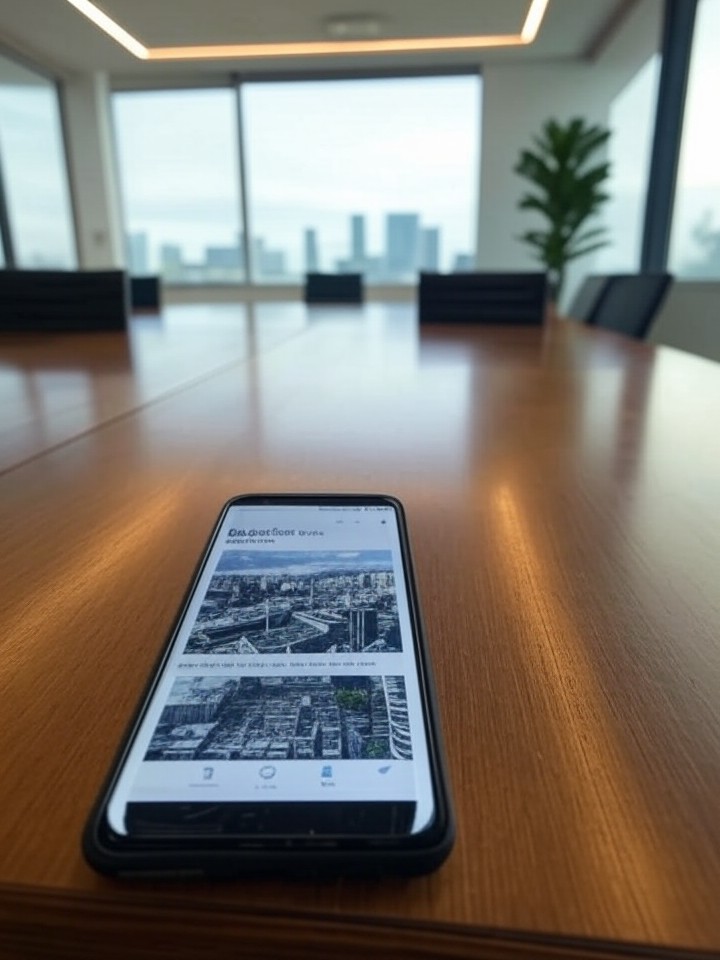
In the ever-evolving realm of hybrid work tools, Google has once again pushed the boundaries with a subtle yet transformative update to its Meet platform. The recent rollout of automatic room check-in for mobile devices marks a significant step forward in streamlining virtual meetings, particularly for users juggling on-the-go connectivity and physical conference spaces. Drawing from ultrasound proximity detection technology, this feature allows smartphones and tablets to seamlessly detect and integrate with conference room hardware, eliminating manual inputs and reducing audio disruptions.
At its core, the innovation builds on a foundation first introduced for laptops, now extended to iOS and Android ecosystems. Users in a equipped conference room can have their devices automatically prompted to join in Companion mode, which optimizes participation without causing feedback loops from multiple audio sources. This isn’t just a convenience; it’s a nod to the frustrations of hybrid setups where remote and in-person attendees often clash in audio quality.
According to details shared in the Google Workspace Updates blog, the feature leverages silent ultrasound signals emitted by room hardware, picked up by the device’s microphone. This detection triggers an automatic check-in, guiding users toward the most efficient joining method. The update, announced just days ago, is already rolling out to Google Workspace customers, promising to cut down on those awkward pre-meeting fumbles.
Seamless Integration in Hybrid Environments
Industry observers note that this mobile expansion addresses a key pain point in modern workplaces, where mobility is paramount. With more professionals using phones or tablets as primary devices during travel or quick huddles, the automatic check-in ensures that joining a meeting doesn’t require typing codes or scanning QR codes. Instead, the system intelligently recognizes the room’s presence and suggests Companion mode, which mutes the device’s audio output to prevent echoes while allowing full participation via chat, reactions, and screen sharing.
This builds on Google’s broader push for frictionless collaboration. For instance, Companion mode itself was designed to turn personal devices into secondary tools in a meeting, complementing dedicated hardware like Series One kits. Now, with mobile support, even those without laptops can benefit, making it ideal for field workers or executives in transit.
The timing couldn’t be better, as hybrid work models continue to dominate post-pandemic office dynamics. Data from various enterprise surveys indicate that over 70% of knowledge workers now split time between remote and in-office settings, amplifying the need for tools that bridge these worlds effortlessly.
Technological Underpinnings and Privacy Considerations
Diving deeper into the tech, the ultrasound method is particularly clever because it’s inaudible to humans, operating at frequencies above 20 kHz. This ensures detection without any noticeable interference, a technique Google has refined since its initial laptop rollout in 2025, as covered in an earlier post on the same Google Workspace Updates blog. By extending it to mobile, the company is essentially democratizing access to high-end meeting experiences.
Privacy, however, remains a focal point. The feature requires microphone access, but Google emphasizes that ultrasound detection is passive and doesn’t record or transmit audio unless explicitly joined. Users can opt out via settings, and enterprise admins have controls to manage deployment across domains. This approach aligns with Google’s ongoing efforts to balance innovation with data security, especially in regulated industries like finance and healthcare.
Comparisons to competitors are inevitable. Microsoft’s Teams has similar room detection via Bluetooth beacons, but Google’s ultrasound variant offers broader compatibility without relying on additional hardware pairings. Analysts suggest this could give Meet an edge in environments with mixed device ecosystems.
Industry Reception and Early Adoption Stories
Feedback from early adopters has been overwhelmingly positive. Posts on X from Google Workspace users highlight how the feature has shaved minutes off meeting prep time, with one admin noting a 30% reduction in support tickets related to audio issues. This sentiment echoes broader discussions on platforms like X, where hybrid work enthusiasts praise the update for its practicality in fast-paced settings.
In a detailed analysis by The Verge, the feature is lauded for its potential to enhance inclusivity in meetings. The article points out that by automatically prompting Companion mode, it encourages more equitable participation, ensuring remote attendees aren’t drowned out by room chatter. This is particularly relevant for global teams where time zones and locations vary widely.
Moreover, industry insiders are buzzing about the ripple effects. In sectors like consulting and sales, where client meetings often occur in borrowed conference rooms, this could become a standard expectation, pressuring rivals to accelerate their own innovations.
Broader Implications for Collaboration Tools
Extending beyond immediate usability, the automatic check-in ties into Google’s ecosystem-wide enhancements. For example, it’s compatible with recent updates like dynamic layouts in Meet, which use AI to highlight active speakers in group settings. This synergy creates a more immersive experience, as devices in the same room are treated as a unified cluster rather than isolated inputs.
From an enterprise perspective, the feature’s rollout via the Google Workspace admin console allows for customized implementation. Admins can enable it for specific rooms or user groups, integrating it with existing hardware like Chromebase for Meet. This flexibility is crucial for large organizations managing thousands of endpoints.
Looking at market trends, the collaboration software sector is projected to grow exponentially, with ultrasound and proximity tech playing larger roles. Google’s move positions Meet as a leader in this space, potentially influencing standards for how devices interact in shared physical environments.
Competitive Dynamics and Future Horizons
Rivals aren’t standing still. Zoom, for instance, has invested in similar proximity features, but Google’s integration with Workspace tools like Calendar and Gmail gives it a holistic advantage. When a meeting invite appears in the Gmail app, the automatic detection can now seamlessly transition to Companion mode, a detail emphasized in The Verge’s coverage.
On the innovation front, whispers from X posts suggest Google might expand ultrasound detection to other apps, perhaps for smart home integrations or augmented reality meetings. While speculative, such extensions could redefine how we perceive “presence” in digital interactions.
For businesses, the economic angle is compelling. By minimizing setup time and reducing errors, features like this contribute to productivity gains. Estimates from productivity studies indicate that even small efficiencies in meeting tech can yield hours saved per employee annually, translating to substantial cost benefits.
User Experiences and Best Practices
Real-world applications are emerging quickly. A case study from a tech firm using Google Workspace revealed that mobile automatic check-in improved meeting punctuality by 15%, as participants no longer fumbled with connections. This is especially beneficial in high-stakes environments like boardrooms, where every second counts.
Best practices for implementation include ensuring room hardware is updated to emit the necessary ultrasound signals, a process detailed in Google’s support documentation. Admins should also train users on Companion mode to maximize its benefits, such as using it for polls or annotations without disrupting the main audio feed.
Challenges do exist, though. In noisy environments or rooms with poor acoustics, detection accuracy might vary, prompting Google to recommend testing in diverse setups. Feedback loops on X indicate that while rare, false positives—where a device detects a signal from an adjacent room—have been reported, though software updates are addressing these.
Strategic Positioning in Enterprise Tech
Google’s strategy here is clear: fortify Meet as an indispensable tool in the Workspace suite. By layering in features like this, it encourages deeper adoption, especially among enterprises already invested in Google’s cloud ecosystem. This contrasts with standalone apps that lack such integration depth.
Industry impact extends to hardware partners. Companies producing Meet-compatible devices, like Logitech or Poly, stand to benefit from increased demand for ultrasound-enabled kits. This could spur a wave of upgrades in corporate AV setups, revitalizing a market segment that stagnated during remote-only phases.
Furthermore, as hybrid models solidify, features promoting seamless transitions between personal and shared spaces will differentiate winners. Google’s ultrasound approach, refined over iterations, sets a benchmark that others may emulate or surpass.
Evolving Standards and Long-Term Vision
Peering ahead, the automatic room check-in could evolve to incorporate more sensors, perhaps combining ultrasound with Wi-Fi or NFC for redundancy. Such advancements would enhance reliability in varied settings, from open-plan offices to temporary pop-up spaces.
In terms of accessibility, the feature supports diverse user needs, including those with mobility challenges who rely on mobile devices. This inclusivity angle is gaining traction in industry discussions, aligning with broader pushes for equitable tech.
Ultimately, this update exemplifies how incremental innovations can reshape daily workflows. As Google continues to iterate, the line between physical and virtual collaboration blurs further, promising a future where meetings feel truly boundaryless. With mobile now in the mix, the stage is set for even more sophisticated enhancements, keeping Meet at the forefront of enterprise communication tools.


 WebProNews is an iEntry Publication