
Unlocking Lost Treasures: How Google’s Find Hub App Transforms Wear OS into a Wrist-Borne Recovery Mission
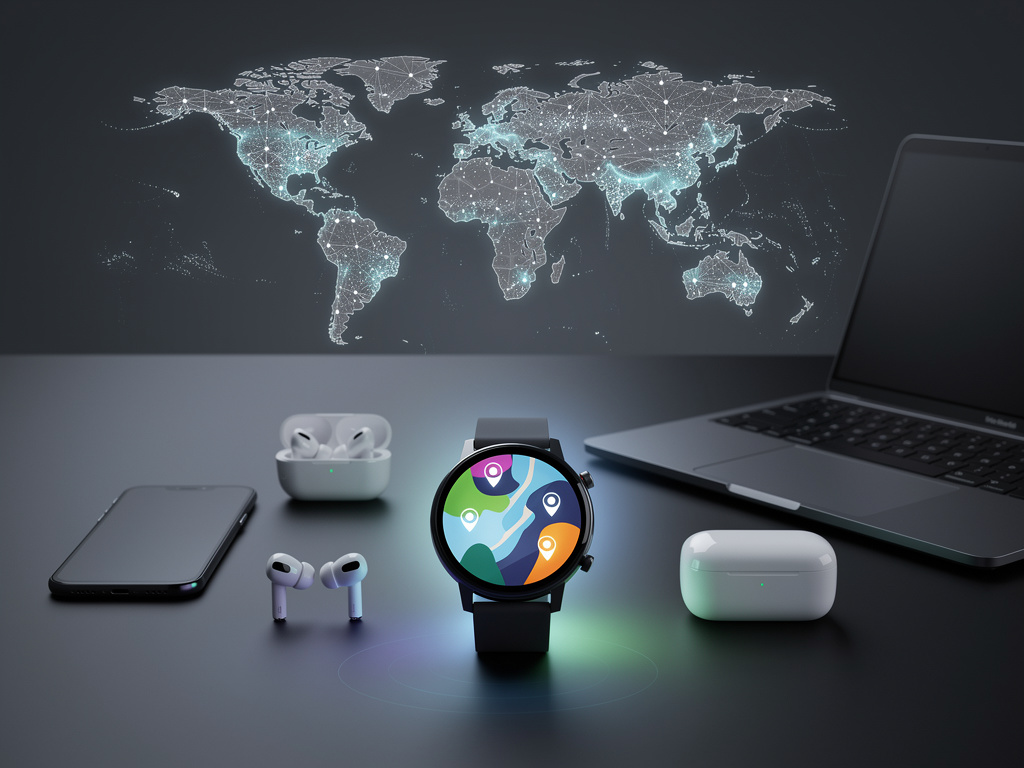
In the ever-evolving world of wearable technology, Google has quietly rolled out a feature that could redefine how users interact with their devices on the go. The Find Hub app, long a staple on Android smartphones for tracking misplaced gadgets, has now made its debut on Wear OS smartwatches. This move, announced in mid-December 2025, allows Wear OS users to locate, ring, and even secure their connected devices directly from their wrist, bypassing the need to pull out a phone in moments of panic.
The app’s arrival comes after months of anticipation, first teased in promotional materials for the Pixel Watch 3 earlier in the year. According to reports from tech outlets, the Find Hub for Wear OS mirrors many functionalities of its mobile counterpart, enabling users to perform remote operations like playing a sound on a lost device, marking it as lost, or initiating a factory reset. This integration taps into Google’s expansive network for device location, leveraging Bluetooth and crowd-sourced data to pinpoint items with remarkable accuracy.
For industry observers, this development signals Google’s deepening commitment to a seamless ecosystem where wearables aren’t just fitness trackers or notification hubs but active participants in device management. The app’s interface, designed with Wear OS’s circular displays in mind, offers an intuitive experience that fits naturally into the smartwatch paradigm, complete with maps and directional guidance.
The Genesis of Google’s Tracking Ecosystem
Google’s journey into device tracking began years ago with the Find My Device service, which evolved into the more robust Find Hub amid growing competition from Apple’s Find My network. The shift to Find Hub earlier in 2025 brought enhancements like unwanted tracker detection and improved integration with third-party tags, making it a formidable tool against loss and theft.
Now, extending this to Wear OS represents a logical progression. As detailed in a recent article from Android Police, the app’s rollout was somewhat unexpected but aligns with Google’s pattern of incremental updates to its wearable platform. Users with compatible devices, such as the Pixel Watch series, can now access these features without needing their phone nearby, a boon for those who misplace their handsets while out and about.
Technical insights reveal that Find Hub on Wear OS requires the latest software versions, potentially limiting initial availability to newer models like the Pixel Watch 3 and 4. This exclusivity, while strategic for pushing hardware upgrades, underscores broader trends in how software updates drive ecosystem loyalty.
The app’s core strength lies in its use of Google’s vast Android user base for crowdsourced location data. When a device goes missing, nearby Android phones can anonymously report its location back to the owner via encrypted signals. On a smartwatch, this translates to real-time updates on your wrist, complete with haptic feedback for alerts.
Industry analysts note that this feature could significantly reduce the friction in device recovery. Imagine jogging and realizing your earbuds are missing; a quick glance at your watch could guide you back without breaking stride. Such scenarios highlight how Wear OS is maturing beyond basic health metrics into a more holistic personal assistant.
Comparisons to competitors are inevitable. Apple’s WatchOS has long offered similar capabilities through its Find My app, allowing users to ping iPhones or AirTags from the wrist. Google’s entry levels the playing field, potentially attracting users frustrated with platform silos.
Navigating the Technical Underpinnings
Diving deeper into the mechanics, the Find Hub app for Wear OS builds on the foundation of Google’s Play Services, which handle the backend location sharing. The app’s APK, available for sideload on platforms like APKMirror, reveals version 1.0.74 as the initial release, optimized for Wear OS’s resource constraints.
Key features include “Play sound” for audible alerts, “Mark as lost” which locks the device and displays contact information, and “Factory reset” as a last resort to protect data. The “Find route” option integrates with Google Maps, providing turn-by-turn directions on the watch face, a seamless blend of navigation and recovery tools.
Security remains paramount. All location data is end-to-end encrypted, ensuring privacy even in a crowdsourced network. This addresses past concerns about tracking vulnerabilities, especially with the rise of Bluetooth Low Energy (BLE) tags that could be misused for stalking.
From a development perspective, the app’s release coincides with the December 2025 Pixel Watch update, which rolled out Wear OS 6.1 to models including the Pixel Watch 2, 3, and 4. As reported by 9to5Google, this update enhances overall system stability, paving the way for apps like Find Hub to perform optimally.
For developers and insiders, this opens doors to custom integrations. Wear OS’s open nature allows third-party apps to tap into similar APIs, potentially leading to a wave of tracking-enabled wearables from brands like Samsung or Fossil.
User feedback, gleaned from posts on X, indicates excitement mixed with calls for broader compatibility. Early adopters praise the convenience, with one noting how it “transforms the watch into a panic-button for lost tech,” while others urge Google to extend support to older devices.
Broader Implications for Wearable Adoption
The introduction of Find Hub on Wear OS isn’t just about finding lost keys; it’s a strategic play in the battle for wearable dominance. With global smartwatch shipments projected to exceed 200 million units in 2025, features that enhance utility can sway consumer choices.
Google’s ecosystem advantage lies in its scale. Unlike Apple’s closed garden, Android’s openness means Find Hub can track a wider array of devices, from phones to tablets and even compatible trackers from partners like Tile or Chipolo. This inclusivity could appeal to mixed-platform households.
Moreover, the app’s wrist-based access addresses real-world pain points. In high-stress situations—like losing a phone in a crowded airport—fumbling for another device isn’t ideal. Wear OS users now have an always-on solution, literally at arm’s length.
Looking ahead, potential expansions could include ultra-wideband (UWB) support for precise indoor tracking, similar to what’s available on newer Pixel phones. Insiders speculate that future updates might integrate AI-driven predictions, using Gemini to anticipate loss patterns based on user habits.
Competitive pressures are mounting. Samsung’s Galaxy Watch series already offers device finding via its SmartThings Find, but Google’s network is larger, boasting billions of Android devices worldwide. This scale gives Find Hub an edge in densely populated areas where crowdsourcing shines.
Regulatory considerations also play a role. With increasing scrutiny on data privacy, Google’s emphasis on encryption and user consent positions Find Hub as a responsible innovation, potentially influencing standards across the industry.
Ecosystem Synergies and User Empowerment
Integrating Find Hub with other Google services amplifies its value. For instance, linking it with Google Home could allow smart home devices to assist in locating items within the house, creating a unified recovery network.
For enterprise users, this feature holds promise in asset management. Companies could track corporate devices via employee wearables, streamlining IT operations without invasive monitoring.
Consumer testimonials, shared across tech forums and social media, underscore the app’s practicality. One user recounted recovering a misplaced tablet during a business trip, crediting the watch’s quick access for averting a productivity disaster.
Challenges remain, however. Battery life on wearables is a perennial concern, and constant location polling could exacerbate drain. Google has mitigated this with efficient background processes, but users should expect tweaks in future updates.
Accessibility features are another highlight. The app supports voice commands via Google Assistant, making it usable for those with mobility impairments. This inclusivity aligns with broader industry pushes toward universal design.
As Wear OS continues to evolve—recent updates have added Gemini AI for on-wrist queries and refreshed app interfaces—the Find Hub app fits into a narrative of empowerment, turning passive wearables into proactive tools.
Future Horizons in Device Recovery
Peering into what’s next, industry whispers suggest Google might expand Find Hub to support offline finding, using stored location data even without internet. This would be a game-changer for remote areas.
Partnerships could further enrich the ecosystem. Collaborations with automakers, for example, might enable tracking car keys via the watch, blending automotive and wearable tech.
Economic impacts are noteworthy. By reducing device loss, Find Hub could save consumers millions in replacement costs annually, while boosting Google’s service revenue through premium features like advanced tracking subscriptions.
Critics, however, point to potential over-reliance on tech. In an era of digital fatigue, does adding more features to watches risk overwhelming users? Google counters by emphasizing opt-in controls and customizable notifications.
Ultimately, the Find Hub’s Wear OS debut exemplifies how incremental innovations can accumulate into transformative experiences. As reported in a detailed piece from Android Authority, this app not only helps when “panic strikes” but also cements Wear OS as a versatile platform.
For tech enthusiasts and professionals alike, monitoring these developments reveals much about the trajectory of personal computing—where the line between devices blurs, and recovery becomes as simple as a wrist flick. With ongoing updates and community feedback shaping its path, Find Hub stands poised to redefine loss prevention in the connected age.


 WebProNews is an iEntry Publication