
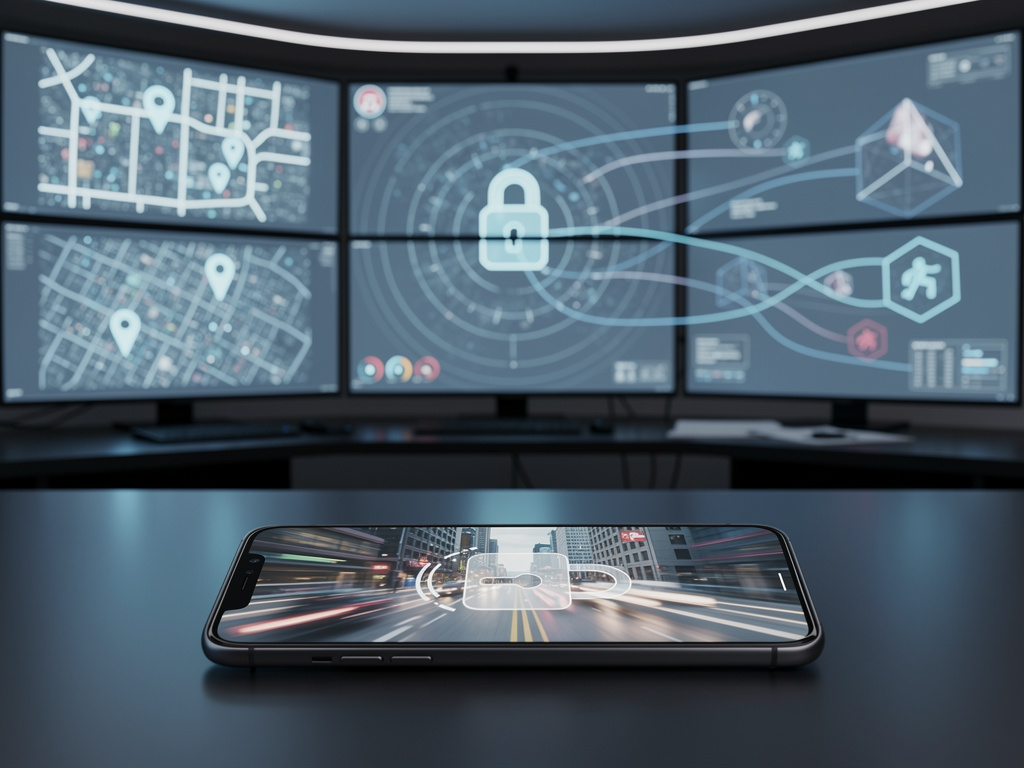
Seeing the Crisis Unfold: Android’s Revolutionary Leap in Emergency Response
In a move that could transform how emergencies are handled, Google has unveiled a groundbreaking feature for Android devices, allowing users to share live video feeds directly with 911 dispatchers. This innovation, dubbed Emergency Live Video, promises to provide first responders with real-time visual insights during critical situations, potentially speeding up response times and improving outcomes. Announced amid a flurry of tech advancements, the feature integrates seamlessly with existing emergency systems, building on years of development in location services and AI-driven public safety tools.
The rollout comes at a pivotal moment when mobile technology is increasingly intertwined with public safety. According to recent reports, Android users in the United States can now initiate a secure video stream during an emergency call or text, enabling dispatchers to see the scene as it unfolds. This isn’t just about convenience; it’s about equipping responders with eyes on the ground before they even arrive. Industry observers note that this capability mirrors similar functionalities on Apple’s iOS, but Google’s implementation leverages its vast ecosystem of devices and partnerships to potentially reach a broader audience.
At the heart of this feature is a collaboration between Google and RapidSOS, a company specializing in emergency response data. RapidSOS’s platform already supports over 600 million connected devices and connects to thousands of public safety agencies. By integrating Google’s live video tech, the system allows dispatchers to send a request via text or call, which users can accept with a single tap, instantly sharing their camera feed.
Integration and Technical Backbone
The technical underpinnings of Emergency Live Video rely on end-to-end encryption to ensure privacy, a critical aspect in an era of heightened data security concerns. As detailed in a press release from PR Newswire, the video is transmitted securely through RapidSOS’s AI-powered platform, which processes and relays the information to emergency centers without storing the footage long-term. This setup minimizes risks of unauthorized access, addressing potential worries about surveillance.
Users don’t need a special app; the feature is baked into the Android operating system, making it accessible on a wide range of devices. For instance, during a medical emergency, a caller could show paramedics the patient’s condition in real time, or in a fire, provide a view of the blaze’s extent. This visual aid can help dispatchers allocate resources more effectively, such as sending additional units or specialized equipment.
Beyond the basics, the feature supports both front and rear cameras, allowing flexibility depending on the situation. It’s designed to work over cellular data or Wi-Fi, ensuring reliability even in areas with spotty coverage. Google has emphasized that the system is opt-in, with users retaining control over when and how the video is shared.
Broader Implications for Public Safety
Drawing from insights shared on social platforms like X, there’s growing excitement among tech enthusiasts and first responders about how this could save lives. Posts highlight scenarios where verbal descriptions fall short, such as in remote hiking accidents or domestic disturbances, where a live feed could clarify ambiguities instantly. This sentiment echoes earlier innovations, like the Android Emergency Location Service, which has been credited with aiding in real-world rescues by providing precise location data.
Comparisons to Apple’s Live Video feature, introduced in iOS 18, are inevitable. While Apple’s version has been praised for its user-friendly interface, Android’s offering benefits from Google’s scale, potentially covering more devices globally. A report from The Verge notes that this parity levels the playing field, ensuring Android users aren’t left behind in emergency tech advancements.
Moreover, the feature’s launch aligns with ongoing efforts to modernize 911 systems across North America. Many dispatch centers still rely on outdated infrastructure, but integrations like this one push toward a more digital, responsive framework. Motorola Solutions, another key player, has announced that its 911 software now supports Android’s live video, covering about 60% of public safety answering points (PSAPs) in the region.
Privacy Safeguards and User Control
Privacy remains a cornerstone of the discussion. Google assures that videos are not saved on devices or servers unless explicitly needed for investigations, and the stream ends automatically when the call concludes. This approach draws from lessons learned in previous location-sharing features, where user consent was paramount. Industry insiders point out that such measures are essential to build trust, especially as smartphones become central to emergency communications.
On the adoption front, the feature is initially available in the U.S., with plans for expansion. It’s compatible with Android 10 and later versions, covering a massive user base. RapidSOS’s involvement ensures that even non-updated dispatch centers can receive the feeds through compatible software, bridging gaps in technology readiness.
Feedback from early tests, as reported in tech circles, suggests high satisfaction rates. For example, in simulated scenarios, responders noted that visual information reduced miscommunications by up to 30%, allowing for faster triage. This data, while preliminary, underscores the potential for measurable improvements in emergency outcomes.
Partnerships Driving Innovation
The collaboration ecosystem extends beyond Google and RapidSOS. Companies like Motorola Solutions are integrating the feature into their command center tools, enabling field responders to view streams on mobile devices. A post on StockTitan highlights how this one-click access enhances situational awareness, with built-in privacy controls to blur sensitive details if needed.
Looking back, this isn’t Google’s first foray into emergency tech. The Android Emergency Location Service, launched years ago, uses GPS, Wi-Fi, and cell towers to pinpoint callers accurately. Emergency Live Video builds on that foundation, adding a visual layer that’s been in development since at least 2020, as evidenced by earlier announcements about expanded language support and real-time location sharing.
Social media buzz on X reflects a mix of optimism and calls for global rollout. Users in regions like Europe, where similar features exist in isolated services (such as London’s 999EYE for fire brigades), are eager for Android to bring this to more countries. Posts from verified accounts, including those from Android’s official handle, emphasize the life-saving potential, sharing stories of how location services have already connected responders during crises like asthma attacks.
Challenges and Future Horizons
Despite the enthusiasm, challenges loom. Not all emergency centers are equipped to handle video feeds, which could limit immediate impact. Upgrading infrastructure requires investment, and rural areas might face bandwidth issues. Experts suggest that federal funding, similar to what’s supported Next Generation 911 initiatives, will be crucial for widespread adoption.
Another angle is interoperability with other platforms. While Android and iOS now offer comparable features, seamless cross-system integration could further enhance effectiveness. Imagine a unified standard where any device can share video securely, regardless of OS.
In terms of user education, Google plans awareness campaigns to teach people how to use the feature without hesitation in high-stress moments. This includes in-app tutorials and partnerships with public safety organizations to simulate emergencies.
Real-World Applications and Testimonials
Envisioning real-world use, consider a car accident on a foggy highway. A driver calls 911, but words alone can’t convey the wreckage’s scale. With Emergency Live Video, dispatchers see the scene, spotting hazards like fuel leaks and directing traffic control accordingly. Such scenarios, drawn from hypothetical discussions in tech forums, illustrate the feature’s value.
Testimonials from pilot programs, as covered in Android Central, praise the intuitive design. One dispatcher noted, “It’s like having a window into the emergency,” highlighting how it aids in assessing injuries remotely.
Expanding globally, Google hints at adaptations for international emergency numbers like 112 in Europe or 000 in Australia. This could involve local partnerships, similar to how London’s Ambulance Service has used video tech since 2019 for instant scene assessment.
Evolving Role of AI in Emergencies
AI plays a subtle yet powerful role here. RapidSOS’s platform uses machine learning to analyze incoming data, potentially flagging key elements in video feeds for quicker dispatcher review. This integration points to a future where AI assists in real-time decision-making, perhaps even suggesting response protocols based on visual cues.
Critics, however, warn of over-reliance on technology. If a video stream fails due to poor signal, responders must fall back on traditional methods. Balancing tech with human judgment remains key.
As this feature matures, its data could inform broader public safety strategies, like urban planning for better emergency access. Cities might use aggregated insights (anonymized, of course) to identify high-risk areas.
Pushing Boundaries in Tech-Driven Safety
The launch also sparks debate on equity. With Android dominating in emerging markets, this feature could democratize access to advanced emergency tools in underserved regions. Yet, ensuring compatibility with older devices is vital to avoid leaving anyone behind.
Industry analysts predict that within a year, similar features might extend to wearables, like smartwatches sharing vital signs alongside video. This convergence of hardware and software could redefine personal safety.
Ultimately, Emergency Live Video represents Google’s commitment to leveraging technology for societal good. By giving eyes to those who rush toward danger, it bridges the gap between crisis and resolution, one stream at a time. As adoption grows, its true impact will unfold in the stories of lives saved and disasters averted.


 WebProNews is an iEntry Publication