
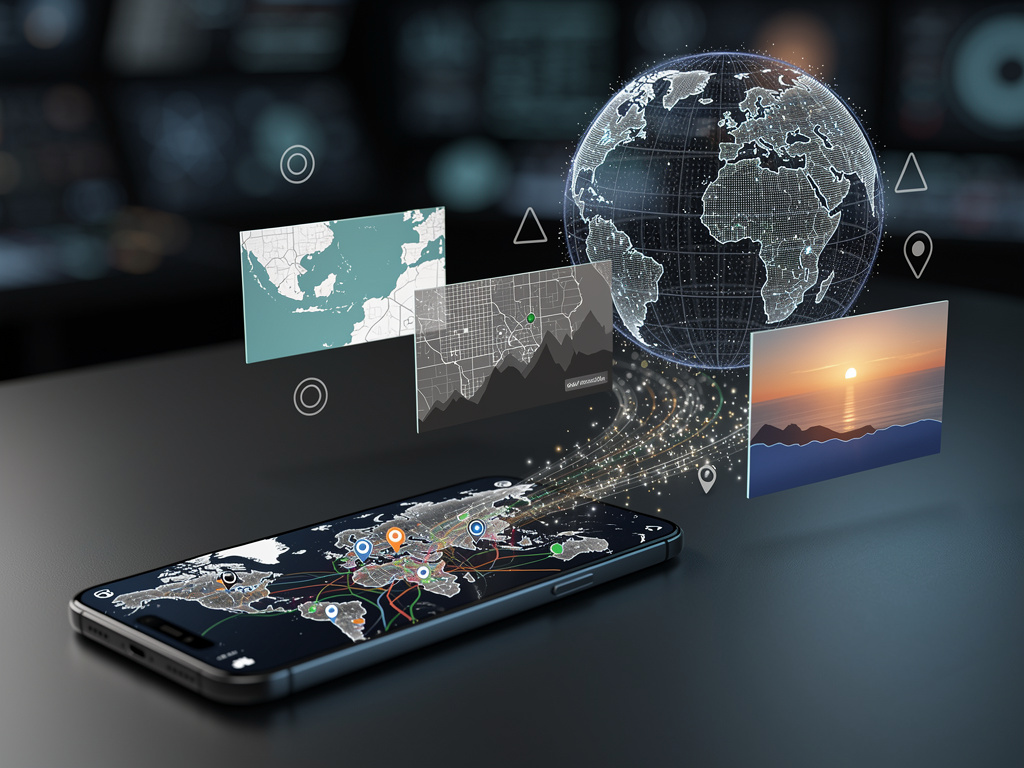
Charting Hidden Vistas: Gemini’s AI Fusion with Google Maps Redefines Photographic Quests
In the ever-evolving realm of digital tools, Google’s integration of its Gemini AI with Maps is emerging as a game-changer for photographers seeking to capture elusive scenes. This synergy isn’t just about navigation; it’s about intelligent discovery, where AI anticipates needs and uncovers prime shooting locations that might otherwise remain overlooked. Drawing from recent advancements, this fusion allows users to query complex requests, like finding spots with optimal lighting conditions at specific times, all grounded in real-time Maps data.
Photographers, both amateur and professional, are finding that this tool transforms how they plan outings. Instead of poring over forums or relying on outdated guides, they can converse with Gemini to get tailored suggestions. For instance, asking for “quiet urban areas with architectural interest at sunset” yields not just directions but contextual insights, such as crowd levels or historical notes, enhancing the creative process.
The integration leverages Gemini’s conversational prowess, making interactions feel natural and intuitive. Users report that it’s like having a knowledgeable assistant who understands photographic intent, pulling from vast datasets to recommend vantage points. This is particularly useful for those chasing unique environmental compositions, where timing and location precision are crucial.
Unlocking AI-Driven Location Intelligence
At the core of this integration is Gemini’s ability to ground responses in Google Maps’ extensive database, as detailed in Google’s developer documentation on Gemini API grounding with Google Maps. This ensures that suggestions are not only relevant but factually anchored, reducing the guesswork in scouting. For photographers, this means accessing hyper-local information, such as seasonal changes in natural settings or temporary events that could provide dynamic backdrops.
One standout feature is the proactive alerting system, where Gemini can notify users of changing conditions en route, like impending weather shifts that might affect light quality. According to a hands-on review in CNET, this AI assistant handles queries seamlessly, even while driving, allowing photographers to focus on their gear rather than their screens.
Moreover, the system’s landmark-aware directions add a layer of precision. Instead of generic turn-by-turn guidance, it might say “veer left after the historic bridge,” which is invaluable for orienting in unfamiliar terrains. This feature, highlighted in a Google Blog post, combines visual recognition with AI to make navigation more contextual for creative pursuits.
From Casual Snaps to Professional Shoots
Photographers experimenting with this tool have shared transformative experiences. In a detailed account from MakeUseOf, the author describes using Gemini to pinpoint overlooked urban nooks ideal for street photography, turning routine drives into serendipitous shoots. By integrating real-time traffic data, it optimizes routes to avoid delays, ensuring arrival during golden hours.
On social platforms like X, users echo this enthusiasm. Posts highlight how Gemini suggests detours to scenic overlooks based on user preferences, such as favoring areas with dramatic natural features. One user noted planning an entire day around AI-recommended stops, capturing images that stood out in their portfolio, underscoring the tool’s role in elevating everyday photography.
Professionals, too, are leveraging it for more structured endeavors. For location scouts in film and commercial photography, Gemini’s deep research capabilities—recently enhanced as per a Google Developers Blog—allow for comprehensive site evaluations, including accessibility and permit information, streamlining pre-production workflows.
Technical Underpinnings and Developer Insights
Delving deeper, the integration relies on Gemini’s multimodal abilities, processing text, images, and location data simultaneously. This is evident in features like Lens built with Gemini, where pointing a camera at a scene prompts instant details on the spot’s photographic potential, as showcased in a recent Google Maps X post. Such innovations make it easier to assess elements like composition opportunities on the fly.
For developers and tech insiders, the Gemini API’s grounding with Maps opens avenues for custom applications. Imagine apps that auto-generate photography itineraries based on user-uploaded mood boards or past images, predicting preferred aesthetics. A AP News article describes this as turning Maps into a conversational co-pilot, which for photographers means dynamic planning that adapts to spontaneous ideas.
User feedback on platforms like Reddit, particularly in threads from r/GooglePixel, reveals rollout nuances. While some praise the seamless rollout across navigation modes, others note areas for improvement, like better integration with camera apps for immediate shot suggestions.
Real-World Applications and Case Studies
Consider a wildlife photographer tracking migratory patterns. Gemini can cross-reference Maps data with environmental databases to suggest optimal viewing spots, factoring in time of day for best visibility. This was exemplified in a Techlicious review, where the AI provided proactive alerts for route adjustments, ensuring timely arrivals.
In urban settings, street photographers benefit from crowd density predictions, avoiding tourist-heavy zones for more authentic captures. X posts from users like those discussing hands-free queries illustrate this, with examples of finding quiet alleys for portrait sessions amid bustling cities.
Furthermore, event photographers use it to navigate festivals or gatherings efficiently. By asking Gemini for “best angles to shoot the parade,” it delivers not just paths but vantage points with elevation data, enhancing shot variety. This practical utility is gaining traction, as seen in recent news from TechRadar, praising the AI’s understanding of nuanced requests.
Challenges and Ethical Considerations
Despite its strengths, the integration isn’t without hurdles. Privacy concerns arise from AI’s reliance on location data, prompting questions about data handling. Industry insiders note that while Google emphasizes user controls, the depth of personalization could inadvertently reveal patterns in photographers’ habits.
Accuracy in suggestions also varies; in remote areas with sparse Maps data, Gemini might fall back on generalizations. Feedback from X users points to occasional mismatches, like recommending spots inaccessible by vehicle, highlighting the need for human verification.
Ethically, there’s debate on how AI might homogenize photography by promoting popular spots, potentially overcrowding unique locations. Balancing this, some argue it democratizes access, allowing diverse creators to discover hidden gems without elite networks.
Future Horizons in AI-Enhanced Creativity
Looking ahead, expansions could include deeper ties with Google’s ecosystem, like linking to Pixel cameras for real-time composition advice. A Daily AI Wire guide on Gemini’s photo tools suggests potential for on-the-spot editing integrations, where Maps data informs AI-generated enhancements.
Collaborations with photography communities might refine algorithms, incorporating user-submitted spot ratings. X discussions speculate on features like virtual scouting via augmented reality, overlaying potential shots on live views.
Ultimately, this integration signals a broader shift where AI becomes integral to creative workflows, not just as a tool but as a collaborative partner. For industry professionals, mastering it could redefine efficiency, from solo adventurers to large-scale productions.
Evolving Ecosystems and Market Impact
The competitive arena is heating up, with rivals like Apple Maps exploring similar AI infusions. Google’s edge lies in its vast data trove, but insiders watch for antitrust scrutiny amid such integrations.
Market adoption is accelerating; analytics from sources like PPC Land show increased engagement in local searches, beneficial for photography-related businesses like gear rentals near prime spots.
Photographers investing in this tech report productivity gains, with some quantifying time saved in planning. As per a Technijian analysis, the visual format of results enhances decision-making, potentially boosting related industries.
Innovative Use Cases Beyond the Lens
Beyond traditional photography, educators use it for field trips, guiding students to historically significant sites for documentary work. Travel bloggers integrate it into content creation, generating itineraries that double as narrative arcs.
In conservation photography, AI helps document endangered habitats by suggesting non-intrusive paths, aligning with ethical standards. X posts from environmental advocates praise this for minimizing impact while maximizing output.
Corporate applications include real estate photography, where Gemini optimizes shoots for property listings, considering light and angles. This versatility underscores the integration’s broad appeal, positioning it as a staple in digital toolkits.
As this technology matures, its influence on photographic artistry will likely deepen, blending human intuition with machine precision to uncover new visual narratives in our world’s diverse terrains.


 WebProNews is an iEntry Publication