
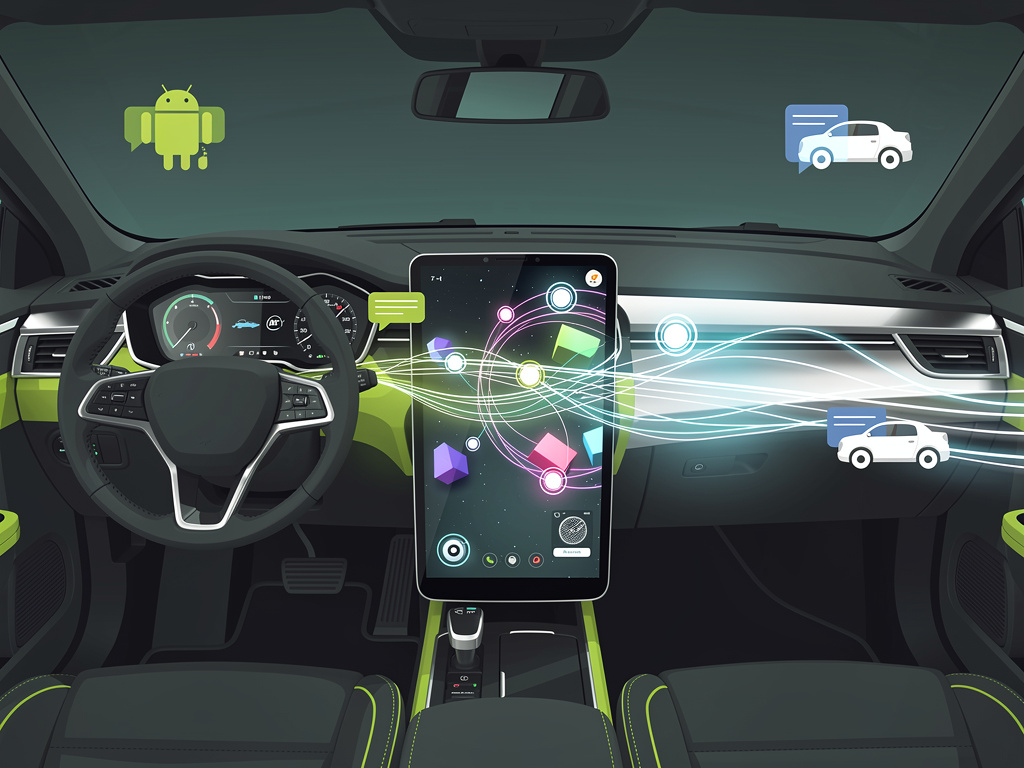
For months, it was the feature that existed mostly in screenshots and whispered promises. Google’s Gemini AI assistant is now rolling out broadly to Android Auto, replacing the aging Google Assistant in cars and marking one of the most significant shifts in how drivers will interact with their vehicles since voice commands first arrived on dashboards.
The rollout, which began appearing for users in late June 2025, isn’t a beta test or a limited pilot. It’s a wide deployment. According to Android Police, users across multiple countries are now reporting that Gemini has replaced Google Assistant on their Android Auto interfaces, bringing with it conversational AI capabilities that go far beyond setting timers and playing Spotify playlists.
Google first teased Gemini’s integration with Android Auto at its I/O developer conference, but the actual availability lagged well behind the announcement. Early adopters who managed to force-enable it through workarounds reported mixed results — sometimes impressive contextual understanding, sometimes baffling failures to perform basic tasks like sending a text message. The version now rolling out appears to have ironed out many of those wrinkles, though it’s still not without limitations.
Here’s what’s actually changed behind the steering wheel. Gemini on Android Auto can handle multi-turn conversations, meaning a driver can ask a follow-up question without re-triggering the assistant or repeating context. Ask it to find Italian restaurants nearby, then say “which one has the best reviews,” and it understands you’re still talking about Italian restaurants. That kind of contextual threading was technically possible with Google Assistant but rarely worked reliably in the car environment, where road noise and fragmented attention made interactions clunky.
The new assistant also brings summarization capabilities to the driving experience. Gemini can read and summarize long messages, emails, or even articles shared via compatible apps, giving drivers a condensed version rather than forcing them to listen to an entire email read verbatim. For anyone who’s sat through Google Assistant robotically narrating a 400-word email from HR about parking policy changes, this alone may justify the upgrade.
But the rollout hasn’t been entirely smooth. Some users on Reddit and X have reported that certain legacy commands — particularly those tied to smart home controls and third-party app integrations — don’t work as reliably with Gemini as they did with the old Google Assistant. A user on X noted that their garage door opener integration, which worked flawlessly through Assistant, now requires a different phrasing to trigger through Gemini. Small friction. But the kind of friction that matters when you’re pulling into your driveway at night.
Google has acknowledged that Gemini on Android Auto is still gaining feature parity with the assistant it’s replacing. The company’s support pages indicate that some extensions — the connectors that let Gemini interact with third-party services — are still being migrated. Google Maps integration, phone calls, and messaging work. More complex routines and multi-step automations are coming but aren’t fully baked yet.
The timing of this rollout is no accident. Google is in an intensifying competition with Apple, whose own Apple Intelligence features are expected to arrive in CarPlay later this year. Amazon’s Alexa, once a credible in-car competitor through partnerships with automakers like BMW and Stellantis, has faded somewhat as Amazon restructured its voice assistant division. That leaves the car as a two-horse race between Google and Apple, with Gemini representing Google’s bid to make the AI experience in vehicles feel genuinely intelligent rather than merely functional.
And the stakes are significant. According to a 2024 report from Counterpoint Research, Android Auto is now active on over 200 million vehicles worldwide, with adoption accelerating as more automakers ship cars with wireless Android Auto support built in. Every one of those screens is a surface where Google can demonstrate Gemini’s capabilities — and, not incidentally, keep users within Google’s services rather than defaulting to whatever the automaker’s native infotainment system offers.
The integration also matters for Google’s broader Gemini strategy. The company has been aggressively pushing Gemini across every product surface it controls: Gmail, Google Docs, Search, Pixel phones, and now the car. Each new deployment serves a dual purpose — it makes the product more useful to consumers, and it generates the real-world usage data that helps Google refine the underlying models. Cars represent a particularly valuable data environment because the queries tend to be urgent, specific, and action-oriented. Nobody asks their car assistant to write a poem. They ask for directions, make calls, and need information fast.
Not everyone is thrilled. Privacy advocates have raised questions about what data Gemini collects during in-car interactions and how it differs from what Google Assistant gathered. Google’s privacy policy for Gemini states that voice interactions may be reviewed by human reviewers to improve the service, though users can opt out of this in their Google account settings. In the European Union, where GDPR enforcement remains aggressive, the rollout may face additional scrutiny — though Google appears to be deploying Gemini in EU markets simultaneously with the rest of the world, suggesting the company believes its compliance framework is solid.
There’s also the question of distraction. A more capable AI assistant could, paradoxically, encourage more complex interactions while driving. If Gemini can summarize emails, the temptation to engage with work communications behind the wheel increases. Google has built in safeguards — the Android Auto interface still restricts certain interactions, and Gemini’s responses in driving mode are designed to be concise — but the line between helpful and distracting gets thinner as the AI gets smarter.
For automakers, Gemini’s arrival on Android Auto adds another layer to an already complicated relationship with Google. Companies like General Motors famously tried to cut Google out entirely, building their own infotainment systems powered by Google’s automotive services but without Android Auto’s phone-projection model. GM reversed course earlier this year, bringing Android Auto back after customer backlash. Now those customers will get Gemini too, whether GM’s product planners wanted it or not.
The auto industry’s broader push toward software-defined vehicles means the infotainment system is increasingly the car’s primary interface. Whoever controls the voice assistant controls a meaningful share of the driver’s attention and, by extension, their purchasing decisions, navigation choices, and media consumption. Google knows this. So does Apple. The fact that Google is pushing Gemini into cars now, rather than waiting for a more polished version, suggests the company views speed of deployment as more important than perfection.
So what should drivers actually expect? If you have an Android phone running Gemini as your default assistant and you connect to Android Auto, you should see Gemini’s interface replace the old Assistant. The visual changes are subtle — a slightly different animation, a new icon — but the conversational differences become apparent quickly. Responses feel more natural. Follow-up questions work. And when Gemini doesn’t know something or can’t perform a requested action, it tends to say so clearly rather than offering a confused non-answer.
The rollout appears to be server-side, meaning there’s no specific app update to install. As Android Police reported, some users received the update days before others in the same region, which is consistent with Google’s typical staged deployment approach. If you don’t have it yet, you likely will within the next few weeks.
One thing is clear. The era of the simple, command-and-response car voice assistant is ending. What replaces it — for better and for worse — is something that actually listens, remembers, and thinks. Whether drivers are ready for that kind of co-pilot remains to be seen.


 WebProNews is an iEntry Publication