
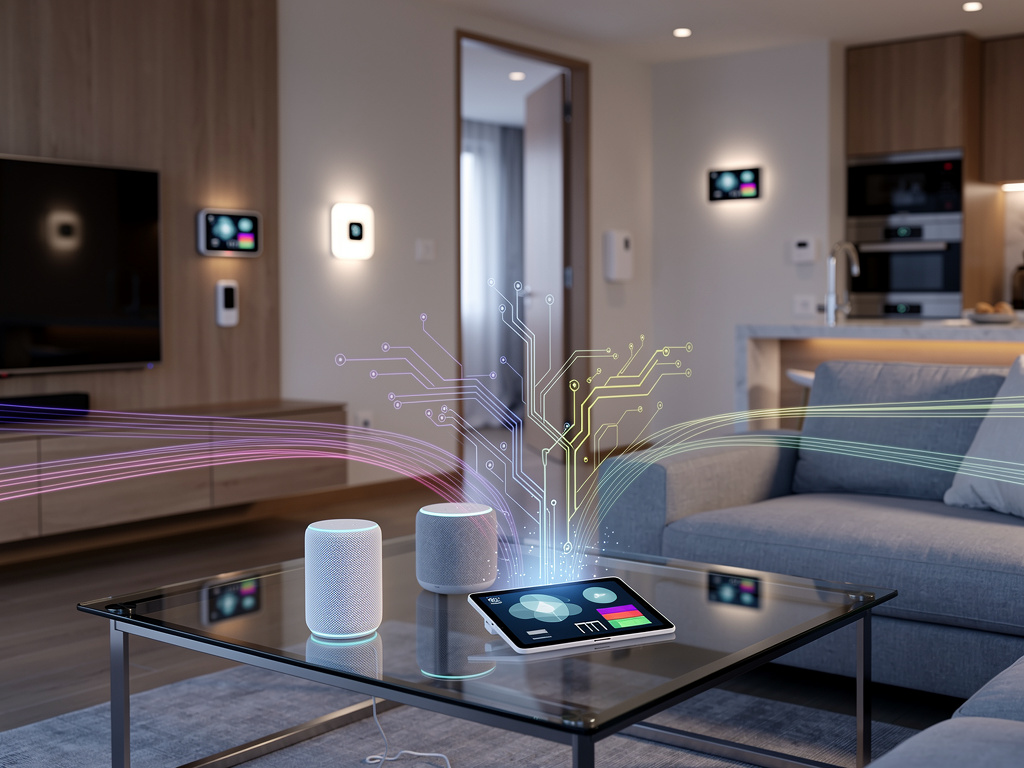
For years, Google’s smart home platform has been the technological equivalent of a sports car with a sticky ignition. Powerful under the hood, maddening in daily use. Owners of Nest speakers, Hub displays, and connected devices have endured a long list of minor but persistent frustrations — the kind of small failures that make you mutter at a $100 speaker like it owes you money. Now, Google is rolling out a sweeping update to its Home app and Gemini assistant that addresses many of these complaints while simultaneously pushing its AI ambitions deeper into the rooms where people actually live.
The update, which Google began detailing in late June 2025, is one of the most significant overhauls the company has made to its smart home software in recent memory. It touches everything from how Gemini responds to voice commands to how automations are created, how cameras behave, and how the Home app itself looks and functions. According to Digital Trends, Google is framing the release as a dual effort: supercharging Gemini’s capabilities and squashing what it calls “papercuts” — those small, nagging issues that individually seem trivial but collectively erode trust in a platform.
That framing matters. Smart home adoption has plateaued in many households not because people don’t want the technology, but because the technology keeps letting them down in stupid ways. A light that doesn’t respond. A routine that fires at the wrong time. A camera notification that tells you nothing useful. Google appears to understand this now, and the company is attacking the problem on two fronts simultaneously.
Start with Gemini, because that’s where the ambition is most visible. Google’s AI assistant is gaining what the company describes as a dramatically expanded understanding of the smart home. Previously, Gemini could handle basic commands — turn on the lights, set a timer, play music. But it struggled with anything that required contextual reasoning or multi-step logic. The new update gives Gemini the ability to understand and control a far wider range of devices and, more importantly, to reason about what you’re actually asking for.
Here’s a practical example. Say you tell Gemini, “I’m heading to bed.” Previously, that command would have done nothing unless you’d manually built a routine called “bedtime” and mapped specific actions to it. With the update, Gemini can infer your intent — lock the doors, turn off the downstairs lights, lower the thermostat, arm the security system — based on your past behavior and device configuration. It’s the difference between a voice-controlled remote and something that actually thinks, even if only a little.
Google is also enabling Gemini to answer questions about the state of your home. Did I leave the garage door open? Is the back door locked? What’s the temperature in the nursery? These queries now return real answers pulled from actual device states, not just web search results or confused apologies. For anyone who’s asked Google Assistant a straightforward question about their own home and received a Wikipedia summary in response, this is a welcome change.
But the Gemini improvements, while impressive on paper, would ring hollow if the underlying platform remained unreliable. That’s where the papercut fixes come in, and honestly, they might matter more to existing users than any AI upgrade.
The Home app is getting a visual and functional refresh. Device controls are being reorganized for faster access. Camera feeds load more quickly. The favorites tab — the screen most people see first when they open the app — now supports more granular customization, so you can pin the devices and controls you actually use instead of scrolling past ones you don’t. According to Digital Trends, Google is also improving the automation editor, making it easier to build complex routines with multiple triggers and conditions without needing a PhD in conditional logic.
Automations have been a particular sore spot. Google’s previous system for creating routines was clunky and limited compared to what competitors like Apple and Amazon offered. The new editor allows for if-then-else logic, time-based conditions, and device state triggers in a more intuitive interface. Want your porch light to turn on at sunset but only if you’re not home? That’s now a straightforward setup rather than a workaround involving three apps and a prayer.
Camera improvements deserve their own mention. Nest camera owners have long complained about sluggish live feeds, delayed notifications, and an activity history that was difficult to scrub through. Google is addressing all three. Live feeds now initiate faster. Notification delivery has been tightened. And the activity timeline in the Home app has been redesigned to make it easier to find specific events. For anyone using Nest cameras as a genuine security tool rather than a novelty, these are meaningful upgrades.
The timing of this release is not accidental. Google is facing intensifying competition in the smart home space from Apple, Amazon, and a growing roster of Matter-compatible device makers who are making platform allegiance less important. Apple’s Home app received a significant overhaul with iOS 18, and Amazon has been aggressively integrating its own AI capabilities into Alexa. Google needed to respond, and this update is that response.
There’s also the Matter question. The cross-platform smart home standard, which Google helped develop alongside Apple, Amazon, and the Connectivity Standards Alliance, has been slow to deliver on its promise of universal device compatibility. But adoption is accelerating, and Google’s update includes improved Matter device support — faster pairing, more reliable connections, and better representation of Matter devices within the Home app. This matters because the future of smart home hardware is increasingly brand-agnostic, and the platform that handles third-party devices best will win.
So does this update actually fix Google’s smart home reputation? It’s too early to say definitively. Software updates look great in press releases and controlled demos. The real test comes when millions of users start interacting with the new features across thousands of different device combinations in homes with varying Wi-Fi quality and network configurations. Google has a history of promising big and delivering unevenly — recall the rocky transition from the original Nest app to Google Home, which alienated a significant portion of the Nest user base.
Still, the approach here feels different. Rather than announcing a flashy new hardware product or a single tentpole AI feature, Google is doing the unglamorous work of fixing what’s broken. That’s not the kind of thing that generates breathless headlines, but it’s exactly what the platform needs. The best smart home is one you don’t have to think about. Every time a command fails or an automation misfires, the illusion breaks. Google seems to finally understand that reliability isn’t a feature — it’s the foundation.
The Gemini integration also signals where Google sees the smart home heading over the next several years. Voice assistants have been stuck in a command-and-response loop since Alexa first shipped in 2014. You talk, the speaker does a thing, and that’s it. Gemini’s contextual reasoning — if it works as advertised — represents a genuine step toward ambient intelligence, where the home anticipates needs rather than simply responding to orders. That’s been the promise of smart home technology since the concept first appeared in science fiction. We’re not there yet. But the gap is narrowing.
For industry watchers, the most interesting signal may be Google’s willingness to invest this heavily in the Home platform at all. There were persistent rumors over the past two years that Google was deprioritizing its smart home efforts in favor of AI research and cloud services. This update suggests the opposite — that Google views the home as a critical proving ground for Gemini and a channel for keeping users embedded in its services. Your Nest thermostat isn’t just a thermostat. It’s a touchpoint. And Google wants as many of those as it can get.
The update is rolling out in phases through the summer of 2025, with some features available immediately and others arriving over the coming weeks. Google says all existing Nest speakers and displays will receive the Gemini improvements, though the full range of capabilities may vary by device generation. The Home app updates are available on both Android and iOS.
Whether this is the turning point for Google’s smart home ambitions or just another chapter in a long and uneven story remains to be seen. But for the first time in a while, the company is addressing the right problems in the right order. Fix the small things. Then build something bigger on top. That’s a strategy that might actually work — if Google has the patience to see it through.


 WebProNews is an iEntry Publication