
Peeling Back the Layers: How Nano Banana is Revolutionizing Google TV with AI Magic
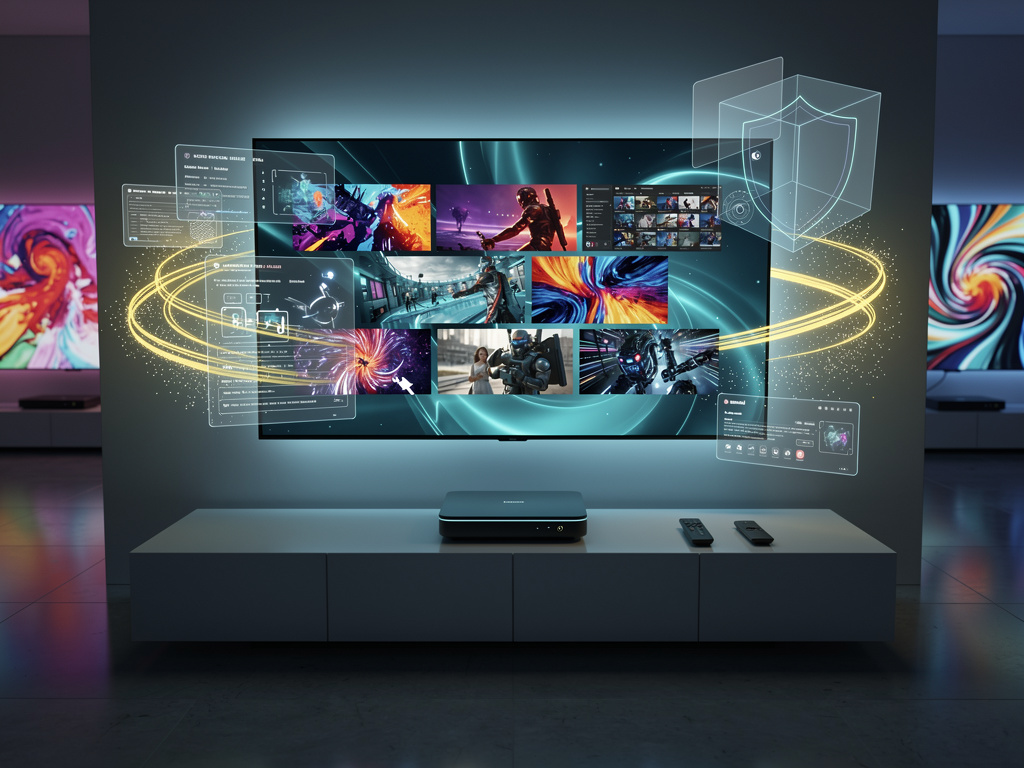
Google’s latest push into artificial intelligence for consumer devices is turning heads, particularly with the integration of its Nano Banana tool into Google TV platforms. Announced amid the buzz of CES 2026, this development promises to blend generative AI capabilities directly into the living room experience, allowing users to create and manipulate images and videos on their televisions. Drawing from recent reports, this move is part of a broader strategy to make AI more accessible and interactive in everyday settings.
At the core of this update is Nano Banana, Google’s advanced image generation and editing model, which has evolved significantly since its initial rollout. Originally introduced as a feature in the Gemini app, Nano Banana enables users to transform photos with remarkable precision—erasing objects, altering environments, or even changing clothing in images—all while maintaining composition and style. Now, extending this to Google TV means families can edit vacation snapshots or generate custom artwork right from their couch, using voice commands or simple prompts.
The integration isn’t just about static images; it includes video generation through models like Veo, allowing for dynamic content creation. This comes at a time when AI tools are proliferating across devices, but Google’s approach stands out for its focus on seamless hardware integration. As detailed in a recent piece from Ars Technica, the update brings Nano Banana and Veo models to the big screen, enabling users to generate and watch AI content effortlessly.
Voice Commands and Interactive Deep Dives
Beyond content creation, the Gemini update enhances Google TV with natural language processing for settings adjustments. Users can now say things like “the screen is too dim” or “I can’t hear the dialogue,” and the AI will tweak picture and audio settings accordingly. This hands-free control is a game-changer for accessibility, making complex menus obsolete.
Posts on X highlight the excitement around these features, with users praising the “sorcery” of Nano Banana’s editing prowess. One enthusiast noted how it handles multiple references consistently, suggesting a huge impact on creative workflows. Such sentiment underscores the tool’s potential to democratize advanced editing, previously the domain of professionals.
Furthermore, the rollout starts with select devices like TCL TVs, but partnerships indicate broader adoption. A report from The Verge explains that this includes support for generating AI videos and modifying family photos, positioning Google TV as more than a streaming hub—it’s becoming an interactive canvas.
From Mobile to Massive Screens
The journey of Nano Banana began in mid-2025, with Google DeepMind unveiling it as an upgrade to image editing in the Gemini app. Early versions allowed for transformative edits, like reimagining scenes with new actions or angles, all in milliseconds on mobile devices. This rapid processing is key to its appeal, making AI feel instantaneous and intuitive.
By November 2025, Nano Banana Pro emerged, powered by Gemini 3 Pro, offering high-resolution visuals that mimic photographs with improved text rendering and factual accuracy. As per a blog post from Google, this model turns visions into reality with unprecedented control, addressing common pitfalls in AI generation like inconsistencies or artifacts.
Extending this to Google TV represents a logical progression, bridging mobile creativity with home entertainment. Recent news from CNET warns that “AI slop” is coming whether users want it or not, but it also highlights the convenience of generating content on larger screens, potentially enriching family interactions or casual viewing.
Partnerships and Platform Expansion
Google’s collaborations are accelerating this tech’s reach. For instance, integrations with Samsung TVs bring Google Photos and Nano Banana together, turning televisions into digital photo albums. A story in Mashable describes how this could make TVs double as family hubs, displaying edited memories in real-time.
On the automotive front, an extended partnership with Qualcomm for AI agents hints at Nano Banana’s versatility beyond TVs. According to The Economic Times, this upgrade makes the AI assistant more visual and interactive, covering topics from travel to health with narrated explainers and real-time updates.
X posts reflect growing anticipation, with users sharing examples of Nano Banana’s capabilities, like erasing people or fixing lighting in photos. This user-generated buzz, combined with official announcements, paints a picture of an AI ecosystem that’s evolving rapidly, with Google TV as a central node.
Technical Underpinnings and Future Iterations
Diving deeper into the tech, Nano Banana Pro incorporates a “pre-frontal cortex” approach, where the model reasons before generating images. This involves planning scene logic, lighting, and composition, resulting in more coherent outputs. An X post elaborated on how this differs from keyword-based dreaming, emphasizing thoughtful creation.
Looking ahead, Google is already working on Nano Banana 2 Flash for even faster generation, as reported by Computerworld. This could push boundaries further, enabling lightning-speed edits on TVs, enhancing live interactions during shows or games.
The CES 2026 announcements, covered in Chrome Unboxed, position Google TV as a proactive assistant, handling complex queries and hardware management. This intelligence boost moves beyond recommendations, fostering a more engaging user experience.
Challenges in AI Integration
However, not all feedback is glowing. Concerns about “AI slop”—low-quality generated content flooding devices—have surfaced. Critics worry that unsolicited AI features could clutter interfaces, but Google counters this with opt-in elements and user controls.
Privacy implications also loom large, especially with photo editing on shared devices. Ensuring data security in generative processes is crucial, as AI models learn from vast datasets. Industry insiders note that while Nano Banana excels in accuracy, ethical use remains a hot topic.
Despite these hurdles, the innovation’s potential for education and entertainment is immense. Imagine interactive history lessons with AI-generated visuals or personalized fitness videos—all from your TV.
Broader Implications for Consumer Tech
This update aligns with Google’s vision of ubiquitous AI, weaving it into fabrics of daily life. From search integrations, as seen in earlier rollouts to Lens and AI Mode, to now dominating living rooms, Nano Banana exemplifies scalable AI deployment.
Comparisons to competitors like Apple’s ecosystem or Amazon’s Fire TV highlight Google’s edge in generative tools. While others focus on voice assistants, Google’s emphasis on visual creation sets it apart, potentially redefining how we interact with media.
X chatter from tech enthusiasts underscores this shift, with posts lauding Nano Banana Pro’s god-mode capabilities for high-res visuals. Such endorsements suggest widespread adoption, especially among creative users.
Evolving User Experiences
As the technology matures, expect more refinements. Voice-controlled deep dives, complete with narration and interactive elements, could transform passive viewing into active learning. For instance, querying about space might yield a generated video tour, narrated in real-time.
Partnerships extend this to global markets, with initial availability in the U.S. and India expanding. The Verge’s coverage emphasizes how this makes Gemini on TV a multifaceted tool, from content creation to settings tweaks.
Ultimately, Nano Banana’s arrival on Google TV signals a new era where AI isn’t just a backend enhancer but a front-and-center feature, empowering users to co-create their entertainment worlds.
Pushing Boundaries in Creativity
Industry analysts predict this will spur content creation booms, with families generating custom stories or artists prototyping ideas on big screens. The speed and accessibility lower barriers, inviting novices to experiment.
Yet, questions about originality arise—does AI generation dilute human creativity? Proponents argue it amplifies it, providing tools for expression previously inaccessible.
Recent developments, like those in ZDNET, detail enhanced search and customizations, reinforcing Google TV’s role in an AI-driven future.
Strategic Moves and Market Impact
Google’s timing with CES leverages the event’s spotlight, positioning it against rivals unveiling similar tech. This strategic rollout could capture market share in smart TVs, where AI features increasingly differentiate products.
Economic factors, such as partnerships with manufacturers like TCL and Samsung, ensure broad hardware compatibility, accelerating adoption.
X posts from today echo this excitement, with users discussing Nano Banana’s integration into TVs for AI videos and photo tweaks, signaling real-time relevance.
The Road Ahead for AI in Entertainment
As we look forward, iterations like Nano Banana 2 promise even more sophistication, perhaps incorporating multimodal inputs for richer outputs.
This evolution challenges traditional media, blending consumption with creation in novel ways.
In essence, Google’s foray with Nano Banana on TV isn’t just an update—it’s a harbinger of interactive, AI-infused home entertainment, poised to reshape how we engage with technology in our most personal spaces.


 WebProNews is an iEntry Publication