
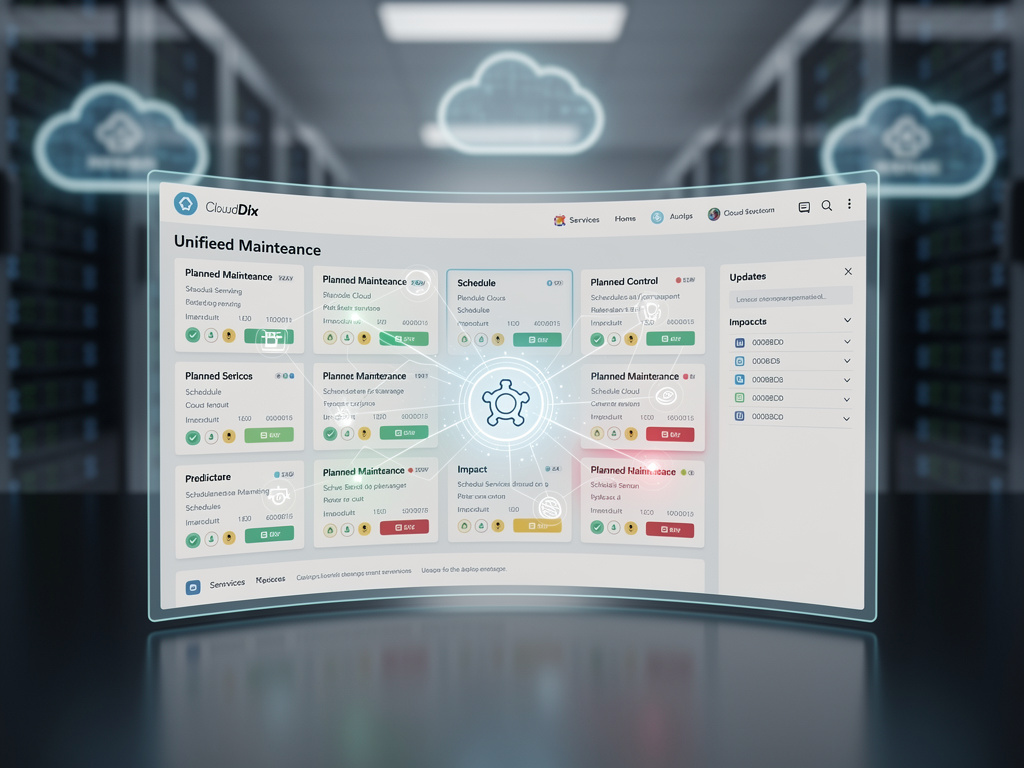
In a move that could reshape how enterprises handle cloud infrastructure downtime, Google Cloud has introduced Unified Maintenance, a centralized system designed to consolidate and streamline planned maintenance activities across its vast array of services. The announcement represents more than just an operational upgrade—it signals a fundamental rethinking of how hyperscale cloud providers balance innovation velocity with customer stability requirements.
According to Google Cloud’s official blog, the new platform addresses a longstanding pain point for enterprise customers: the fragmented nature of maintenance notifications and scheduling across different Google Cloud services. Previously, customers received maintenance alerts through disparate channels, making it nearly impossible to develop a cohesive strategy for managing infrastructure updates across their entire cloud footprint. The Unified Maintenance system consolidates these notifications into a single pane of glass, providing visibility into upcoming maintenance events across Compute Engine, Google Kubernetes Engine, Cloud SQL, and other core services.
The timing of this announcement reflects broader industry pressures. As organizations increasingly rely on cloud infrastructure for mission-critical workloads, unplanned disruptions—even brief ones—can cascade into significant business impacts. A 2023 survey by the Uptime Institute found that 60% of outages cost companies more than $100,000, with some exceeding $1 million in damages. While Google’s Unified Maintenance focuses on planned events rather than unexpected failures, the underlying message is clear: predictability and control have become paramount concerns for enterprise cloud customers.
Centralization as Competitive Advantage in the Cloud Wars
Google Cloud’s strategic emphasis on maintenance management comes as the company seeks to differentiate itself in an intensely competitive market dominated by Amazon Web Services and Microsoft Azure. While Google Cloud holds approximately 11% of the global cloud infrastructure market according to recent Synergy Research Group data, compared to AWS’s 32% and Azure’s 23%, the company has consistently positioned itself as the provider of choice for enterprises seeking operational sophistication and engineering excellence.
The Unified Maintenance platform exemplifies this positioning. Rather than simply notifying customers about upcoming maintenance windows, the system provides granular control over scheduling, allowing organizations to align cloud maintenance with their own operational rhythms. Customers can view maintenance events weeks in advance, reschedule certain types of maintenance within defined parameters, and coordinate updates across multiple projects and regions. This level of control represents a significant departure from the traditional cloud provider model, where maintenance schedules were largely dictated by the provider with limited customer input.
Industry analysts suggest this approach could pressure competitors to enhance their own maintenance management capabilities. “Google is betting that operational maturity matters to enterprises,” noted one infrastructure analyst who spoke on background. “They’re saying, ‘We understand you’re running complex, globally distributed systems, and we’re giving you the tools to manage them like the sophisticated operation you are.’ That’s a compelling message for CIOs who’ve been burned by surprise maintenance windows.”
Technical Architecture Reveals Deeper Integration Strategy
Beneath the user-facing features, Unified Maintenance represents a significant technical undertaking that required Google to fundamentally restructure how it coordinates maintenance activities across its infrastructure. The system integrates with Google Cloud’s Resource Manager, allowing maintenance schedules to respect organizational hierarchies and policy constraints. This integration means that maintenance windows can be automatically aligned with business unit requirements, regulatory constraints, and operational policies without requiring manual intervention for each event.
The platform also introduces what Google calls “maintenance policies”—reusable templates that define acceptable maintenance windows, notification preferences, and escalation procedures. These policies can be applied across multiple resources, projects, or even entire organizations, dramatically reducing the administrative overhead associated with managing maintenance at scale. For large enterprises operating thousands of cloud resources across dozens of projects, this capability alone could save hundreds of hours of operational effort annually.
Perhaps most significantly, Unified Maintenance provides APIs that allow customers to integrate maintenance data into their own operational systems. This opens possibilities for sophisticated automation scenarios: triggering pre-maintenance health checks, automatically failing over to redundant systems, or coordinating cloud maintenance with on-premises infrastructure updates. The API-first approach reflects Google’s recognition that enterprise customers increasingly operate hybrid and multi-cloud environments where cloud provider tools must interoperate with broader IT management platforms.
Implications for Site Reliability Engineering Practices
The introduction of Unified Maintenance has particular significance for Site Reliability Engineering (SRE) teams, who bear primary responsibility for maintaining system availability while accommodating necessary infrastructure updates. Google pioneered the SRE discipline, and the company’s internal practices have long influenced how organizations approach operational excellence. Unified Maintenance can be viewed as Google codifying some of its internal SRE practices into a customer-facing product.
One key principle embedded in the platform is the concept of “maintenance budgets”—allocations of acceptable maintenance time that can be tracked and managed similarly to error budgets in SRE practice. By providing visibility into upcoming maintenance windows and their potential impact, the system allows SRE teams to make informed decisions about when to accept maintenance and when to request rescheduling based on business priorities and current system health. This transforms maintenance from an externally imposed constraint into a manageable variable within the broader reliability equation.
The platform’s notification system also reflects SRE best practices around incident communication. Rather than generic alerts, Unified Maintenance provides detailed information about what specific resources will be affected, what type of maintenance will occur, and what customer impact to expect. This level of detail enables SRE teams to conduct accurate impact assessments and develop appropriate mitigation strategies, whether that means scheduling additional on-call coverage, pre-positioning failover capacity, or communicating proactively with affected business stakeholders.
Regulatory Compliance and Audit Considerations
For enterprises operating in regulated industries, the audit trail and documentation capabilities of Unified Maintenance address critical compliance requirements. Financial services firms, healthcare organizations, and government agencies often must demonstrate that infrastructure changes—including provider-initiated maintenance—follow documented change management processes and receive appropriate approvals. The centralized nature of Unified Maintenance creates a single source of truth for maintenance activities, complete with timestamps, affected resources, and approval workflows.
The system’s ability to enforce maintenance policies also helps organizations demonstrate compliance with internal governance requirements. For example, a financial services firm might establish a policy prohibiting maintenance during market hours for trading systems, or a healthcare provider might restrict maintenance windows for systems subject to HIPAA requirements. Unified Maintenance can automatically enforce these policies, preventing maintenance from being scheduled during prohibited times and creating documentation that auditors can review.
This compliance-focused functionality reflects Google Cloud’s broader push into regulated industries, where operational controls and auditability often matter as much as technical capabilities. By building compliance considerations directly into infrastructure management tools, Google is reducing the friction that has historically slowed cloud adoption in heavily regulated sectors.
The Economics of Downtime and Maintenance Management
The business case for sophisticated maintenance management extends beyond operational convenience. Unplanned downtime costs enterprises an average of $5,600 per minute according to Gartner research, but even planned maintenance can carry significant costs when it disrupts business operations or requires expensive mitigation measures like running redundant capacity during maintenance windows. By providing better visibility and control over maintenance schedules, Unified Maintenance enables organizations to optimize these costs.
Consider a global e-commerce platform operating across multiple regions. Without centralized maintenance visibility, the platform might need to maintain excess capacity in all regions at all times to guard against unexpected maintenance events. With Unified Maintenance, the operations team can see maintenance schedules weeks in advance and strategically shift traffic between regions, minimizing the excess capacity required. Over the course of a year, this optimization could translate to substantial cost savings on cloud infrastructure spending.
The platform also reduces the hidden costs associated with maintenance coordination. In organizations running hundreds or thousands of cloud resources, tracking maintenance notifications, coordinating schedules, and ensuring appropriate stakeholders are informed can consume significant staff time. By automating these processes and providing a centralized interface, Unified Maintenance allows operations teams to focus on higher-value activities rather than maintenance logistics.
Multi-Cloud Complexity and the Path Forward
While Unified Maintenance represents a significant advancement for Google Cloud customers, it also highlights a growing challenge in multi-cloud environments. As enterprises increasingly distribute workloads across multiple cloud providers for resilience, cost optimization, or regulatory reasons, they face the complexity of managing maintenance across fundamentally different platforms with different tools, APIs, and philosophies. A company running workloads on Google Cloud, AWS, and Azure must now navigate three separate maintenance management systems, each with its own capabilities and limitations.
This fragmentation has created opportunities for third-party vendors offering unified cloud management platforms that abstract away provider-specific differences. Companies like CloudHealth, Flexera, and others have built businesses around providing single interfaces for managing multi-cloud environments. Google’s Unified Maintenance, while powerful within its ecosystem, may inadvertently strengthen the value proposition for these cross-cloud management tools by highlighting the operational complexity that arises from provider-specific approaches.
Looking ahead, the question becomes whether cloud providers will move toward standardization in areas like maintenance management, potentially through industry consortia or open standards, or whether differentiation will continue to drive provider-specific approaches. Google’s investment in Unified Maintenance suggests the company views operational tooling as a competitive differentiator rather than a commodity to be standardized. This philosophy may drive continued innovation in cloud management capabilities, but it also ensures that multi-cloud complexity will remain a persistent challenge for enterprise operations teams.
Measuring Success and Customer Adoption
The ultimate test of Unified Maintenance will be customer adoption and measurable improvements in operational outcomes. Google has not disclosed specific adoption metrics or customer case studies at this early stage, but the company will likely be tracking several key indicators: the percentage of eligible customers actively using the platform, the volume of maintenance events being rescheduled through the system, and customer-reported improvements in maintenance-related incidents or disruptions.
Early feedback from the Google Cloud customer community suggests cautious optimism. Enterprise customers appreciate the increased visibility and control, though some have noted that the platform’s capabilities vary by service—not all Google Cloud products support all Unified Maintenance features yet. This gradual rollout is typical for Google Cloud’s approach to new platform capabilities, but it means customers will need to understand which services support which features as they develop their maintenance management strategies.
The broader industry will be watching to see whether Unified Maintenance translates into tangible reliability improvements for Google Cloud customers. If organizations can demonstrate reduced maintenance-related incidents, improved change success rates, or lower operational costs, it could validate Google’s approach and potentially influence how other cloud providers think about maintenance management. Conversely, if adoption remains limited or customers struggle to realize value from the platform, it may indicate that the operational challenges in cloud maintenance management run deeper than tooling alone can address, requiring more fundamental changes to how cloud providers approach infrastructure updates and customer communication.


 WebProNews is an iEntry Publication