
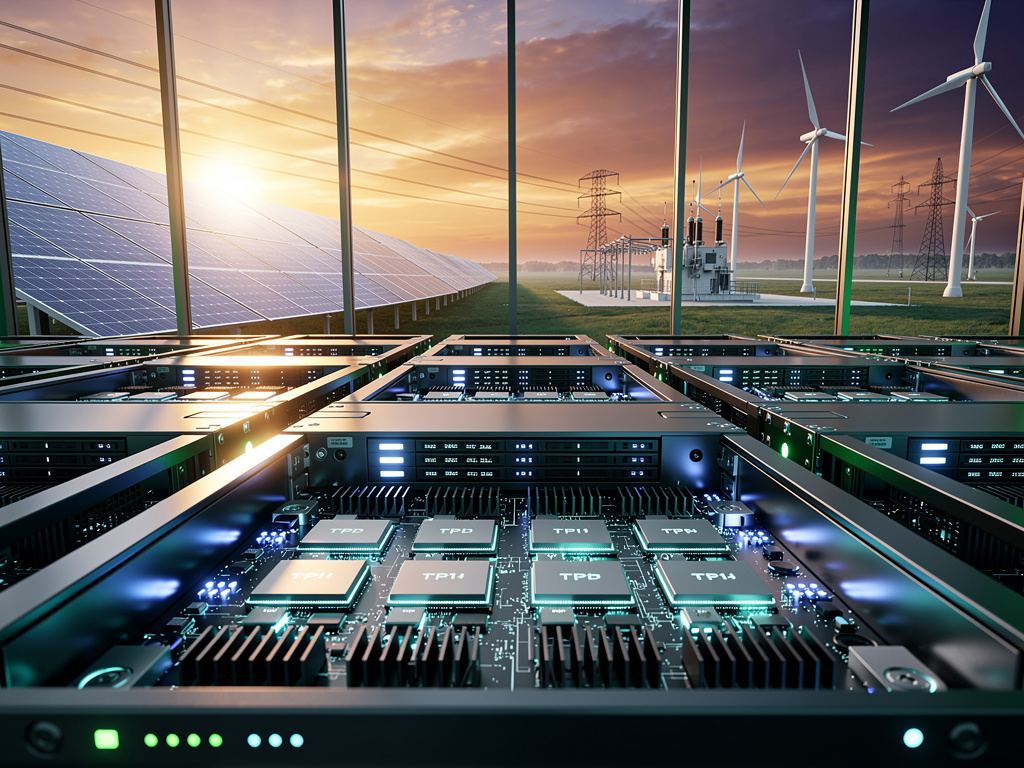
Google’s Silent Decade: Forging AI Dominance Through Chips and Power Plays
In the high-stakes world of artificial intelligence, where tech giants vie for supremacy, Google Cloud has emerged as a formidable player not through flashy announcements but through a meticulously crafted long-term strategy. At the recent Fortune Brainstorm AI conference, Google Cloud CEO Thomas Kurian pulled back the curtain on the company’s decade-long investment in custom silicon and its proactive approach to the mounting energy demands of AI. This revelation comes at a time when the industry grapples with skyrocketing power consumption, positioning Google as a prescient leader in an arena where compute resources are becoming as precious as oil once was.
Kurian’s insights, detailed in a Fortune article, highlight how Google began developing its Tensor Processing Units (TPUs) as early as 2014, well before the generative AI hype took hold. These specialized chips, designed specifically for machine learning workloads, have given Google a significant edge over competitors reliant on third-party hardware like Nvidia’s GPUs. By controlling the entire stack—from chip design to cloud distribution—Google has minimized dependencies and costs, allowing it to scale AI operations more efficiently.
This silicon strategy isn’t just about hardware; it’s a foundational element of Google’s broader AI ecosystem. As Kurian explained, the company’s early focus on TPUs enabled it to build a robust infrastructure that supports everything from training massive models to deploying them in real-world applications. This vertical integration has proven crucial as AI demands have exploded, with enterprises increasingly turning to Google Cloud for its reliable, high-performance computing capabilities.
The Genesis of Google’s AI Arsenal
Delving deeper into the timeline, Google’s TPU journey began in an era when AI was still a niche pursuit within tech circles. By 2015, the first TPU was deployed internally, accelerating tasks like image recognition in Google Photos and language translation. This internal proving ground allowed Google to refine the technology iteratively, leading to successive generations that have kept pace with AI’s rapid evolution. Today, the latest TPUs are integral to Google Cloud’s offerings, powering services like Vertex AI and BigQuery ML.
The strategic foresight extends beyond chips. Kurian emphasized that energy availability has become the “most problematic thing” in scaling AI, a sentiment echoed across the industry. Google recognized this bottleneck early, investing in data center efficiencies and renewable energy sources to mitigate the power crunch. This approach contrasts with rivals who are now scrambling to secure energy supplies amid global shortages.
Recent acquisitions underscore this commitment. For instance, Alphabet’s $4.75 billion purchase of Intersect Power, a major solar energy provider, aims to bolster the energy infrastructure for its data centers. As reported in Investopedia, this move is part of a broader effort to ensure sustainable power for AI’s voracious appetite, potentially giving Google a competitive moat in an energy-constrained environment.
Energy as the Ultimate AI Gatekeeper
The energy challenge in AI is multifaceted, involving not just consumption but also grid stability and environmental impact. Data centers, the backbone of cloud computing, now account for a significant portion of global electricity use, with AI workloads pushing that figure higher. Google Cloud’s strategy addresses this by optimizing chip designs for energy efficiency—TPUs are engineered to deliver more computations per watt than general-purpose GPUs, reducing overall power draw.
Kurian outlined a three-part plan at the Brainstorm conference: advancing silicon innovation, enhancing data center efficiency, and securing reliable energy sources. This holistic approach is detailed in another Fortune piece, where he discusses how Google is rethinking data center locations and cooling systems to minimize energy waste. By colocating facilities near renewable sources, Google aims to lower its carbon footprint while ensuring uninterrupted operations.
Industry insiders note that this energy focus is reshaping competitive dynamics. Posts on X from technology analysts highlight how control over power resources is becoming a key differentiator. For example, discussions emphasize that while silicon scarcity once dominated headlines, the real constraint now lies in electricity supply, with companies like Google securing long-term deals to lock in megawatts.
Silicon Sovereignty in a Competitive Arena
Google’s custom chip development isn’t isolated; it’s part of a trend where hyperscalers are increasingly designing their own hardware to tailor performance and cut costs. Broadcom, a key partner in TPU co-development, reportedly generates over $1 billion quarterly from this collaboration, as noted in various X threads analyzing AI chip economics. This partnership exemplifies how Google’s strategy creates ripple effects, benefiting suppliers while strengthening its own position.
Comparing to peers, Amazon’s AWS has its Trainium chips, and Microsoft its Maia accelerators, but Google’s head start with TPUs—now in their sixth generation—provides a maturity advantage. Kurian pointed out that this long game allows Google to offer cost-effective AI solutions, attracting enterprises wary of escalating cloud bills. In fact, Google Cloud’s revenue surged to $15 billion in Q3 2025, growing 34% year-over-year, rivaling YouTube as Alphabet’s second-largest revenue driver.
Moreover, Google’s AI agents are poised to transform business operations, as forecasted in the Google Cloud 2026 AI Agent Trends Report. This report predicts that 2026 will see AI agents reshaping workflows, built on the foundation of efficient silicon and abundant energy.
Global Expansion Amid Power Pressures
The push for AI infrastructure is going global, with significant investments in emerging markets. A recent New York Times article details how tech giants, including Google, are pouring billions into data centers in India to tap into the country’s vast data needs. This expansion is driven by AI’s growth but complicated by local energy grids struggling to keep up.
In response, Google is innovating in energy management, exploring nuclear options and advanced battery storage to provide stable power. X posts from energy experts underscore the “gigga cycle” of AI-driven electricity demand, warning that without breakthroughs, progress could stall. Google’s acquisition of Intersect Power directly addresses this, providing solar farms that can scale with AI needs.
Internally, Google’s research breakthroughs in 2025, as outlined in their year-in-review blog, include advancements in efficient AI models that require less compute, further alleviating energy strains. These innovations position Google not just as a cloud provider but as a leader in sustainable AI development.
Strategic Implications for the Tech Ecosystem
For industry insiders, Google’s approach offers lessons in foresight and integration. By owning the silicon stack, Google reduces vulnerabilities to supply chain disruptions, a risk that has plagued GPU-dependent firms. X analyses point out that this “compute sovereignty” is akin to controlling oil in the industrial age, with energy as the new currency.
Kurian’s revelations also highlight the irrational exuberance in some AI investments, as noted in posts quoting Alphabet CEO Sundar Pichai. Yet, the underlying economy of compute and power remains durable, driving productivity gains across sectors.
As AI evolves, Google’s decade-long bet could redefine market leadership. Competitors must now match not only in innovation but in securing the physical resources that power it all.
Navigating Future Bottlenecks
Looking ahead, the energy battle is intensifying, with U.S. electricity prices up 35% since 2022 due to AI demands. Google Cloud’s proactive stance, including partnerships for nuclear and gas alternatives, positions it to weather this storm. A TechCrunch article reflects on 2025 as the year data centers became central to tech narratives, underscoring the shift.
In silicon terms, Google’s collaboration with Broadcom continues to yield dividends, enabling rapid iterations on TPU designs. This agility is crucial as AI models grow more complex, demanding ever-greater efficiency.
Ultimately, Google’s strategy exemplifies how anticipating constraints—be they silicon shortages or energy scarcities—can turn potential obstacles into advantages. For enterprises and investors, this deep dive reveals a playbook for thriving in AI’s next phase, where power and chips dictate the winners.
Lessons from a Decade of Preparation
Reflecting on Kurian’s conference remarks, it’s clear Google’s journey began when AI was unfashionable, allowing it to build without the spotlight’s pressure. This quiet accumulation of expertise has paid off, with TPUs now a cornerstone of its cloud dominance.
Energy strategies, meanwhile, are evolving rapidly. Acquisitions like Intersect Power signal a trend toward vertical integration in power, mirroring the silicon approach. X sentiment suggests this could spark a wave of similar deals, reshaping the tech-energy nexus.
As 2026 approaches, Google’s integrated model—combining custom hardware, efficient data centers, and secured energy—sets a benchmark. Industry observers will watch closely as this long game unfolds, potentially cementing Google’s lead in the AI era.


 WebProNews is an iEntry Publication