
Google’s next major Android release includes a feature so granular, so seemingly minor, that most people will never adjust it manually. But its existence tells a story about where voice-based AI is headed — and how the companies building these systems are quietly wrestling with problems that don’t make for splashy keynote demos.
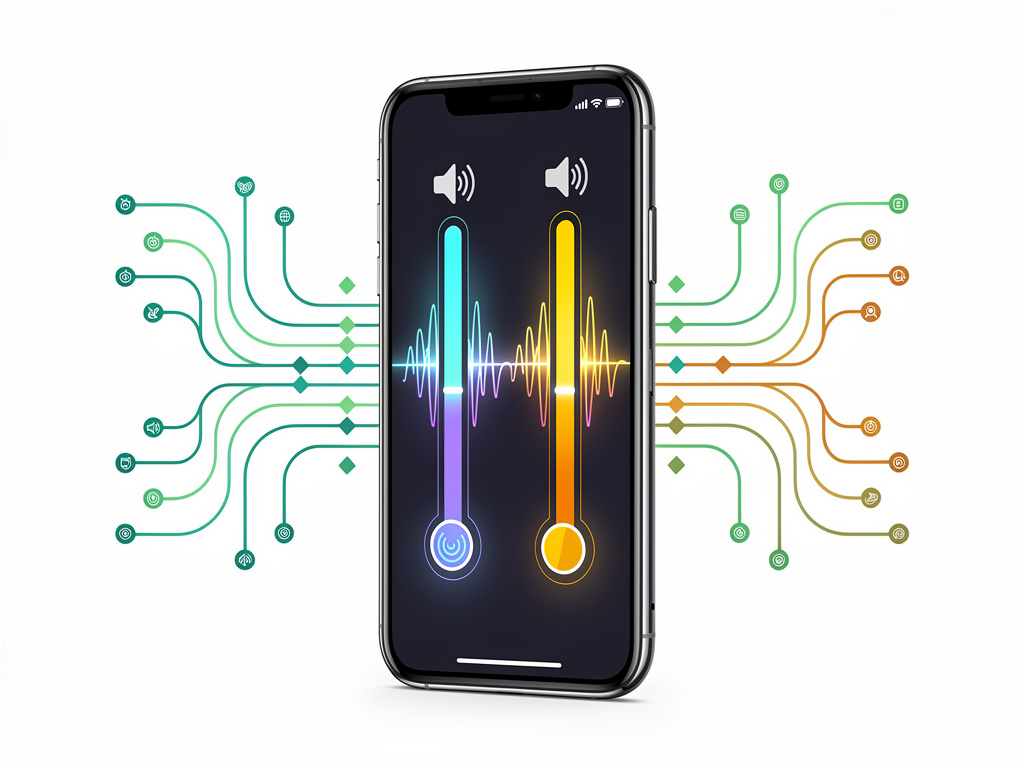
Android 17, previewed at Google I/O 2025, introduces an independent volume control specifically for AI assistant responses. Not the ringer. Not media playback. Not notification sounds. A dedicated slider just for the voice that talks back to you when you ask Gemini a question or issue a command.
The reason is straightforward. As Digital Trends reported, current Android versions tie assistant voice output to the media volume channel. So if you’ve been blasting music or watching a video at high volume, then switch to asking your AI assistant a question, the response comes through at that same elevated level. The result: your phone essentially shouts at you. It’s a jarring experience, and one that has persisted for years without a fix.
Now there’s a fix. But the implications extend well beyond comfort.
Why a Simple Slider Signals a Structural Shift in How We’ll Use Phones
Google didn’t build this feature because a few users complained about loud Gemini responses. The company built it because the entire trajectory of Android is moving toward persistent, conversational AI interaction — and the existing audio architecture wasn’t designed for that.
Think about how smartphone audio has worked for over a decade. You have discrete volume channels: one for ringtones and alerts, one for media, one for calls, sometimes one for alarms. These categories made sense when phones were primarily consumption devices. You watched videos. You listened to music. You received calls. Each activity was distinct, with clear start and stop points.
AI assistants break that model. A Gemini interaction might happen in the middle of media playback, or right after it, or simultaneously with navigation audio. The assistant’s voice doesn’t fit neatly into any legacy category. It’s not a notification. It’s not a phone call. It’s not media. It’s a new type of audio output that needs its own treatment.
According to Digital Trends, the new setting lives under Settings > Sound & vibration > Assistant volume. It can be adjusted independently at any time, meaning users won’t have to scramble to lower the volume before asking a question after watching a YouTube video at full blast. The feature was spotted in the Android 17 developer preview and is expected to ship with the final release later this year.
This matters more than it appears to.
Google has been aggressively integrating Gemini across Android — into the phone dialer, into messaging, into the home screen overlay, into search. The company’s vision, articulated repeatedly at I/O 2025, is that Gemini should be an ambient presence on the device, available in any context. If that’s the goal, then audio management becomes a fundamental design problem, not an afterthought. You can’t have an always-available conversational AI that periodically screams at users because it inherited the volume level from a Spotify session.
And it’s not just Google thinking this way. Apple has been deepening Siri’s integration with on-device processing. Samsung has embedded its own AI features across its One UI interface. The entire industry is converging on a model where voice AI isn’t a discrete app you open — it’s a layer that sits on top of everything else. That layer needs its own audio infrastructure.
The Broader Audio Problem No One Has Solved
The volume control issue is actually a symptom of a larger, more complex challenge: how do you manage audio output when multiple intelligent agents might be producing speech simultaneously or in rapid succession?
Consider a near-future scenario that Google itself is building toward. You’re in a car. Android Auto is providing navigation instructions. You ask Gemini to summarize your emails. A notification comes in that Gemini reads aloud. Your music is playing in the background. That’s four distinct audio streams, at least two of which involve AI-generated speech, all competing for your attention through the same speakers.
Current audio management systems handle this poorly. Most rely on simple ducking — temporarily lowering one audio stream when another needs attention — or outright pausing. But as AI-generated speech becomes more frequent and more contextual, these blunt instruments won’t suffice. The dedicated assistant volume in Android 17 is a first step toward disaggregating audio streams by function rather than by legacy category.
There’s also the question of voice characteristics. Google has been experimenting with different Gemini voice options, varying pitch, speed, and tone. A volume control is the crudest form of audio customization. Expect future Android releases to offer more granular tuning — perhaps adjusting assistant speech rate based on context, or automatically lowering volume when the phone detects it’s being held close to the ear rather than sitting on a desk across the room.
Samsung has explored similar territory with its Galaxy AI features, and Apple’s latest iOS updates have introduced adaptive audio modes for AirPods that adjust based on environmental noise. But none of these solutions have tackled the specific problem of AI voice output as its own first-class audio category. Google appears to be the first to do so at the operating system level.
Some context on timing. Android 17 is expected to reach stable release in the second half of 2025, likely around August or September based on Google’s recent cadence. The developer preview that surfaced this feature is available now for Pixel devices, giving app developers time to adapt. Third-party apps that produce voice output — think ChatGPT’s mobile app, or Amazon’s Alexa integration — could potentially hook into this new volume channel, though Google hasn’t confirmed whether the API will be open to non-Gemini assistants.
That last point is significant. If Google restricts the dedicated assistant volume channel to Gemini, it becomes a competitive advantage — a smoother experience that only Google’s AI gets to offer. If it opens the API, it becomes a platform feature that benefits the entire Android app market. Google’s history suggests it will eventually open access, but the initial rollout may favor its own services.
What This Tells Us About the State of AI Integration
Step back from the technical specifics for a moment. The fact that Google is shipping a dedicated volume slider for AI responses tells us something about the maturity — or lack thereof — of AI integration in consumer devices.
We’re in a phase where the AI capabilities are advancing rapidly, but the infrastructure around them hasn’t caught up. Large language models can now carry on sophisticated conversations, summarize documents, write code, and interpret images. But the basic plumbing of how their output reaches users — through speakers, screens, and haptic feedback — is still largely borrowed from pre-AI frameworks.
It’s a bit like the early days of smartphones, when mobile websites were just desktop sites crammed onto smaller screens. The content was there, but the delivery mechanism hadn’t been rethought for the new form factor. Similarly, AI voice output is currently being crammed into audio channels designed for music and phone calls. Android 17’s assistant volume control is the beginning of a rethink.
And the rethink will have to go much further. Beyond volume, there are questions of priority (which AI output takes precedence when multiple requests overlap?), persistence (should assistant audio resume after an interruption?), and privacy (how loud should an AI response be in a public setting, and should the phone automatically adjust?). These are design problems that didn’t exist five years ago.
For now, though, the fix is simple and practical. If you’ve ever flinched because Google Assistant blasted a weather report at the same volume you were using for a movie trailer two minutes earlier, Android 17 has your back. It’s a small feature. But small features that address real, persistent annoyances tend to matter more than flashy ones that look good in demos.
Google hasn’t said much about this feature in its official Android 17 communications, which have focused more heavily on Gemini’s expanded capabilities and the new “Expressive Captions” system that was a highlight at I/O. But developers who’ve been poking through the preview builds flagged the assistant volume control quickly — a sign that this was a pain point the technical community felt acutely.
So here’s the bottom line. A volume slider isn’t exciting. It won’t trend on social media or generate breathless headlines. But it represents something important: the moment Google acknowledged that AI voice interaction is a fundamentally different category of phone use, one that requires its own infrastructure. Every major platform will follow. The question is how fast, and how far they’ll take it.


 WebProNews is an iEntry Publication