
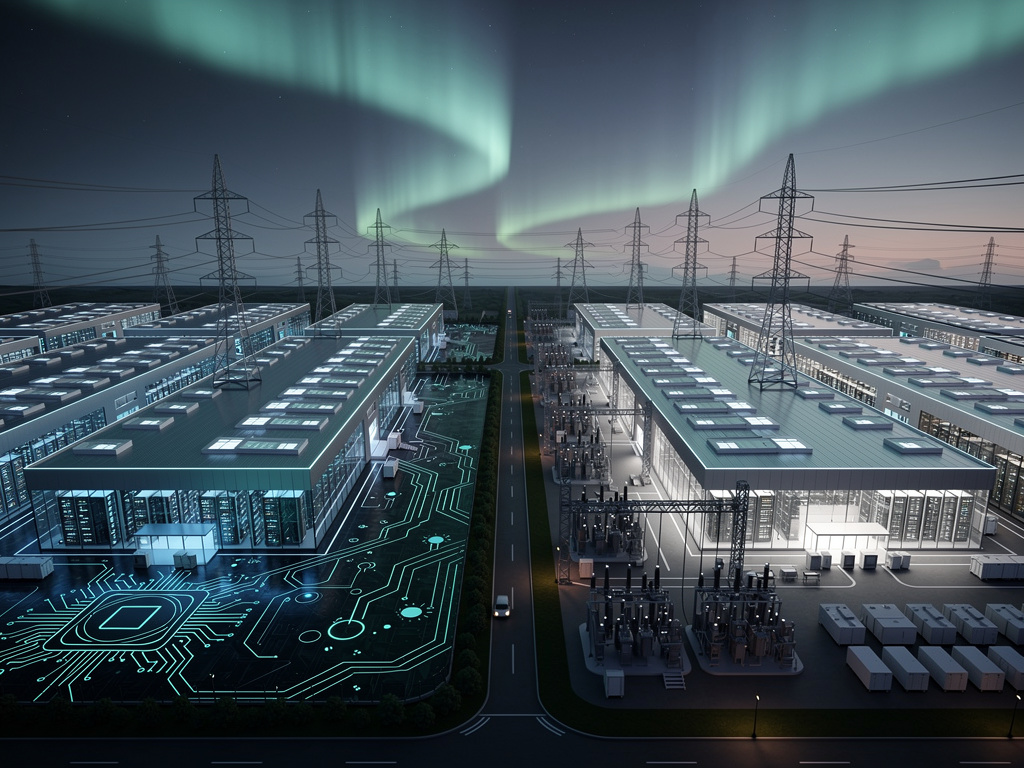
Google and Meta have each committed substantial sums toward building and upgrading data centers as the artificial intelligence sector demands ever greater amounts of computing power. According to a recent report from Business Insider, the two companies plan to spend tens of billions of dollars through 2026 on facilities that will house the specialized chips and infrastructure needed to train and run large language models and other advanced AI systems. This spending reflects a broader industry pattern in which technology giants race to secure physical capacity before shortages become more acute.
The scale of these investments stands out even by the standards of major cloud providers. Google parent Alphabet has signaled plans to direct more than 50 billion dollars into data center construction and related equipment over the next two years alone. Meta, which operates one of the largest social media advertising platforms in the world, has outlined capital expenditures that could exceed 40 billion dollars annually in the same period, with a sizable share earmarked for AI infrastructure. These figures represent a sharp increase from previous years and illustrate how quickly the economics of computing have shifted.
At the heart of the surge lies the training process for modern AI models. Training a single frontier system can require thousands of graphics processing units running continuously for months. Each new generation of models tends to be larger and more data hungry than the last, which multiplies the need for both raw chip count and supporting electrical and cooling systems. Data centers built even five years ago often lack the power density required for racks packed with the latest accelerators from Nvidia, AMD, or custom designs developed internally by hyperscalers. As a result, companies find themselves either retrofitting existing sites or breaking ground on entirely new campuses.
Power availability has emerged as one of the most significant constraints. Many regions that traditionally hosted large technology facilities now face strained electrical grids. Utilities in Northern Virginia, a longtime hub for data centers, have reported waiting lists that stretch for years. Similar bottlenecks appear in parts of the Midwest, the Pacific Northwest, and several European countries. In response, Google and Meta have begun exploring alternative locations, including sites near renewable energy projects or in states that offer faster permitting and cheaper land. Some projects incorporate on-site generation, such as natural gas turbines or fuel cells, to bypass transmission bottlenecks.
The financial commitments also extend beyond bricks and mortar. Both organizations are investing heavily in networking gear that can move data at speeds measured in terabits per second across thousands of chips working in parallel. Liquid cooling systems, once considered exotic, have become standard for the highest performance deployments because air cooling can no longer dissipate the heat generated by dense GPU clusters. Backup power infrastructure, including massive battery arrays, must be sized to keep these systems online during grid outages without interrupting training runs that can cost millions of dollars in electricity and lost productivity if interrupted.
Analysts following the sector point to several reasons why Google and Meta feel pressure to act aggressively. First, the competitive dynamic between large technology firms has intensified. OpenAI, Anthropic, xAI, and other startups have raised substantial funding and partnered with cloud providers to secure capacity. If Google or Meta fall behind in raw compute resources, they risk ceding ground in the race to release more capable consumer and enterprise products. Second, both companies see AI as central to their long-term revenue strategies. Google intends to embed advanced models throughout its search, advertising, and cloud offerings. Meta aims to enhance its family of social apps with generative features while also exploring new hardware products such as AI-powered wearables.
The Business Insider article highlights how these investments are already influencing public market perceptions. Shares of companies that supply components for data centers, including chipmakers, cooling specialists, and electrical equipment manufacturers, have reacted positively to the spending announcements. Conversely, investors have scrutinized the near-term impact on profit margins, since building at this pace requires large upfront payments before the new capacity can generate revenue. Google and Meta have both indicated that they expect returns to materialize over several years as AI-driven products reach wider audiences.
Construction timelines add another layer of complexity. A typical hyperscale data center project can take 18 to 36 months from site selection to full operation. That means decisions made today will determine available capacity in 2027 and beyond, precisely when many experts predict the next leap in model scale. Companies therefore rely on demand forecasting models that attempt to anticipate how quickly research teams will consume additional compute. These forecasts have proven difficult to calibrate. In recent quarters, several cloud providers reported that AI workloads grew faster than projected, leading to capacity shortages that forced them to ration access for certain customers.
Energy consumption represents both a cost and a reputational factor. Training a single large model can consume electricity equivalent to the annual usage of hundreds of households. When multiplied across dozens of models in development and millions of inference queries served to users, the aggregate draw becomes substantial. Google has long maintained a goal of operating on carbon-free energy around the clock, and it reports progress through power purchase agreements with solar and wind farms. Meta has made similar pledges. Still, the rapid expansion of AI infrastructure tests the pace at which renewable generation can be added to the grid. In regions where clean power remains limited, the companies must balance growth ambitions against sustainability targets.
Workforce considerations also shape these projects. Building and operating facilities at this scale requires electricians, mechanical engineers, network technicians, and site operators with specialized skills. Competition for talent has driven up compensation in certain markets. At the same time, automation plays an increasing role. Modern data centers use sophisticated software to allocate workloads, predict failures, and optimize cooling in real time. The combination of physical scale and intelligent management creates facilities that look more like factories than the server rooms of previous decades.
The ripple effects extend to real estate and local economies. Small towns that secure a major data center project often see an immediate boost in construction jobs followed by ongoing employment for operations staff. Tax revenue can help fund schools and infrastructure, although some communities worry about increased strain on water resources used for cooling or the visual impact of large industrial buildings. Google and Meta have responded by publishing community benefit plans that include local hiring commitments and infrastructure upgrades. In certain cases they have also funded workforce training programs to develop the technical skills needed to maintain the facilities.
Looking further ahead, industry observers anticipate continued growth in data center spending through the remainder of the decade. Some forecasts suggest that global investment in AI-related infrastructure could surpass 200 billion dollars annually by 2028. Much of that total will come from the same group of hyperscalers that dominate cloud computing today, but new entrants may appear as well. Sovereign wealth funds, telecommunications carriers, and even traditional utilities have begun exploring partnerships that would allow them to participate in the buildout.
For Google and Meta specifically, the current wave of spending forms part of a larger capital allocation strategy. Both maintain healthy balance sheets and generate strong cash flow from their core businesses. This financial strength gives them flexibility to fund multi-year infrastructure programs even during periods of economic uncertainty. At the same time, they face pressure from shareholders to demonstrate that the investments will produce attractive returns rather than simply fueling an arms race with limited payoff.
One open question concerns the efficiency gains that future hardware and software might deliver. If newer chip architectures dramatically improve performance per watt, the need for additional physical capacity could moderate. Similarly, algorithmic advances that reduce the amount of compute required to reach a given level of model capability would stretch existing resources further. Yet history suggests that demand for intelligence tends to absorb efficiency improvements quickly. Each time hardware becomes more powerful, researchers find ways to train larger models or serve more users, maintaining pressure on infrastructure.
The two companies have also begun to share select facilities and explore joint procurement in limited areas to control costs. While they remain fierce competitors in search, social media, and cloud services, the sheer expense of building at the necessary scale has prompted occasional collaboration on non-sensitive projects. Whether such arrangements expand remains to be seen, but they illustrate the unusual economics at play when foundational computing resources become a strategic bottleneck.
In practical terms, the data centers now rising across multiple continents will power the next generation of AI applications that consumers and businesses encounter. From more accurate language translation to personalized creative tools and sophisticated scientific simulations, these systems depend on the underlying hardware fabric that Google, Meta, and their peers are assembling. The pace of construction therefore directly influences how quickly those capabilities reach the market.
As the projects advance, attention will turn to operational performance. Companies will measure success not only by how many megawatts they bring online but also by how efficiently those resources are used and how quickly new models can be trained on them. Metrics such as training time, energy per token, and utilization rates will guide future investment decisions. In this respect the current spending spree represents both a bet on continued AI progress and a test of each organization’s ability to manage complex industrial projects at unprecedented scale.
The coming years will reveal whether the massive capital commitments translate into sustained competitive advantage. For now, the visible activity, from cleared construction sites to long-term power contracts, demonstrates the seriousness with which Google and Meta approach the opportunity and the challenge of supplying compute for artificial intelligence. Their actions, as outlined in the Business Insider coverage, provide a window into the infrastructure foundations being laid for the next phase of technological development.


 WebProNews is an iEntry Publication