
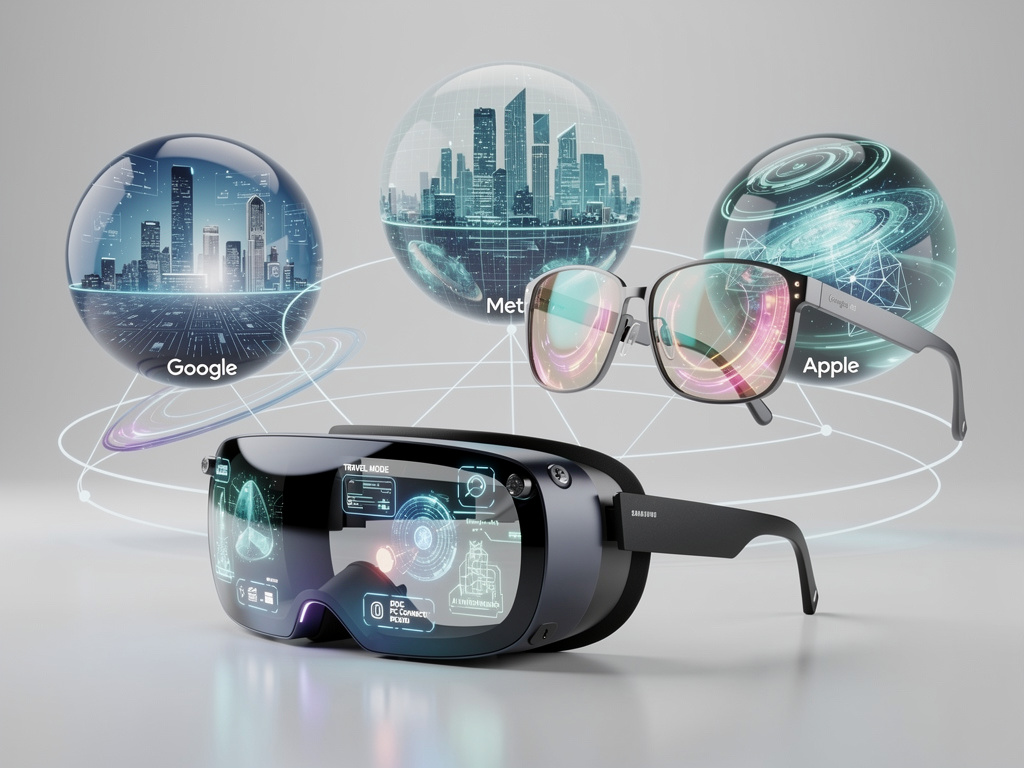
Google’s XR Revolution: From Galaxy Headsets to AI-Powered Eyewear
In a move that signals Google’s deepening commitment to extended reality technologies, the company recently unveiled a slate of updates for its Android XR platform, including enhancements to the Samsung Galaxy XR headset and tantalizing previews of upcoming smart glasses. This development comes at a pivotal moment when competitors like Meta and Apple are pushing boundaries in mixed reality, but Google’s approach leverages its strengths in artificial intelligence and ecosystem integration. Drawing from announcements made during “The Android Show: XR Edition,” the updates promise to make XR devices more intuitive and versatile for everyday use.
The Galaxy XR, Samsung’s flagship headset running on Android XR, is receiving several key features that address user pain points and expand functionality. One standout addition is Travel Mode, which optimizes the device for use in moving vehicles like airplanes or cars, reducing motion sickness by stabilizing virtual content relative to the user’s environment. This builds on Google’s ongoing investments in spatial computing, aiming to make XR practical beyond stationary setups. Additionally, PC Connect allows seamless integration with Windows computers, enabling users to mirror and interact with desktop applications in a virtual space— a feature that could transform productivity workflows.
Another intriguing update is the introduction of Likeness, a system for creating photorealistic avatars for video calls within the XR environment. This uses advanced AI to generate digital representations that mimic users’ facial expressions and movements in real-time, potentially making remote interactions more engaging. These enhancements are rolling out starting today, as confirmed in coverage from Android Central, which highlighted how these tools position Galaxy XR as a more mature product in the competitive headset market.
Unveiling Project Aura and the Rise of Smart Glasses
Beyond the immediate updates, Google teased Project Aura, a new line of AI-powered smart glasses developed in partnership with Samsung, Warby Parker, and Gentle Monster. These glasses represent a three-tier strategy for XR eyewear, starting with screen-free audio versions in 2026, followed by monocular display models, and culminating in binocular smart glasses by 2027. This phased rollout allows Google to iterate on hardware while building consumer familiarity with wearable AI.
The screen-free glasses, akin to advanced earbuds with visual capabilities, will integrate Gemini AI for contextual assistance without obstructing the user’s view. Imagine getting real-time translations or navigation cues whispered in your ear, powered by multimodal AI that processes audio, visual, and environmental data. As detailed in a hands-on report from Tom’s Guide, early demos showcased how these devices could rival offerings from Meta and Apple by emphasizing subtlety and integration over bulky hardware.
Google’s strategy here is informed by past lessons from Google Glass, which faced privacy concerns and limited adoption. By partnering with fashion brands like Warby Parker and Gentle Monster, the company aims to make these glasses stylish and socially acceptable, blending technology with everyday eyewear. Posts on X from industry insiders, such as those discussing the excitement around Android XR’s Gemini integration, reflect growing enthusiasm for this approachable form factor.
Gemini’s Role in Powering the XR Ecosystem
At the heart of these advancements is Gemini, Google’s AI model, which is being embedded deeply into Android XR. This integration enables natural interactions via voice, hand gestures, and eye tracking, making devices feel like extensions of the user rather than gadgets. For instance, in the Galaxy XR, Gemini facilitates an immersive workspace where users can manipulate virtual screens with intuitive controls, as noted in a blog post from Google’s official blog.
Looking ahead, Google plans to introduce Spatialization, a feature set to arrive next year that automatically converts 2D content into 3D spatial experiences. This could revolutionize how apps are experienced, turning standard Android applications into interactive, volumetric elements. According to insights from ZDNET, this capability underscores Google’s ambition to create a unified platform where developers can build once and deploy across headsets and glasses seamlessly.
The ecosystem play is crucial. Android XR isn’t just an OS; it’s a framework that brings together AI, AR, and VR investments. Partnerships with Qualcomm for hardware support and Samsung for device manufacturing ensure robust performance, with specs like 4K per-eye MicroOLED displays and 16GB RAM in the Galaxy XR setting new benchmarks, as leaked details on X have suggested.
Competitive Pressures and Market Implications
Google’s push into XR comes amid intensifying rivalry. Meta’s Quest series dominates consumer VR, while Apple’s Vision Pro targets premium mixed reality. Yet, Google’s open Android approach could democratize access, much like it did for smartphones. By supporting a range of form factors—from full headsets to lightweight glasses—Google is positioning itself to capture diverse use cases, from gaming to professional collaboration.
Industry analysts point to the potential disruption. A report from CNET described hands-on experiences with Project Aura, noting its chunky yet promising design that runs Android apps natively. This versatility could appeal to developers wary of closed ecosystems, fostering innovation in areas like education and healthcare.
Moreover, the emphasis on AI-driven features like real-time content spatialization addresses a key limitation in current XR devices: the lack of seamless integration with existing digital workflows. As Android Central reported, these updates make Galaxy XR more than a novelty, turning it into a tool for immersive productivity.
Technical Underpinnings and Development Roadmap
Diving deeper into the tech, Android XR builds on Qualcomm’s Snapdragon XR2+ Gen 2 chipset, capable of 4.3K resolution per eye at 90fps, ensuring low-latency passthrough for mixed reality applications. Eye-tracking cameras, similar to those in Apple’s Vision Pro, enable precise gaze-based interactions, enhancing user immersion.
Google’s roadmap, as outlined in announcements covered by Android Authority, includes developer tools to encourage app creation. The shift away from platforms like Snapdragon Spaces toward Android XR signals a consolidated effort, with internal directives at Google prioritizing this unified system.
Sentiment on X from tech enthusiasts and developers highlights optimism, with discussions around the March 2025 consumer release of initial headsets and subsequent glasses launches. This timeline allows for iterative improvements, potentially incorporating user feedback to refine AI features like Gemini’s contextual awareness.
Privacy, Adoption Challenges, and Future Horizons
No discussion of XR advancements would be complete without addressing privacy. Google’s history with data collection raises questions, but the company has emphasized on-device processing for Gemini to minimize cloud dependencies. Still, as Tom’s Guide explored in its preview, balancing AI utility with user trust will be key to widespread adoption.
Adoption hurdles remain, including cost and comfort. The Galaxy XR’s specs suggest a premium price point, but Google’s tiered glasses strategy could lower entry barriers. Partnerships with eyewear brands aim to make devices fashionable, countering the “tech bro” stigma of early wearables.
Looking forward, the integration of XR with other Google services—like Maps for augmented navigation or Workspace for virtual meetings—could create compelling reasons for uptake. ZDNET’s hands-on piece praised the ambition, noting how multimodal AI in glasses could redefine personal computing.
Industry Reactions and Strategic Positioning
Reactions from the tech community have been largely positive. On X, posts from figures like Google executives and AR/VR specialists underscore the “main character energy” Gemini brings to XR, as one viral thread put it. This buzz aligns with Google’s narrative of making devices “truly intelligent,” as stated in their announcements.
Strategically, this positions Google to challenge incumbents by leveraging its AI prowess. Unlike Meta’s social focus or Apple’s hardware-centric approach, Google’s ecosystem emphasizes seamless intelligence across devices, from wrists to eyes.
In the broader context, these developments could accelerate XR’s maturation, moving it from niche entertainment to essential tools. As CNET’s demo insights revealed, the combination of hardware from Xreal and software upgrades promises a cohesive experience that might finally make smart glasses mainstream.
Ecosystem Expansion and Developer Opportunities
Google is also expanding developer access, with kits for Android XR slated for release soon. This openness contrasts with more gated systems, potentially attracting a wave of innovative apps. Features like PC Connect extend beyond Galaxy Books to broader Windows compatibility, broadening appeal.
The three-part glasses launch—audio, monocular, binocular—offers a progression path, allowing users to start simple and upgrade. Android Authority detailed how this roadmap could outpace competitors by offering varied price points and capabilities.
Ultimately, Google’s XR initiatives reflect a calculated bet on AI-infused wearables as the next computing frontier. With updates rolling out and hardware on the horizon, the stage is set for a transformative shift in how we interact with technology.


 WebProNews is an iEntry Publication