
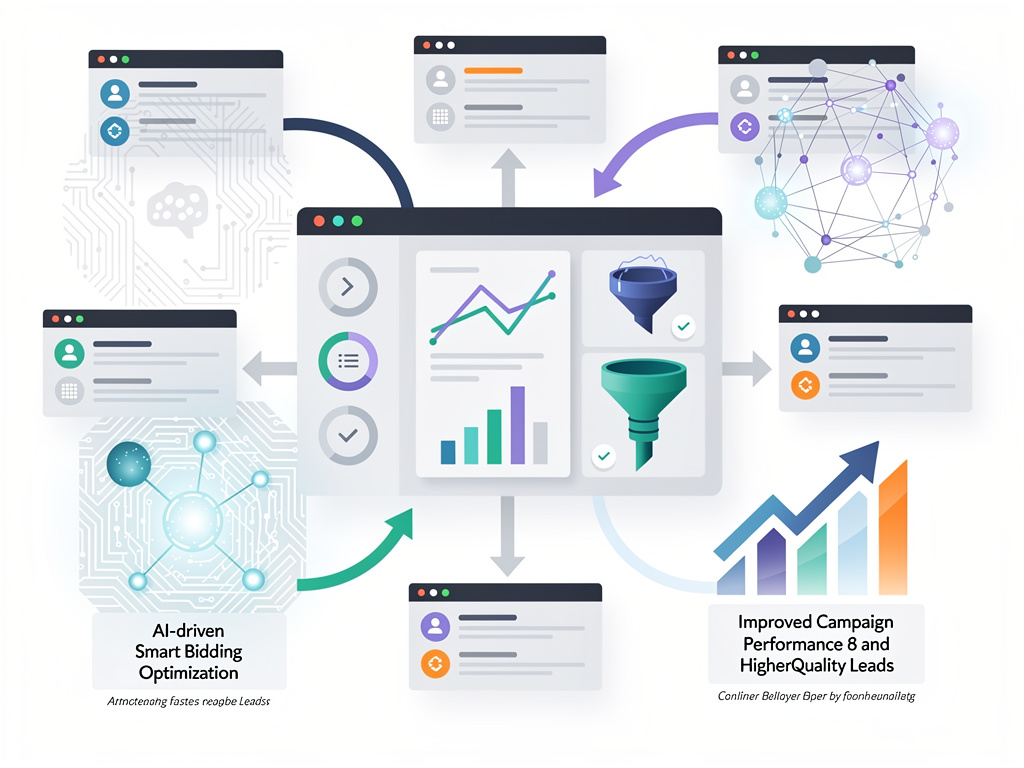
Google just handed advertisers a new tool that sits inside the platform they already use every day. The search giant rolled out a built-in lead management dashboard in Google Ads. It targets those running lead form extensions and other Google-hosted forms. No more exporting spreadsheets or juggling third-party CRMs for basic lead tracking.
The move comes at a time when performance marketers demand tighter connections between ad spend and actual revenue. Search Engine Land first reported the launch on May 29, 2026. Author Anu Adegbola laid out the core shift. Google now gives advertisers one place to track, qualify, and manage leads while sending quality signals straight back to its Smart Bidding algorithms.
Consider the old workflow. A lead lands in a Google form. Someone downloads a CSV. Sales logs it elsewhere. Marketing loses visibility. The new dashboard ends much of that disconnect. It displays totals for leads generated, new arrivals, those marked qualified, lost opportunities, and where each sits in the sales funnel. Advertisers click into individual records to see contact details and current stage. Simple. Direct.
Yet the real power lies beneath the surface. Advertisers can now feed lead-quality data back into Google Ads. Smart Bidding learns which form submissions turn into customers instead of just counting volume. Higher-quality signals should improve bid decisions over time. Google has spent years pushing AI into every corner of its ad system. This update gives the machines better training material from the very first step of the customer journey.
Benefits stack up quickly. Centralized management reduces the chance that hot leads slip through cracks. Teams spot qualified prospects faster. Sales cycles shorten. Marketing and sales finally share one view without leaving the Google Ads interface. The dashboard functions like a lightweight CRM. Not a full replacement for Salesforce, but enough to bridge the gap for many mid-market and smaller operations.
Reporting gains matter too. New views show funnel performance, qualified lead counts, and conversion rates from form to close. Advertisers gain clearer sight into what happens after the click. For years, the industry has complained that Google excels at generating leads but offers limited insight once those leads leave the platform. This dashboard narrows that gap.
Industry reaction appeared fast on X. PPC professionals shared the Search Engine Land article within hours of publication. Many noted the timing. Google continues to expand AI features across its advertising products. Direct access to lead quality data fits the pattern. One post highlighted how the tool lets advertisers “feed higher-quality conversion signals” back into bidding. The feedback loop tightens.
Google itself has not issued a detailed public statement beyond the product update. Yet the implications feel clear. Performance marketing now sits at the intersection of creative, bidding strategy, and post-click operations. Tools that blur those lines deliver competitive advantage. Advertisers who adopt early may see their cost per qualified lead drop as the AI models train on better data.
Of course, limitations exist. The dashboard focuses on Google-hosted form leads. Leads from website conversions or offline channels still require separate handling. Integration with full-scale CRMs remains necessary for complex sales processes. And while the reporting adds visibility, it does not automatically solve attribution challenges that have dogged digital advertising for decades.
Still. For businesses heavily invested in Google Lead Form Ads, this change simplifies operations. No extra logins. No custom Zapier setups for basic tracking. Just open Google Ads, click the new section, and start qualifying. The interface appears designed for speed. Marketing teams can hand off warm leads to sales with context already attached.
Look at the broader context. Google Marketing Live events in recent years have emphasized measurement and AI. This dashboard aligns with that message. It turns lead data into fuel for smarter bidding. Better bids should produce stronger ROI. Stronger ROI justifies larger budgets. The cycle reinforces itself.
Competitors have offered lead management features for some time. Microsoft Advertising, Meta, and various martech platforms provide similar capabilities. Google’s version benefits from native integration and direct access to its machine learning models. That combination could prove hard to beat for search-heavy advertisers.
Early adopters will test how much the quality signals actually move the needle on bidding performance. Results likely vary by vertical, lead volume, and sales cycle length. B2B companies with long consideration periods may see slower impact than high-velocity ecommerce or service businesses. Time will tell.
One thing feels certain. The pressure on marketers to prove revenue impact has never been higher. Tools that connect ad platforms more tightly to sales outcomes address that pressure head on. Google’s new dashboard represents another step in that direction. Advertisers who master it could gain an edge in both efficiency and effectiveness.
And the timing coincides with other Google Ads updates. Recent announcements around measurement, AI agents, and policy reviews show the company pushing multiple fronts at once. The lead management feature stands out because it directly tackles a pain point many practitioners voice in forums and at conferences. Leads get generated. Then they disappear into black holes. Not anymore. At least not the ones born inside Google’s own forms.
Smart teams will combine this dashboard with their existing CRM integrations and offline conversion uploads. The full picture still requires work. But the foundation just got stronger. For performance marketing professionals watching every dollar of ad spend, that matters.


 WebProNews is an iEntry Publication