
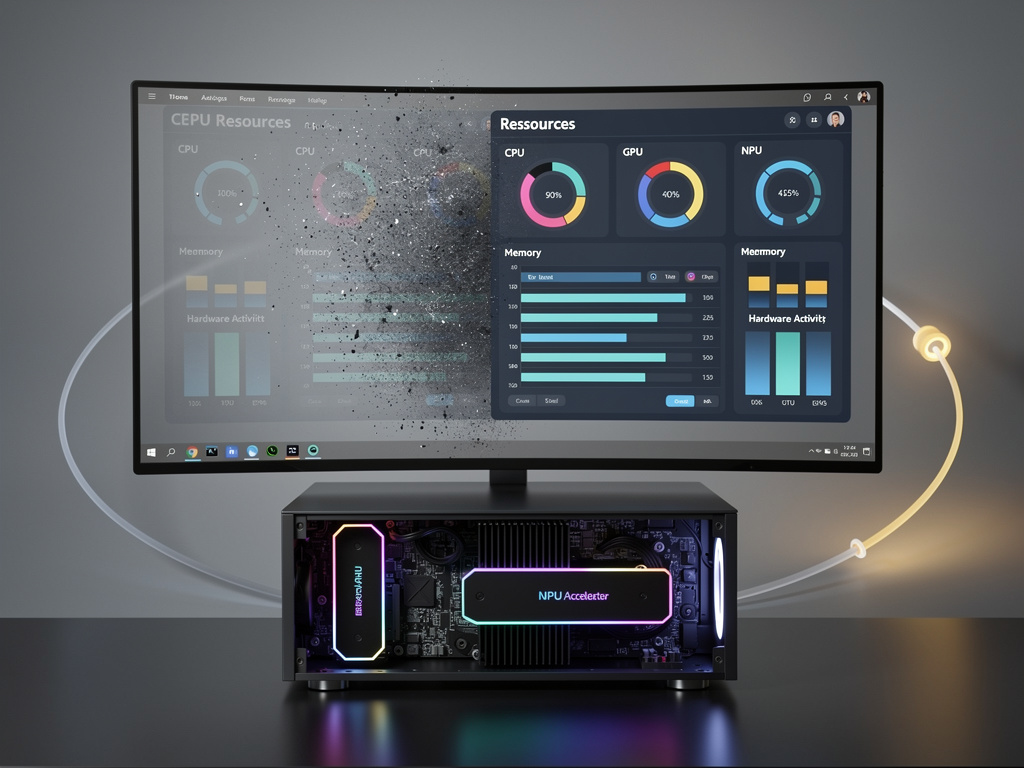
GNOME developers are preparing a significant change to one of the desktop’s longest-standing utilities. The System Monitor application, familiar to users for years, stands on the brink of replacement. Its successor? A newer tool simply called Resources.
Phoronix first reported the shift yesterday (https://www.phoronix.com/news/GNOME-51-Resources-Possible). The move could land with GNOME 51. That release targets September 16, according to plans outlined months ago.
Why now? System Monitor has grown stale. Resources brings fresh capabilities. It tracks NPU usage. It monitors GPU power draw. Device support runs wider. And many simply prefer its cleaner interface. Short. Direct. Modern.
The transition didn’t happen overnight. Ubuntu already made the switch. It set Resources as default some time back. Now the broader GNOME project follows. A GNOME Incubator work item opened three months ago. Activity picked up lately. The project’s original GitHub repository reached end of life. It moved to official GNOME GitLab hosting under the Incubator umbrella.
But. Progress accelerated. A GNOME Shell merge request landed just yesterday. It swaps the desktop file reference. No longer org.gnome.SystemMonitor. Now org.gnome.Resources. One more box checked. If the remaining tasks complete in time, the change sticks for GNOME 51. Miss the window and it slips to GNOME 52 next spring.
Resources itself lives up to its name. Written in Rust. Built with GTK 4 and libadwaita. The app focuses on clarity over exhaustive detail. It displays CPU. Memory. GPUs. NPUs. Network interfaces. Storage devices. Users can view running graphical applications and plain processes. They can terminate them too.
Its official page on the GNOME apps site puts it plainly. “Resources allows you to check the utilization of your system resources and control your running processes and apps.” (https://apps.gnome.org/Resources/). Designed to feel at home in the current GNOME environment. No bloat. No attempt to expose every hardware register.
GNOME 51 carries the codename “A Coruña.” The name honors the Spanish city set to host GUADEC 2026 in July. Release milestones already sit on the calendar. Alpha arrives June 27. Beta follows August 1. Release candidate on August 29. Then the final cut in mid-September. (https://9to5linux.com/gnome-51-a-coruna-desktop-environment-scheduled-for-september-16th-2026).
This replacement fits a larger pattern. GNOME has pushed performance and efficiency in recent cycles. GNOME 50 brought noticeable speed gains. Smoother animations. Lower memory footprint in some tests. Resources continues that focus. It avoids the stagnation that crept into the older monitor.
Yet not everyone will cheer. Long-time users built muscle memory around System Monitor. Its graphs. Its process tree. Its integration. The new app must win them over. Early signs look positive. Ubuntu’s adoption drew little backlash. Many in the community already installed Resources alongside or instead.
And the technical foundation matters. Rust code promises better safety and concurrency for a monitoring tool that polls hardware frequently. Libadwaita ensures visual consistency with other GNOME 40-series and later applications. The result feels less like a utility bolted on. More like a native citizen of the desktop.
So the stakes extend beyond one app. GNOME competes with KDE Plasma. With lighter environments. With Windows and macOS. Every improvement in default tools counts. A more capable, better-looking system monitor signals attention to fundamentals. It tells administrators, developers, and everyday users that resource awareness remains a priority.
Developers still need to finish integration steps. Update documentation. Handle any edge cases in the shell handover. Test across distributions. The September target looks ambitious but achievable given recent velocity.
If it ships, GNOME 51 users will boot to a desktop where Resources sits in the menu. System Monitor may linger in repositories for a transition period. Or vanish entirely from the core set. Either way, the direction looks set.
The change also highlights how GNOME incubates new software. Promising applications start outside. They mature. They gather users. Then, when ready, they graduate to official status. Resources followed that exact path. From independent Rust project to GNOME-hosted incubator to potential core component in one release cycle. Impressive pace.
Watch the merge request. Track the incubator board. GNOME 51 could mark more than a version bump. It might retire an old staple and install a sharper replacement. For an environment often criticized for resource demands, the symbolism carries weight. Better tools to watch those demands. Better information for users who care.
September will tell. But the pieces already align. The old monitor’s days appear numbered. Resources stands ready.


 WebProNews is an iEntry Publication