
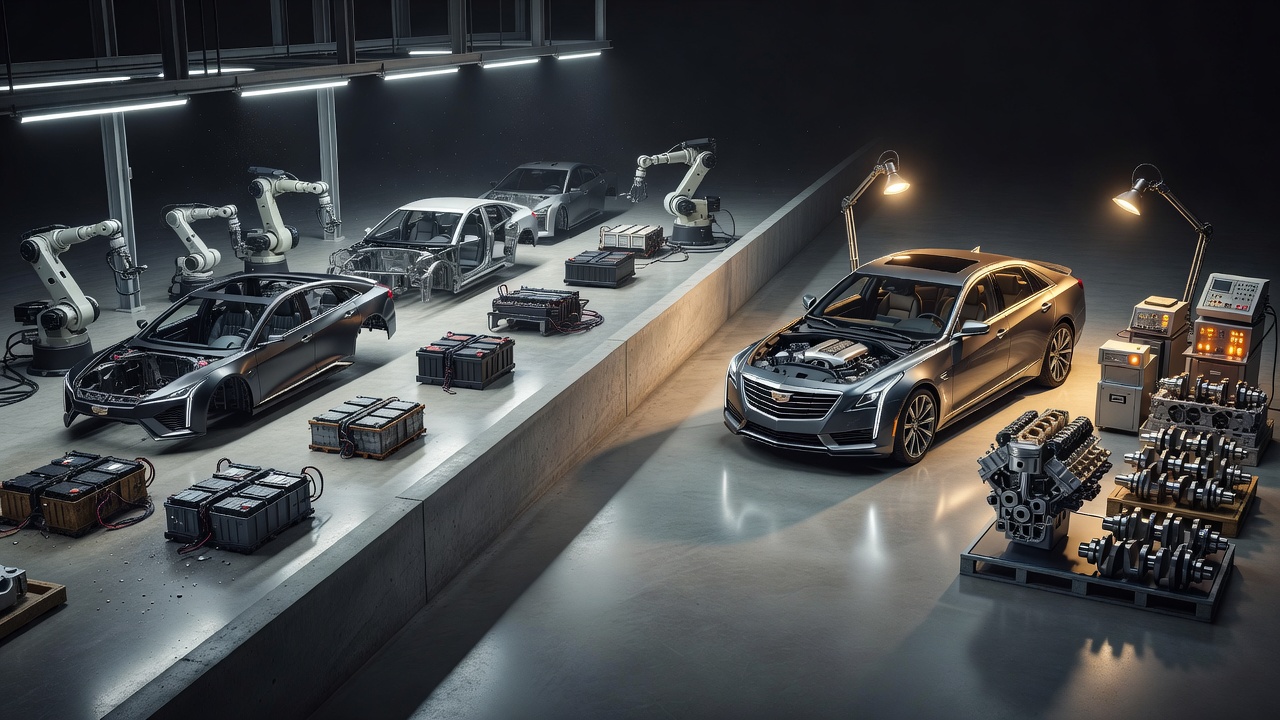
General Motors has taken a $10.9 billion hit to scale back its electric vehicle ambitions. The write-downs, revealed in the company’s latest earnings, signal a stark shift from the bold forecasts once championed by CEO Mary Barra.
Executives disclosed a $2.3 billion EV-related charge in the most recent quarter. That figure pushes the cumulative cost of the reset to $10.9 billion since the second half of 2025. The charges stem from reduced battery production capacity and retooling factories to build more gasoline engines. But the worst may be nearly over, according to the automaker.
Barra’s vision looked very different in 2021. Back then she predicted GM would outsell Tesla in EVs by 2025. CNBC reported her confidence at the time. Reality proved harsher. GM moved just over 150,000 electric vehicles last year. Tesla delivered nearly 590,000.
The mismatch shows in dealership lots. In the second quarter GM shipped 31,000 fewer EVs to North American dealers than a year earlier. It sent 30,000 more gasoline-powered trucks and SUVs instead. Demand for battery-electric models cooled after the $7,500 federal tax credit expired in September. Legacy carmakers across the industry felt the pinch.
Ford recorded a $19.5 billion charge last December. Business Insider covered that reversal toward hybrids. Stellantis took a $26 billion hit in February. Volkswagen wrote off $3.5 billion in September. GM’s move fits a pattern. The era of unchecked EV expansion has given way to measured recalibration.
Cadillac sits at the center of this change. The luxury brand once positioned itself as America’s top-selling luxury EV maker. Now it prepares to launch a new generation of internal combustion engine vehicles starting next spring and continuing through 2028. “Starting next spring and continuing into 2028, we will begin launching the next generation of Cadillac ICE vehicles,” Barra said on the earnings call.
That statement marks a reversal. Cadillac’s Lyriq and Optiq had aimed to redefine American luxury with battery power. Production costs for those models had climbed higher than expected. Industry watchers had warned that premium EVs required pricing power the market refused to grant without tax incentives. GM responded by slowing output and preserving cash.
The decision carries risks. Rivals continue to pour resources into electrification. Tesla maintains pricing pressure with frequent updates and software advantages. Chinese manufacturers threaten to enter the U.S. market with lower-cost options if tariffs ease. Yet GM insists its gas-powered profit centers can fund a more sustainable EV ramp-up later.
Recent coverage adds context to the pressure. A July 2025 report from Reuters examined how softening U.S. EV sales forced multiple automakers to idle battery plants. Reuters detailed similar capacity reductions at plants supplying GM and others. Another piece in Automotive News this week highlighted dealer frustration with unsold EV inventory piling up. Automotive News reported that some Cadillac retailers now favor the brand’s upcoming ICE models to meet customer requests for range confidence.
Analysts have mixed views. Some praise the pragmatism. Others worry the retreat could erode GM’s technology edge. Battery development continues but at a slower pace. The company has already delayed several planned EV launches beyond 2027. Cadillac’s next pure-electric flagship may not arrive until 2028 or later.
GM’s stock rose more than 3 percent after the earnings release. Investors appeared relieved that the major cash costs of the reset appear largely complete. The company now projects improved profitability in its core truck and SUV segments through the end of the decade.
Still, the numbers tell a story of overreach. Billions spent on battery plants now sit partially idle. Supplier contracts have been renegotiated or canceled. Factory lines once destined for Ultium battery packs are being converted back to traditional powertrains. The $10.9 billion figure captures asset impairments, severance, and contract termination fees.
Barra has faced questions about the 2021 forecast. She maintains the long-term case for electrification remains intact. Consumer adoption simply moved slower than anticipated. Range anxiety, charging infrastructure gaps, and higher interest rates all played roles. The tax credit’s end removed a key subsidy at a vulnerable moment.
Industry data supports the caution. Electric vehicle market share in the U.S. stalled around 7 to 8 percent in recent months after climbing steadily earlier in the decade. Hybrid sales have surged as buyers seek efficiency without full commitment to battery power. Ford’s decision to emphasize hybrids over pure EVs in some segments reflects the same trend.
For Cadillac the pivot carries special weight. The brand had staked its revival on electric innovation. Showrooms featured dramatic Lyriq displays and promises of silent, instant torque. Now marketing materials quietly emphasize the upcoming gas-powered successors. Dealers report stronger interest in those future models than in current EV inventory.
One recent analysis from The Wall Street Journal explored how luxury buyers in particular have resisted high-priced EVs. The Wall Street Journal noted that affluent customers often prioritize proven reliability and rapid refueling over environmental signaling. Cadillac’s experience mirrors findings in that report.
GM executives declined to provide updated long-term EV volume targets. They pointed instead to flexibility. The company will match production to actual demand rather than chase arbitrary goals. That approach contrasts with the fixed timelines announced years ago.
Supply chain partners have felt the impact. Battery cell makers tied to GM’s Ultium platform saw orders reduced. Some have sought new contracts with other automakers. The write-downs include compensation for those changes.
Yet GM maintains its EV portfolio still leads among U.S. incumbents. Nine distinct electric nameplates give it breadth. The Chevrolet Equinox EV and Silverado EV continue to find buyers in fleet and commercial segments where total cost of ownership matters more than sticker price.
The coming months will test whether the reset succeeds. New gasoline Cadillac models must deliver profits to offset the billions already spent on electrification. At the same time the company cannot fall too far behind in battery technology or software capabilities. The balancing act defines the next phase of Barra’s tenure.
So far Wall Street gives the benefit of the doubt. The post-earnings share gain suggests confidence that management has faced reality. Whether that optimism holds depends on execution in showrooms and factories alike.
GM’s experience offers a case study for the entire industry. Ambition met market resistance. Massive investments required equally large adjustments. The $10.9 billion charge stands as a reminder that transitions rarely follow straight lines. Cadillac’s coming ICE revival may prove the pragmatic bridge that keeps the brand viable until conditions for broader EV acceptance improve.


 WebProNews is an iEntry Publication