
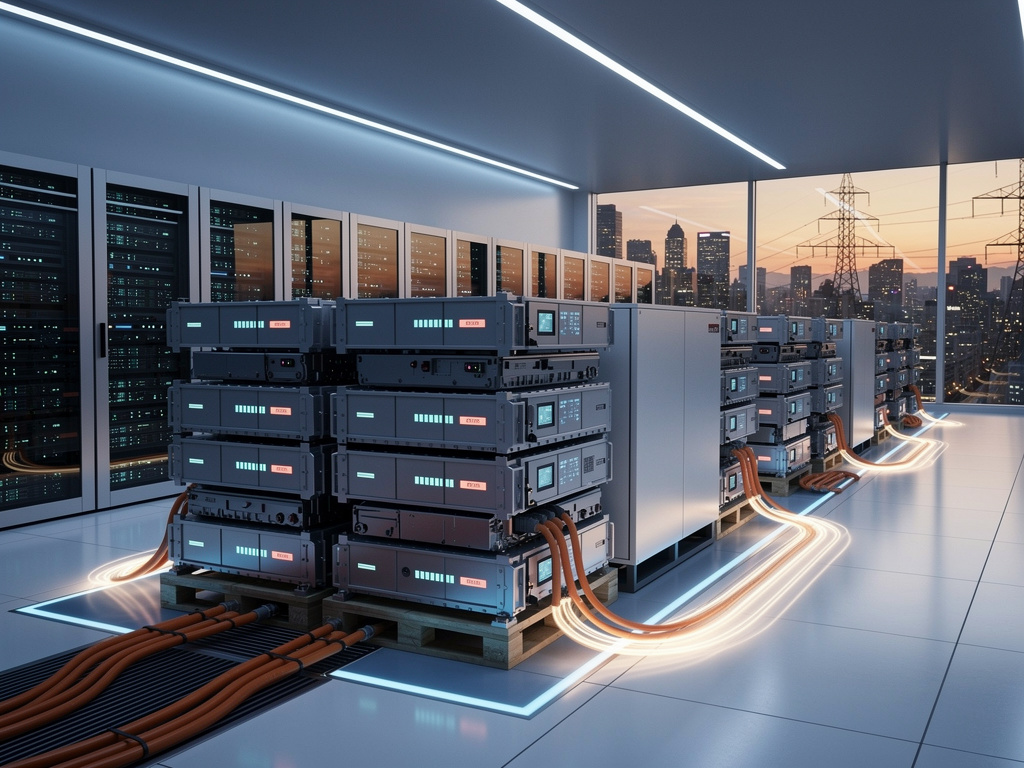
General Motors is preparing to transform its electric vehicle battery production into a major supplier of power for data centers and artificial intelligence operations starting as early as 2026. The automaker plans to redirect electricity originally intended for charging thousands of future EVs directly into the expanding needs of tech companies hungry for reliable energy sources. This strategic pivot reflects broader changes in how manufacturers view their role in the national power infrastructure as demand from computing facilities outpaces many traditional supply projections.
The announcement comes amid growing concern over electricity availability for new data centers that support AI training and inference workloads. Industry analysts project that data center power consumption could double or triple in some regions within the next five years, creating acute shortages in areas already strained by population growth and electrification efforts. GM has identified this gap as an opportunity to repurpose assets originally developed for its EV transition. According to reporting from Business Insider, the company intends to install massive battery storage systems at select manufacturing sites and connect them to the grid in ways that allow rapid discharge to meet peak demands from nearby computing facilities.
These battery installations differ from typical EV charging infrastructure. Instead of storing power for vehicle use, the systems would function as grid-scale buffers capable of delivering hundreds of megawatts on short notice. GM executives described the approach as treating battery packs as flexible energy resources that can shift between supporting vehicle production, stabilizing local grids, and serving high-value commercial customers. The financial returns from selling power to data center operators could exceed those available from simply manufacturing more electric cars, especially given current market saturation in some EV segments.
Power grid operators have welcomed the concept because battery storage addresses one of their most difficult challenges: matching instantaneous supply with fluctuating demand. Traditional power plants require hours to ramp up or down, while battery systems can respond in milliseconds. This capability becomes particularly valuable for data centers that operate continuously but may experience sharp spikes during large AI model training runs. By locating storage near these facilities, GM can reduce transmission losses and provide what amounts to a dedicated power reserve without requiring the construction of new generating plants.
The scale involved is substantial. A single large data center campus can require as much electricity as a medium-sized city. Multiple hyperscale facilities planned for the coming decade could collectively demand power equivalent to several nuclear reactors. GM’s existing battery manufacturing capacity, developed through joint ventures with suppliers like LG Energy Solution, gives the company a head start in producing the necessary storage cells. Rather than shipping all these cells to vehicle assembly plants, some production lines could be reconfigured to create stationary storage modules optimized for grid applications.
This adaptation represents a pragmatic response to market conditions. GM has invested billions in EV platforms, but consumer adoption rates have slowed in several key markets due to high prices, charging infrastructure gaps, and economic uncertainty. Meanwhile, technology companies continue to announce ambitious data center expansions with seemingly unlimited capital backing. By positioning its battery expertise as a solution for the AI boom, GM creates new revenue streams that can help offset the costs of its vehicle electrification efforts.
Engineering teams at GM are already modifying battery management systems to handle the different duty cycles required for grid support versus vehicle propulsion. Vehicle batteries typically experience gradual charge and discharge patterns based on driving habits, while grid batteries may need to cycle multiple times per day in response to market signals or sudden demand surges. Thermal management systems also require adjustment since stationary installations lack the airflow benefits of moving vehicles. These technical modifications, while complex, build upon the extensive research GM has conducted for its Ultium battery architecture.
Regional energy markets will likely determine where GM deploys these systems first. Areas with high concentrations of data centers, such as Northern Virginia, Texas, and parts of the Midwest, offer natural opportunities for co-location. The company may partner with utilities to identify optimal interconnection points and navigate regulatory approval processes that govern how storage assets participate in wholesale power markets. Some states have already established favorable policies for battery storage as a tool for reducing carbon emissions and improving grid reliability.
Critics have raised questions about whether diverting batteries from vehicles to data centers represents a setback for transportation electrification goals. Environmental advocates argue that every battery cell used for grid storage means one fewer cell available for zero-emission vehicles. GM maintains that its battery production capacity continues to expand and that serving data center demand actually accelerates overall battery manufacturing scale-up. The learning gained from grid applications can inform future vehicle battery designs, creating a positive feedback loop across both sectors.
The economic model for these projects depends on securing long-term contracts with creditworthy technology companies. Data center operators have shown willingness to pay premium rates for guaranteed power availability, especially in markets where grid constraints threaten to delay their expansion plans. GM could structure agreements that guarantee minimum power delivery while retaining the ability to sell excess capacity in energy and ancillary service markets. This combination of contracted revenue and market participation could generate attractive returns on the capital invested in storage systems.
Supply chain implications extend beyond GM itself. Battery component manufacturers, from cathode and anode producers to separator film companies, may see increased demand if grid storage becomes a major new market segment. This diversification could help stabilize the battery industry against the cyclical nature of automotive production. Mining operations for lithium, nickel, and other materials might also benefit from more predictable offtake agreements tied to data center power contracts rather than volatile vehicle sales.
Workforce development represents another consideration. GM’s battery plants currently employ thousands of workers focused on automotive quality standards. Adapting some production for grid storage may require different testing protocols and certification processes. The company will likely need to provide additional training to help employees understand the unique requirements of stationary energy storage systems. This transition could create opportunities for existing staff while attracting new talent with expertise in power systems engineering.
Integration with renewable energy sources adds another dimension to the strategy. Many data center operators have committed to running their facilities on carbon-free electricity. Battery storage pairs naturally with solar and wind generation by storing excess renewable power during peak production hours and releasing it when needed. GM’s systems could help balance these intermittent resources while providing the firm capacity that data centers require for uninterrupted operation. This alignment with corporate sustainability targets may make GM’s offerings particularly attractive to technology firms under pressure from investors and customers to reduce their carbon footprints.
Competitive dynamics in the energy storage market are intensifying. Traditional utilities, renewable developers, and specialized storage companies are all pursuing similar opportunities. GM brings unique advantages including decades of experience manufacturing high-volume battery systems, established relationships with automotive suppliers, and a global footprint that could support international data center projects. However, the company must demonstrate that its automotive-derived technology meets the reliability standards expected by data center operators who cannot tolerate outages.
Regulatory frameworks will play a decisive role in determining how quickly these projects can move forward. Federal energy policies continue to evolve, with various incentives available for storage deployment under the Inflation Reduction Act and related legislation. State public utility commissions must approve rate structures and interconnection procedures that make these projects financially viable. GM has assembled a team of policy experts to engage with regulators and help shape rules that recognize the value storage provides to modern power systems.
Looking ahead, the convergence of electric vehicles, battery technology, and data center energy needs may reshape how companies think about energy assets. What began as a component for sustainable transportation is evolving into a foundational element of digital infrastructure. GM’s willingness to adapt its battery strategy demonstrates the flexibility required to succeed in rapidly changing markets. As artificial intelligence capabilities expand and data centers proliferate, access to reliable power will remain a primary constraint. Companies that can deliver innovative solutions to this challenge stand to capture significant value while contributing to broader economic and technological progress.
The initiative also highlights the increasingly interconnected nature of transportation, energy, and computing sectors. Decisions made in GM’s boardroom about battery allocation can directly affect the pace of AI development at technology companies thousands of miles away. Similarly, the power requirements of large language models influence investment priorities across multiple industries. This cross-sector interdependence suggests that future business strategies will need to account for broader systemic impacts rather than focusing solely on traditional product categories.
GM continues to refine its implementation plans while engaging with potential customers and grid operators. The company has indicated that initial deployments could begin within the next two years, with capacity ramping up as battery production scales and contracts are finalized. Success in these early projects could lead to substantially larger initiatives that fundamentally alter the company’s role in the energy system. For an automaker historically focused on manufacturing vehicles, becoming a significant power provider represents a notable expansion of its business model that reflects changing realities in both transportation and technology markets.


 WebProNews is an iEntry Publication