
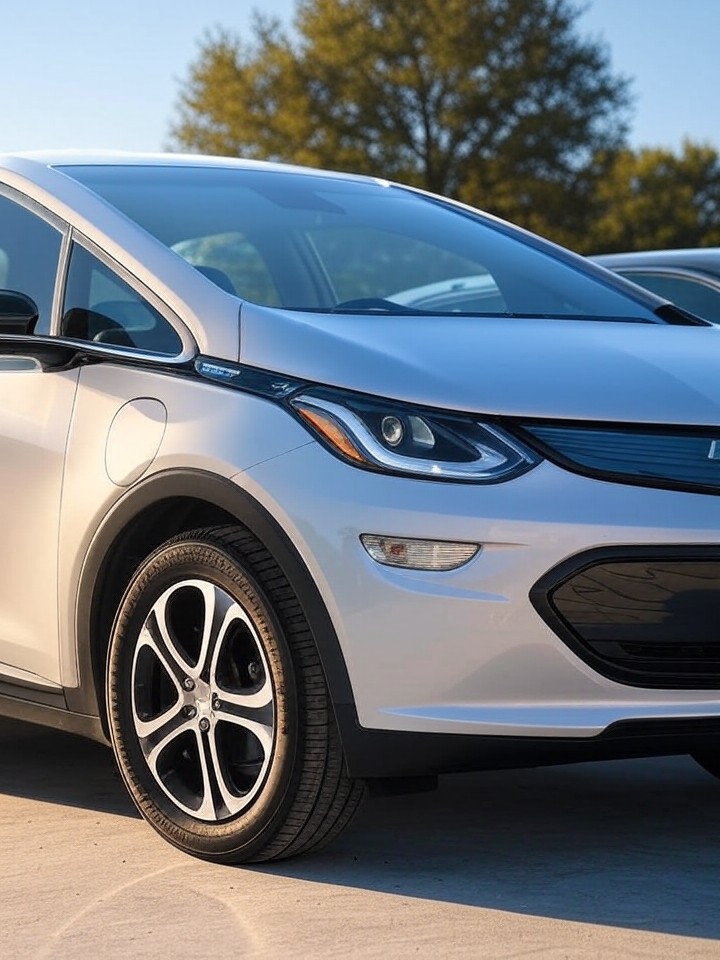
The Bolt’s Electrifying Encore: Revival, Range, and the Road Ahead for GM’s Budget EV
General Motors has once again thrust the Chevrolet Bolt into the spotlight, relaunching the compact electric vehicle after a brief hiatus that left many enthusiasts wondering if it was gone for good. The 2027 model, which began arriving at dealerships in early January 2026, promises to reclaim its title as America’s most affordable EV, starting at under $30,000. This comeback story is rooted in consumer demand and strategic pivots within GM’s electric lineup, but questions linger about its longevity in a fiercely competitive market.
The Bolt’s resurrection follows its retirement in 2023, a move that surprised many given its popularity as a budget-friendly option. GM cited the need to retool production lines and incorporate newer battery technologies. Now, with production ramping up at the Fairfax Assembly Plant in Kansas City, Kansas, the new Bolt boasts significant upgrades, including a lithium-iron-phosphate (LFP) battery pack that delivers an EPA-estimated 262 miles of range—surpassing initial projections of 255 miles. This improvement stems from refined engineering and efficiency tweaks, making it a direct competitor to rivals like the Nissan Leaf.
Drawing from recent insights, the vehicle’s fast-charging capability has been enhanced to 150 kW, allowing a 10% to 80% charge in about 26 minutes, a marked improvement over its predecessor. GM executives, including President Mark Reuss, have emphasized these features as key to appealing to cost-conscious buyers seeking practical electrification without breaking the bank. As reported in Ars Technica, the Bolt’s return is timely, yet its future hangs in the balance amid broader industry shifts.
Battery Breakthroughs and Production Realities
The adoption of LFP batteries represents a cost-saving measure for GM, as these cells are cheaper to produce and less prone to thermal issues compared to traditional nickel-manganese-cobalt chemistries. This shift not only lowers the vehicle’s base price to $29,995 for the Launch Edition (with an LT trim expected at $28,995 later), but also aligns with global trends toward more sustainable and economical battery solutions. Industry observers note that LFP’s durability could extend the Bolt’s appeal in fleet markets, where longevity matters.
Production details reveal GM’s commitment to efficiency. The Bolt is built on the Ultium platform, shared with higher-end models like the Cadillac Lyriq, allowing for economies of scale. However, supply chain constraints and fluctuating raw material costs could impact availability. Posts on X from automotive enthusiasts highlight excitement around the native North American Charging Standard (NACS) port, enabling seamless access to Tesla’s Supercharger network—a game-changer for road trips.
GM’s strategy here is multifaceted. By reviving the Bolt, the company aims to fill a gap in its portfolio left by the original model’s departure. According to GM News, the vehicle offers the most range in an EV under $30,000, positioning it as a bridge for mainstream adoption. Yet, insiders whisper about internal debates on whether this relaunch is a stopgap or a long-term play.
Market Pressures and Competitive Edges
In the broader arena of electric vehicles, the Bolt faces stiff competition from entrants like the Hyundai Kona Electric and the aforementioned Nissan Leaf, which recently edged out with slightly more range but at a higher price point. The Bolt’s 262-mile rating, confirmed by the EPA and detailed in GM Authority, gives it a slight advantage, boasting 210 horsepower and front-wheel drive for nimble urban handling.
Consumer sentiment, as gleaned from recent X discussions, is overwhelmingly positive, with users praising the bidirectional charging feature that allows vehicle-to-home (V2H) power transfer up to 9.6 kW—useful during outages. This functionality, combined with an updated interior featuring enhanced tech and safety systems, elevates the Bolt beyond its budget roots. Chevrolet’s official site, as per Chevrolet, touts comfort-focused amenities like a redesigned cabin and advanced driver aids.
However, market dynamics pose risks. EV sales growth has slowed in some regions due to economic factors and infrastructure gaps, prompting GM to label this relaunch as available “for a limited time only,” as noted in Electrek. This phrasing has sparked speculation: Is the Bolt a temporary fix until more advanced models arrive, or a permanent fixture?
Technological Upgrades and User Feedback
Delving deeper into the tech suite, the 2027 Bolt integrates GM’s Super Cruise hands-free driving system on select trims, a nod to semi-autonomous trends. The infotainment system, powered by Android Automotive, offers seamless app integration, though some early reviewers on platforms like Reddit have flagged potential glitches. A thread in r/cars discusses the NACS plug’s implications, with users debating its impact on charging accessibility.
From a performance standpoint, the Bolt’s 65 kWh battery supports faster charging rates, achieving three times the speed of the outgoing model. This is crucial for appealing to commuters who rely on public stations. Insights from InsideEVs reveal GM President Reuss explaining the comeback as driven by customer feedback, underscoring the vehicle’s role in democratizing EVs.
User-generated content on X amplifies this narrative, with posts from influencers like Sawyer Merritt highlighting production milestones and pricing details. Such buzz has driven pre-order interest, but dealership reports suggest inventory might be constrained initially, echoing past supply issues that plagued the original Bolt.
Strategic Implications for GM’s EV Vision
GM’s broader electrification push includes over 30 new EVs by 2026, as outlined in InsideEVs‘s comprehensive list. The Bolt fits into this mosaic as an entry-level offering, potentially drawing in first-time EV buyers who might later upgrade to premium models like the Equinox EV. This tiered approach mirrors strategies employed by Tesla and Ford, aiming to capture market share across price segments.
Yet, the “limited time” caveat raises eyebrows. Analysts speculate it could be a marketing ploy to create urgency or a hedge against policy changes, such as evolving federal tax credits under the Inflation Reduction Act. The Bolt qualifies for up to $7,500 in incentives, making its effective price as low as $22,495—a steal in today’s market.
Industry insiders point to GM’s history of model discontinuations, like the original Bolt’s battery recall saga in 2021, which cost the company billions. Lessons from that episode have informed the new model’s design, with robust safety protocols in place. As Edmunds details, this iteration addresses past shortcomings, from range anxiety to build quality.
Consumer Adoption and Future Prospects
Adoption rates will hinge on real-world performance. Early test drives, as shared in automotive circles, praise the Bolt’s peppy acceleration and quiet ride, ideal for city dwellers. With 262 miles of range, it outperforms expectations, besting the first-generation model’s 259 miles and undercutting competitors on cost, per The Drive.
Feedback from X users, including recent posts celebrating dealership arrivals, indicates strong grassroots support. One notable discussion revolves around the vehicle’s value proposition in an era of rising energy costs, positioning it as a hedge against fuel price volatility.
Looking ahead, GM’s commitment to the Bolt could evolve based on sales data. If it captures significant volume, it might secure a permanent spot; otherwise, it risks being overshadowed by flashier siblings. Reuss’s comments in various outlets suggest optimism, but the industry watches closely.
Sustainability and Supply Chain Considerations
Sustainability underpins the Bolt’s appeal, with LFP batteries reducing reliance on scarce minerals like cobalt. This aligns with GM’s carbon-neutral goals by 2040, appealing to eco-conscious consumers. Supply chains for LFP, primarily sourced from China, introduce geopolitical risks, but GM has diversified partnerships to mitigate disruptions.
Comparisons with peers reveal the Bolt’s edge in affordability, though models like the upcoming Volvo EX30 challenge on features. Top Electric SUV lists 11 new aspects, from enhanced aerodynamics to over-the-air updates, bolstering its tech credentials.
Ultimately, the Bolt’s relaunch embodies GM’s adaptive strategy in electrification, balancing innovation with accessibility. As dealerships stock up, the coming months will test its staying power.
Navigating Uncertainties in EV Evolution
Uncertainties abound, from regulatory shifts to consumer preferences. The Bolt’s bidirectional capabilities could integrate with smart grids, opening revenue streams via energy markets. X posts from EV advocates underscore this potential, envisioning homes powered by parked Bolts.
GM’s track record with affordable EVs is mixed, but this iteration seems poised for success. Referencing Carscoops, the range beat promises have materialized, fueling optimism.
In this dynamic environment, the Bolt stands as a testament to resilience, potentially reshaping entry-level electrification if GM plays its cards right.


 WebProNews is an iEntry Publication