
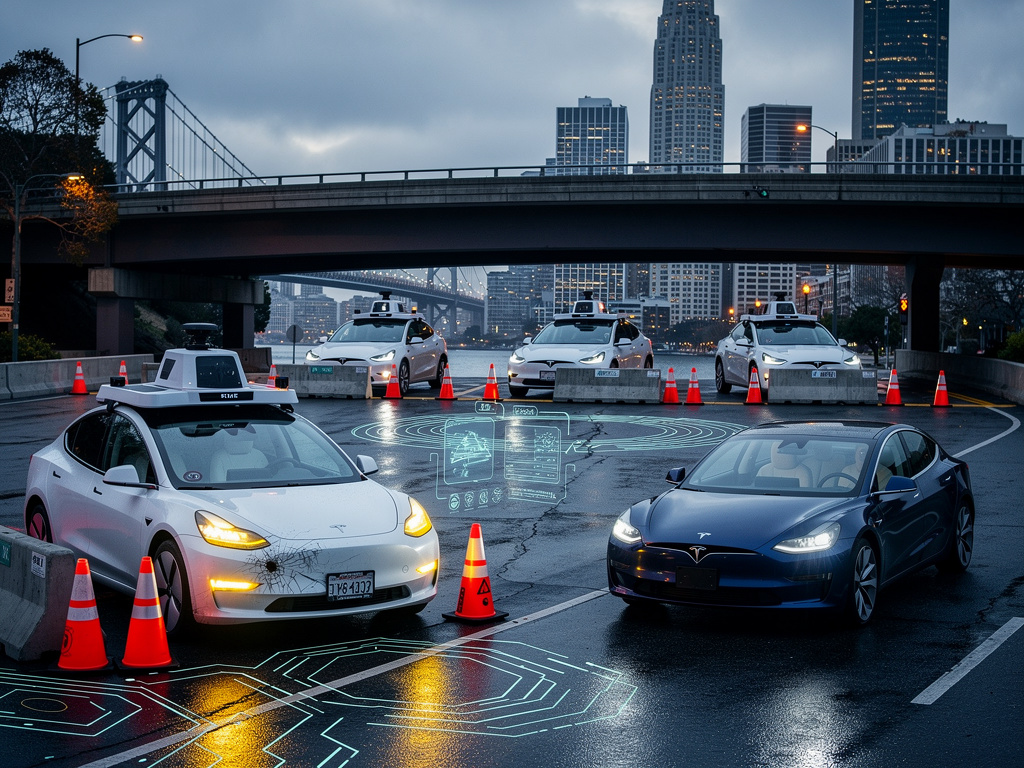
The Turbulent Journey of Cruise: GM’s Bold Bet on Robotaxis Hits the Brakes
In the fall of 2023, General Motors found itself at a crossroads in the autonomous vehicle sector. The company’s subsidiary, Cruise, had been aggressively expanding its robotaxi operations in San Francisco, a hotbed for self-driving technology testing. But on October 2, a harrowing incident changed everything: a Cruise autonomous vehicle struck and dragged a pedestrian who had been hit by another car moments earlier. This accident prompted immediate scrutiny from regulators and the public, leading to a swift suspension of operations. According to reports from CNN, GM voluntarily halted all driverless operations nationwide to rebuild trust and address safety concerns.
The decision came amid mounting pressure from California authorities. The state’s Department of Motor Vehicles revoked Cruise’s permit for driverless operations, citing the company’s failure to fully disclose details of the incident. This wasn’t an isolated event; Cruise had faced prior criticisms for traffic disruptions and minor collisions in urban environments. Industry observers noted that the pedestrian-dragging episode highlighted critical flaws in the vehicle’s decision-making algorithms, particularly in handling unpredictable scenarios involving vulnerable road users.
GM’s leadership, under CEO Mary Barra, emphasized a commitment to safety over speed. In statements following the halt, the company outlined plans for internal reviews and collaboration with third-party experts to enhance vehicle software and hardware. This pause marked a significant setback for what was once hailed as a frontrunner in the race to commercialize fully autonomous ride-hailing services, competing with the likes of Waymo and Tesla.
Regulatory Fallout and Internal Reckoning
The suspension rippled through the industry, raising questions about the readiness of autonomous tech for widespread deployment. Federal investigations ensued, with the National Highway Traffic Safety Administration probing Cruise’s handling of post-crash scenarios. Documents revealed that Cruise vehicles had been involved in over 100 incidents in San Francisco alone, ranging from blocking emergency vehicles to sudden braking that caused rear-end collisions. These revelations, detailed in coverage by The Guardian, underscored the challenges of integrating self-driving cars into complex city traffic.
Internally, Cruise underwent a leadership shakeup. Co-founder and CEO Kyle Vogt resigned in November 2023, followed by other executives. GM injected over $8 billion into Cruise since acquiring it in 2016, yet the unit reported substantial losses. By early 2024, the company laid off nearly a quarter of Cruise’s workforce, signaling a strategic pivot. Posts on X from that period, including those from tech analysts, reflected widespread skepticism about the viability of robotaxis in densely populated areas without human oversight.
As 2024 progressed, GM’s ambitions for Cruise began to shift dramatically. In December, the automaker announced it would cease funding for robotaxi development, effectively shuttering the division’s commercial aspirations. Instead, resources were redirected toward integrating autonomous features into personal vehicles, such as expanding the Super Cruise hands-free driving system. This move, as reported by NPR, was driven by escalating costs, regulatory hurdles, and fierce competition from players like Waymo, which continued to operate successfully in select markets.
Shifting Gears: From Fleet Dreams to Individual Autonomy
The decision to abandon robotaxis wasn’t merely a retreat; it represented a fundamental reassessment of market potential. GM cited the high capital requirements for scaling a robotaxi fleet, including custom vehicle designs like the Origin, which lacked traditional controls. Production of the Origin was indefinitely suspended in July 2024, as noted in X posts from industry watchers like Sawyer Merritt, who highlighted the financial toll exceeding $10 billion in accumulated losses.
By absorbing Cruise’s technology into its core operations, GM aimed to leverage advancements in AI and sensors for consumer products. This included enhancing Super Cruise, which allows hands-free driving on mapped highways, with plans to extend it to more road types. A press release from GM’s official news site outlined a roadmap toward fully autonomous personal vehicles, prioritizing safety and incremental improvements over revolutionary leaps.
The pivot also addressed insurer concerns. Recent incidents involving robotaxis have pressured risk models, as discussed in articles from Insurance Business. Autonomous vehicles were touted as safer than human-driven ones, but real-world data from Cruise’s operations suggested otherwise, leading to higher premiums and cautious underwriting for self-driving fleets.
Revival Efforts and Industry Ripples
Fast-forward to 2025, and GM signaled a cautious comeback. In August, the company restarted its driverless program, but with a narrowed focus on personal vehicles rather than ride-hailing. Coverage from Fox Business detailed how this revival came after over a year of paused operations, incorporating lessons from the 2023 incident, such as improved pedestrian detection and emergency response protocols.
This resurgence wasn’t without challenges. Competitors like Tesla pushed forward with their own autonomous initiatives, while Waymo expanded robotaxi services in multiple cities. X posts from 2025 and early 2026 captured mixed sentiments: some users praised GM’s pragmatic shift, while others decried it as a failure to innovate boldly. For instance, discussions on the platform highlighted Tesla’s potential robotaxi launches, contrasting them with GM’s more conservative approach.
The broader impact on the autonomous vehicle industry has been profound. Cruise’s troubles prompted regulators worldwide to tighten standards, emphasizing transparency and rigorous testing. In the U.S., new guidelines from the Department of Transportation required detailed incident reporting, influencing how companies like Uber and Zoox approach deployments. GM’s experience served as a case study in the perils of rapid scaling without robust safety nets.
Technological Lessons and Future Horizons
Delving deeper into the tech, Cruise’s vehicles relied on a suite of lidar, radar, and cameras, powered by machine learning models trained on millions of miles of data. The 2023 accident exposed gaps in handling “edge cases”—rare but critical situations like multi-vehicle interactions. Post-suspension analyses, referenced in reports from Car and Driver, revealed software updates that improved object tracking and predictive behaviors, but these came too late to salvage the robotaxi vision.
GM’s refocus on personal autonomy aligns with consumer preferences. Surveys indicate drivers are more comfortable with assisted systems that allow intervention, rather than fully driverless taxis. This strategy could accelerate adoption, as Super Cruise expands to models like the Cadillac Escalade and Chevrolet Silverado, potentially capturing a larger market share in the semi-autonomous space.
Looking ahead to 2026, industry events like CES showcased incremental progress in self-driving tech. A feature from CNET noted key expansions, suggesting the sector is gaining momentum despite past setbacks. For GM, integrating Cruise tech into personal vehicles might yield autonomous features like urban hands-free driving by the end of the decade, provided regulatory approvals keep pace.
Economic Implications and Strategic Realignments
Financially, the Cruise saga has been costly. GM’s $10 billion investment yielded valuable IP but no profitable robotaxi service. The shutdown, as covered by CNBC, allowed the company to cut losses and redirect funds to electric vehicle development and software services, areas with clearer paths to revenue.
Stakeholders, including investors, have mixed views. While some see the pivot as a smart exit from a crowded field, others lament the missed opportunity in a market projected to reach trillions by 2030. X sentiment in early 2026, including posts questioning Tesla’s robotaxi viability in adverse weather, mirrors ongoing debates about the technology’s maturity.
Competitively, GM’s withdrawal has emboldened rivals. Waymo, backed by Alphabet, has scaled operations without major incidents, while startups like Aurora focus on trucking. This dynamic has fostered collaborations, such as GM’s partnerships with mapping firms to bolster its assistance systems.
Safety First: Evolving Standards in Autonomy
At the heart of Cruise’s challenges lies the paramount issue of safety. The 2023 incident, where the vehicle failed to detect the pedestrian under its chassis, prompted a reevaluation of sensor fusion and AI ethics. Experts argue that true autonomy requires not just technical prowess but also societal acceptance, which Cruise’s missteps eroded.
GM’s current path emphasizes verifiable safety metrics, including voluntary safety reports and third-party audits. This approach, echoed in updates from TechCrunch, positions the company as a leader in responsible innovation, potentially influencing global standards.
As the industry matures, Cruise’s story serves as a cautionary tale. From ambitious launches to regulatory halts and strategic pivots, it illustrates the high stakes of pioneering autonomous mobility. For insiders, the key takeaway is resilience: adapting to failures can pave the way for sustainable progress in a field still navigating its early miles.
Reflections on Innovation and Market Realities
Innovation in autonomy demands balancing ambition with pragmatism. GM’s journey from robotaxi pioneer to personal vehicle enhancer reflects broader trends, where initial hype gives way to measured implementation. X discussions in 2026, including critiques of overpromising in self-driving tech, underscore the need for transparency to maintain public trust.
Economically, the shift could bolster GM’s bottom line by embedding autonomous features as premium options in consumer cars, similar to how Tesla monetizes Full Self-Driving. This model avoids the operational complexities of fleet management, focusing instead on software updates and over-the-air enhancements.
Ultimately, Cruise’s evolution highlights the sector’s fluidity. While robotaxis remain a distant dream for some, GM’s refocused efforts might democratize autonomy, making advanced driving aids accessible to everyday motorists and reshaping how we think about transportation in the years ahead.


 WebProNews is an iEntry Publication