
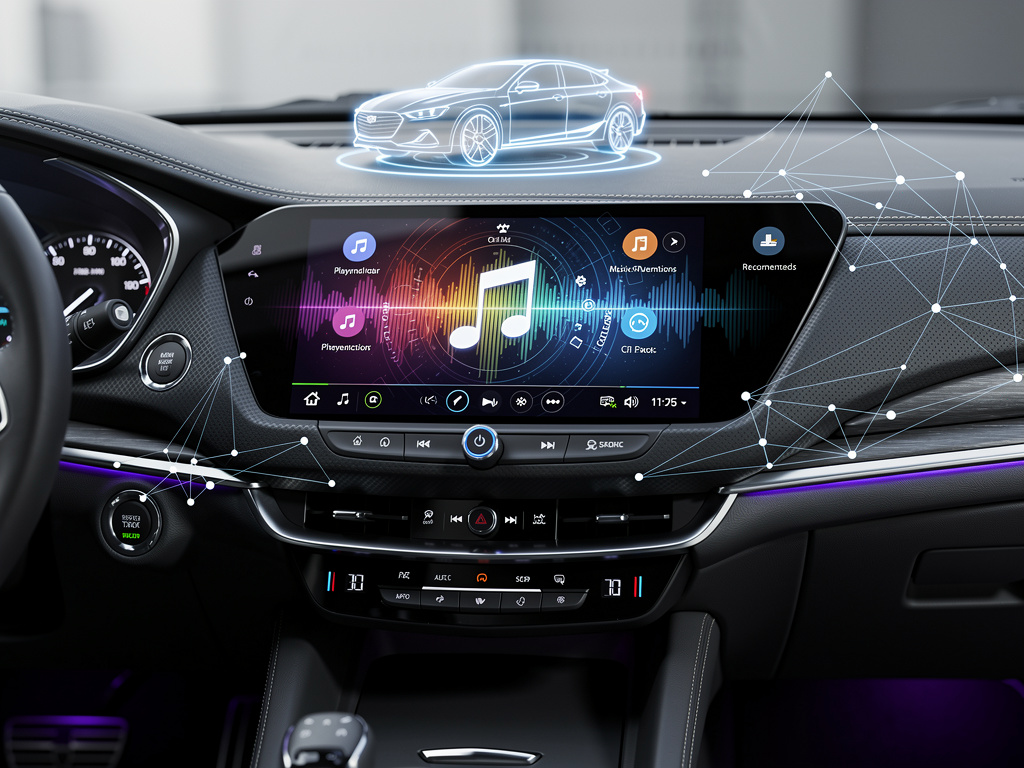
General Motors Co. has taken a significant step in its ongoing effort to redefine the in-car entertainment experience by integrating a native Apple Music app into select Cadillac and Chevrolet models. This move comes as the automaker phases out support for Apple’s CarPlay and Google’s Android Auto, aiming to create a more seamless, proprietary infotainment ecosystem. Announced on December 15, 2025, the update allows Apple Music subscribers to access their libraries, playlists, and recommendations directly through the vehicle’s built-in system, without relying on smartphone mirroring.
The integration promises features familiar to Apple Music users, including curated playlists, personalized suggestions, live global radio, and hands-free voice controls. In certain Cadillac models, the app even supports Spatial Audio with Dolby Atmos, delivering an immersive listening environment that leverages the vehicle’s premium sound systems. This development follows GM’s broader strategy to control more of the digital interface in its cars, particularly in electric vehicles where software plays a pivotal role in user satisfaction and brand loyalty.
For drivers, this means no more fumbling with phone mounts or dealing with connectivity glitches that can plague CarPlay sessions. Instead, the app runs natively on GM’s Ultifi software platform, which the company has been developing to handle everything from navigation to entertainment. Early reports suggest the rollout begins with over-the-air updates for 2025 and newer models, starting with high-end Cadillacs like the Escalade and select Chevrolets such as the Silverado EV.
Shifting Strategies in Automotive Infotainment
GM’s decision to ditch CarPlay isn’t new; the company first signaled its intentions back in 2023, citing a desire for greater integration and data control. As detailed in a report from MacRumors, this native Apple Music app is a direct response to customer feedback lamenting the loss of familiar interfaces. By partnering with Apple, GM aims to soften the blow, offering a taste of the iOS ecosystem while keeping users within its own software boundaries.
This isn’t just about music—it’s part of a larger push toward subscription-based services. GM envisions a future where drivers pay for premium features, much like Tesla’s model with its over-the-air updates and app integrations. The Apple Music app requires an active subscription from the user, but GM could potentially bundle it with its own OnStar services or other add-ons, creating new revenue streams.
Industry observers note that this integration highlights the tension between automakers and tech giants. Apple has long dominated in-car experiences through CarPlay, but GM’s move signals a rebellion, one that prioritizes proprietary tech over third-party dominance. Sources indicate that the app’s rollout is limited initially to EVs and luxury lines, with plans to expand across the lineup by 2028, when GM aims to eliminate CarPlay entirely from all its vehicles.
Technical Details and User Experience Enhancements
Diving deeper into the tech, the native app leverages GM’s Android-based infotainment system, co-developed with Google, to run Apple Music smoothly. This hybrid approach—using Google’s backbone for an Apple service—underscores the complex alliances in the auto-tech space. Users can expect offline playback capabilities for downloaded tracks, integration with the vehicle’s voice assistant for commands like “Play my Discover Weekly,” and even lyrics display on the dashboard screen.
In Cadillac models equipped with advanced audio hardware, the Spatial Audio feature stands out. According to reports, it uses Dolby Atmos to create a three-dimensional soundstage, making commutes feel like concert halls. This is particularly appealing for audiophiles, as it surpasses the audio quality often limited by CarPlay’s compression. GM has tested this in prototypes, ensuring compatibility with various cabin acoustics.
However, not all models will get the full suite right away. Chevrolet’s implementation might lack Spatial Audio in base trims, reserving it for higher-end variants. This tiered approach aligns with GM’s segmentation strategy, encouraging upgrades for better experiences. Feedback from beta testers, shared in automotive forums, praises the app’s responsiveness but notes occasional bugs in voice recognition during high-speed drives.
Market Reactions and Competitor Comparisons
Posts on X (formerly Twitter) reflect a mix of excitement and skepticism among users. Many Apple enthusiasts applaud the native integration as a smart compromise, with one post highlighting how it “bridges the gap left by CarPlay’s exit.” Others express concern over potential lock-in, fearing GM’s system might not match CarPlay’s polish. Sentiment analysis from recent X discussions shows a divide: tech-savvy drivers see it as innovative, while traditionalists mourn the loss of choice.
Comparatively, rivals like Rivian have taken a different tack. As noted in X posts from 2024, Rivian integrated Apple Music with Spatial Audio into its EVs, but it did so while retaining CarPlay support in some models. This contrast underscores GM’s bolder stance—fully committing to its own ecosystem. A Bloomberg article from December 15, 2025, details GM’s deal with Apple, emphasizing how it extends to over-the-air updates for seamless delivery, available at Bloomberg.
Tesla, another key player, has long eschewed CarPlay in favor of its proprietary interface, integrating services like Spotify directly. GM’s move mirrors this, but with a twist: by natively supporting Apple Music, it courts iPhone users who make up a significant portion of the premium vehicle market. Analysts predict this could boost GM’s EV adoption, as software features increasingly influence buying decisions.
Broader Implications for the Auto Industry
This integration arrives amid a wave of changes in how cars connect with personal devices. GM’s phase-out of CarPlay, set to complete by 2028, is driven by data privacy concerns and the desire to own the user interface. As explained in a piece from The Verge, accessible at The Verge, blocking third-party mirroring allows GM to collect more telemetry on driving habits, which can inform everything from insurance rates to targeted ads.
For Apple, the partnership is a win-win. It keeps Music subscribers engaged in non-CarPlay environments, potentially staving off churn. Recent news from 9to5Mac, found at 9to5Mac, highlights the app’s Spatial Audio support as a key differentiator, positioning it against competitors like Spotify, which GM already integrates natively.
Challenges remain, though. Cybersecurity experts warn that deeper software integrations could expose vehicles to hacks, a risk GM mitigates through its Ultifi platform’s robust updates. Consumer advocacy groups have raised eyebrows over the subscription model, arguing it fragments the driving experience and could lead to higher costs for features once considered standard.
Consumer Feedback and Adoption Hurdles
Early adopters, particularly in the EV community, are buzzing about the update. X posts from December 15, 2025, show users sharing screenshots of the app in action, with comments praising its intuitive interface. One trader on X noted the stock implications, linking GM’s announcement to potential boosts in share value due to enhanced partnerships with tech firms.
Yet, not everyone is convinced. Modding communities, as covered in InsideEVs at InsideEVs, have developed workarounds to reinstall CarPlay in GM vehicles, indicating resistance to the change. This grassroots pushback suggests GM must continue innovating to win over skeptics.
Looking ahead, GM plans to expand the app to more models, including Buick and GMC lines, by mid-2026. Insiders speculate on further integrations, like Apple Podcasts or even Apple TV for parked viewing, though nothing is confirmed. This evolution could redefine loyalty in the automotive sector, where software increasingly trumps hardware.
Strategic Partnerships and Future Directions
The GM-Apple collaboration isn’t isolated; it’s part of a trend where automakers court tech companies for exclusive features. A Gadget Hacks article, available at Gadget Hacks, explores why GM is killing CarPlay, pointing to control over the “digital cockpit” as the core motivation.
For industry insiders, this signals a maturation of in-car ecosystems. GM’s bet is that native apps like Apple Music will reduce distractions and improve safety, as drivers interact less with their phones. Studies from the National Highway Traffic Safety Administration support this, showing lower accident rates with integrated systems.
Economically, the move could generate millions in recurring revenue. With Apple Music boasting over 100 million subscribers, even a fraction adopting GM vehicles for the seamless experience could shift market dynamics. Rivals like Ford and Stellantis are watching closely, potentially accelerating their own native integrations.
Evolving User Expectations in Connected Vehicles
As the rollout progresses, GM is gathering data to refine the app. User metrics will likely influence updates, such as adding collaborative playlists or integration with Apple Fitness for workout soundtracks during drives. This data-driven approach mirrors tech giants’ strategies, blurring lines between auto and software industries.
Critics argue it limits consumer choice, but proponents see it as progress toward truly connected cars. X discussions from financial accounts, like those tracking stock movements, tie this to broader EV trends, where infotainment is a key selling point.
Ultimately, GM’s native Apple Music app represents a pivotal chapter in the automaker’s digital transformation, balancing innovation with user demands in an era of rapid technological change. With expansions on the horizon, it could set the standard for how music and mobility intersect.


 WebProNews is an iEntry Publication