
GM’s Electric Pivot: Sacrificing the Bolt for Buick’s American Revival
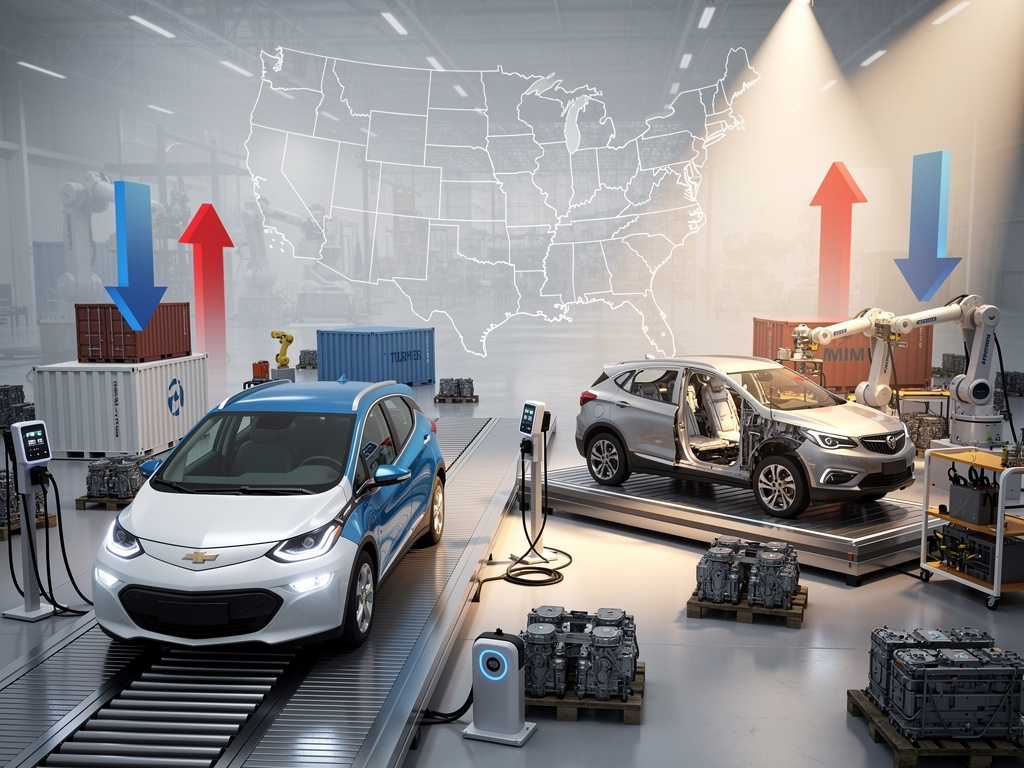
General Motors Co. is making a bold strategic shift in its manufacturing operations, announcing plans to cease production of the Chevrolet Bolt electric vehicle by the end of 2027. This decision comes as the company reallocates resources at its Fairfax Assembly plant in Kansas City, Kansas, to accommodate the relocation of Buick Envision SUV production from China to the United States. The move reflects broader pressures from trade policies, tariffs, and evolving market demands in the automotive sector. According to recent reports, this reconfiguration is driven by the Trump administration’s tariff impositions on imported vehicles, which have made Chinese manufacturing less viable for U.S. sales.
The Bolt, once hailed as an affordable entry into the electric vehicle market, has faced a tumultuous journey since its debut in 2016. Priced starting around $30,000 for its latest iteration, the model represented GM’s push toward accessible electrification. However, production challenges, including past battery recalls and shifting consumer preferences toward larger vehicles, have plagued its success. GM’s choice to end the Bolt’s run underscores a prioritization of profitability over volume in the EV space, especially as the company ramps up production of higher-margin electric trucks and SUVs.
This factory reshuffle isn’t isolated; it’s part of a pattern where GM is responding to geopolitical tensions and domestic job creation incentives. By moving the Envision—a compact SUV currently built in China—to the Fairfax plant, GM aims to evade steep import tariffs that have been in place since 2018. These tariffs, escalated during trade disputes between Washington and Beijing, have added significant costs to vehicles like the Envision, which has been GM’s sole Chinese import to the U.S. market since 2017.
Tariffs and Trade Winds Shaping Auto Decisions
The economic rationale behind this shift is clear. As detailed in a report from Reuters, GM has been navigating a 25% tariff on Chinese-made vehicles without securing exemptions, making domestic production a more attractive option. This decision aligns with commitments from GM and other automakers to bolster U.S. manufacturing amid political pressures, particularly in swing states like Michigan and Ohio where union leaders and politicians have criticized imports.
Beyond tariffs, the end of the federal EV tax credit under the current administration has further complicated the Bolt’s viability. Without incentives that once made the Bolt more competitive against gas-powered rivals, GM sees limited upside in continuing its production. Instead, the company is betting on gas-powered models like the Envision to fill the gap, even as it maintains a foothold in electrification through other lines.
Social media sentiment on platforms like X reflects a mix of disappointment and pragmatism among EV enthusiasts. Posts highlight frustration over losing an affordable EV option, with some users lamenting the Bolt’s demise as a setback for widespread adoption. Others point to GM’s historical challenges with the model, including early battery fire issues that led to massive recalls, reinforcing the narrative that the Bolt’s end was inevitable.
From China to Kansas: The Envision’s Journey Home
The Buick Envision’s relocation is emblematic of a broader “reshoring” trend in the auto industry. Currently produced in China and shipped to the U.S., the Envision has drawn scrutiny from labor groups such as the United Auto Workers, who view it as a symbol of job outsourcing. By bringing production to Kansas, GM not only sidesteps tariffs but also supports domestic employment, a point emphasized in the company’s statements.
This isn’t GM’s first such move at the Fairfax plant. As noted in coverage from Yahoo Finance, the automaker recently shifted production of the Chevrolet Equinox SUV from Mexico to the same Kansas facility. That transition, announced last year, set the stage for further expansions, including the limited-run restart of Bolt production after a previous halt in 2023.
Industry analysts suggest this strategy allows GM to optimize its assembly lines for a mix of powertrains. The Fairfax plant, capable of producing both electric and internal-combustion vehicles, will now focus on the gas-powered Envision starting in 2028. This flexibility is crucial as consumer demand for EVs fluctuates amid concerns over charging infrastructure and range anxiety.
EV Affordability at a Crossroads
The Bolt’s discontinuation raises questions about the future of budget-friendly electric cars in America. Once a pioneer with over 200 miles of range at a sub-$40,000 price point, the Bolt filled a niche that few competitors matched. Its end leaves a void, particularly as rivals like Tesla focus on premium models and emerging players from China face their own import barriers.
Drawing from insights in InsideEVs, the 2027 Bolt was positioned as a limited-run model, suggesting GM viewed it as a stopgap rather than a long-term commitment. This limited scope allowed the company to test new battery technologies while preparing for the Envision’s arrival, but it also signals a retreat from aggressive EV expansion in the compact segment.
On X, discussions often circle back to the Bolt’s legacy, with users recalling its role in popularizing EVs despite setbacks. Some posts from 2023, when GM first paused Bolt production, echo current sentiments, criticizing the shift toward larger, more profitable trucks as shortsighted for environmental goals.
Union Dynamics and Political Pressures
Labor implications are significant in this pivot. The United Auto Workers union has long advocated for domestic production, and this move could strengthen GM’s relationship with organized labor. By adding jobs at the Fairfax plant, GM addresses criticisms that have persisted since the Envision’s import began, potentially easing negotiations in future contracts.
Politically, the decision dovetails with the Trump administration’s emphasis on American manufacturing. Tariffs on foreign vehicles, combined with the elimination of EV subsidies, create an environment where companies like GM must adapt quickly. As explored in Ground News, this environment has prompted similar reshoring efforts across the industry, from Ford to Stellantis.
However, critics argue that sacrificing the Bolt undermines broader sustainability efforts. Environmental advocates on X express concern that prioritizing gas SUVs over EVs contradicts global pushes for reduced emissions, especially as climate targets loom.
Strategic Bets on Future Mobility
Looking ahead, GM’s broader EV strategy remains ambitious. The company is investing heavily in its Ultium battery platform, which powers models like the Cadillac Lyriq and upcoming electric Silverado. Ending the Bolt frees up resources to scale these higher-end offerings, potentially yielding better margins in a competitive market.
Yet, this focus on premium and truck-based EVs may alienate price-sensitive buyers. As reported in BNN Bloomberg, GM’s moves are part of a pattern to expand U.S. factory work, but they also highlight the tension between short-term economics and long-term innovation.
X posts from industry watchers speculate on what might replace the Bolt, with some suggesting a new affordable EV could emerge from GM’s pipeline. Others debate the impact on EV adoption rates, noting that without accessible options, the transition to electric mobility could slow.
Market Reactions and Competitor Responses
Wall Street has reacted cautiously to the news, with GM shares showing modest fluctuations. Investors appear to endorse the cost-saving aspects of reshoring, but there’s skepticism about abandoning a proven EV nameplate. Analysts from firms like Morgan Stanley have pointed out that the Bolt’s sales, while steady at around 20,000 units quarterly, generated losses, making the pivot logical.
Competitors are watching closely. Tesla, with its Model 3, stands to gain market share in the affordable EV segment, while Hyundai and Kia continue to push models like the Kona Electric. The Envision’s domestication could pressure other brands to follow suit, especially those reliant on Chinese supply chains.
Echoing sentiments on X, some users praise GM for bolstering U.S. jobs, viewing it as a win against foreign competition. This nationalist angle resonates in posts that tie the move to broader trade war narratives.
Global Supply Chain Realignments
The relocation underscores shifting global supply dynamics. China’s dominance in auto manufacturing is being challenged by U.S. policies, prompting companies to diversify. GM’s decision, as covered in Startup News FYI, involves not just the Envision but potential ripple effects on suppliers and logistics.
For Buick, a brand struggling with identity in the U.S., this could revitalize its image as an American-made luxury option. The Envision’s sales have been solid, and domestic production might enhance appeal amid “buy American” sentiments.
However, challenges remain, including retooling costs and training workers for new models. GM has committed to minimizing disruptions, but the transition period could affect output.
Innovation Amid Transition
As GM navigates this change, innovation in electrification persists elsewhere. The company is exploring autonomous tech and connected vehicles, areas where the Bolt once served as a testbed. Its Ultium cells, for instance, promise advancements in energy density that could benefit future models.
On X, tech enthusiasts discuss how the Bolt’s end might accelerate development of next-gen EVs, perhaps a Bolt successor with improved features. This optimism contrasts with laments over lost affordability.
Ultimately, GM’s strategy bets on a diversified portfolio, balancing EVs with traditional powertrains while adapting to policy shifts. This approach, while pragmatic, will test the company’s agility in an evolving industry.
Reflections on Automotive Evolution
The Bolt’s phase-out evokes reflections on the auto sector’s rapid evolution. From its inception as a game-changer to its current status as a casualty of strategy, the model encapsulates the highs and lows of EV adoption.
Trade policies continue to influence decisions, as seen in GM’s alignment with domestic priorities. References to earlier X posts from 2023 highlight how perceptions of the Bolt have shifted from disappointment over pauses to acceptance of its limited revival.
In this context, the Envision’s move represents not just a production shift but a statement on resilience amid uncertainty. GM’s actions may set precedents for how legacy automakers balance profitability, politics, and progress.


 WebProNews is an iEntry Publication