
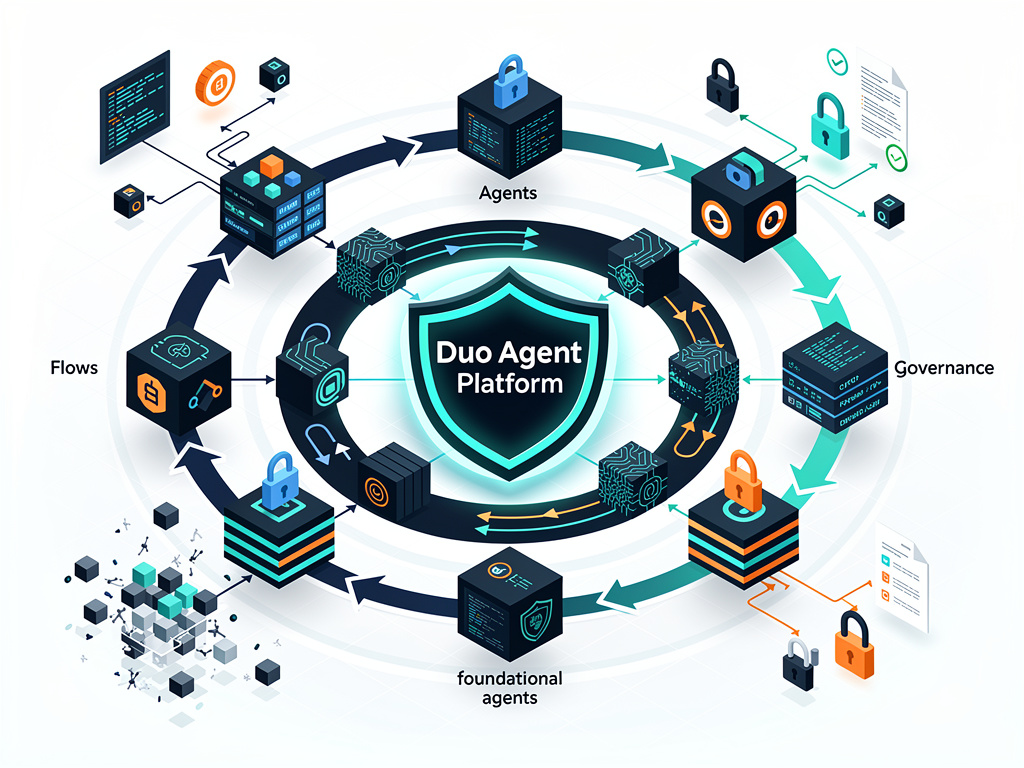
SAN FRANCISCO—GitLab Inc. has thrust agentic artificial intelligence into the core of software development with the general availability of its Duo Agent Platform, a move designed to shatter what the company calls the ‘AI paradox’ in delivery pipelines. AI tools have accelerated code writing, with developers reporting up to 10x productivity gains, yet since coding consumes only about 20% of their time, overall innovation speed sees mere incremental lifts. New hurdles like swollen code review queues, security flaws, compliance hurdles, and bug fixes have emerged instead.
The platform, now live for Premium and Ultimate customers on GitLab.com and self-managed setups—with Dedicated support slated in the 18.8 cycle—orchestrates AI agents across planning, building, securing, and shipping phases. It draws on full project context from issues, merge requests, CI/CD pipelines, and security scans to execute autonomous actions under organizational guardrails. GitLab’s investor relations page detailed the rollout, emphasizing unified governance.
“The general availability of GitLab Duo Agent Platform marks a fundamental shift in how AI delivers value in software development,” said Manav Khurana, chief product and marketing officer at GitLab. “We’ve seen AI make coding faster, but that is just one part of what it takes to deliver innovation at scale.”
Agentic Chat Transforms Developer Workflows
At the platform’s heart lies Agentic Chat, an evolution of Duo Chat that employs multi-step reasoning for context-aware aid in the GitLab web UI and IDEs like VS Code, JetBrains, Cursor, and Windsurf. It crafts issues, epics, merge requests; summarizes findings; generates code, configurations, infrastructure-as-code; debugs; authors tests and docs; troubleshoots pipelines; and demystifies vulnerabilities. Actions hinge on user rights and approvals, embedding AI seamlessly into daily routines. Techzine highlighted its integration across GitLab elements.
Pre-built foundational agents launch ready-to-use: the Planner Agent structures tasks, prioritizes via frameworks like RICE or MoSCoW, and flags stale items; the Security Analyst Agent triages vulnerabilities in natural language, assesses impacts, dismisses false positives, and guides fixes—all within chat. More agents sit in beta. InfoQ noted these alongside 18.8 perks like auto-dismissal of irrelevant vulnerabilities via policies.
Custom agents arise from the AI Catalog, a repository for teams to build, test, publish, and share tailored bots aligned to internal standards. External agents, such as Anthropic’s Claude Code or OpenAI’s Codex CLI, integrate natively with GitLab security. Flows chain agents for intricate automation—like morphing issues into merge requests, migrating pipelines to GitLab CI/CD, diagnosing CI/CD failures, or streamlining reviews—retaining human oversight where needed. GitLab Blog outlined these capabilities.
Governance Meets Scalable Automation
Enterprise controls anchor the platform: namespace-level model picks (OpenAI GPT-5, Anthropic Claude, Mistral, Meta Llama, self-hosted options); group-based access for phased rollouts; LDAP/SAML sync; usage tracking for adoption metrics and compliance. Visibility logs agent actions, ensuring accountability. Self-managed instances from 18.8 enable on-premises deployment. GitLab Docs specify prerequisites like composite identity for self-hosted use.
GitLab Credits introduce usage-based billing: Premium users get $12 monthly per seat, Ultimate $24, resetting automatically as a limited promo. Excess credits buy via shared pools or on-demand, curbing costs while scaling. Legacy Duo Pro/Enterprise converts to credits. “IDC forecasts that by 2030, 70% of organizations will embed AI agents into DevOps and DevSecOps pipelines,” said Katie Norton, research manager at IDC, per Business Wire.
“GitLab Duo Agent Platform enhances our development workflow with AI that truly understands our codebase and our organization,” shared Bal Kang, engineering platform lead at NatWest. The setup boosts velocity by turning agents into collaborators that grasp intent and act, freeing humans for creative challenges.
From Beta to Battle-Tested in GitLab 18.8
Introduced experimentally in 18.4, beta in 18.5-18.7 with flags like self_hosted_agent_platform, the platform hit GA in 18.8 alongside Runner upgrades, multi-container scanning beta, and credential APIs. IDE extensions demand Developer role in group namespaces. MCP client links external tools like Jira, Slack, Confluence, Grafana for broader context. GitLab’s product page demos use cases from backlog grooming to codebase securing.
GitLab positions this against rivals like Copilot Workspace or Google Gemini Enterprise, stressing end-to-end orchestration in one system. X posts from @gitlab hype GA alongside model leaps like Gemini 3 and GPT-5.2, warning coding alone hits ceilings—agentic AI spans the lifecycle for exponential gains. CEO Bill Staples and VP Sherrod Patching unpacked this in videos, tying to Transcend event on February 10.
Industry watchers eye monetization proof via credits, with Yahoo Finance probing if it redefines GitLab’s narrative amid unprofitability risks. DevOps.com praised agents as ‘durable actors’ for planning to security with traceability. Early X feedback mixes hype with caveats on observability needs.
Orchestration Edge in Competitive Arena
While Microsoft Agent 365 and others vie, GitLab’s native DevSecOps embedding—50 million users, over 50% Fortune 100—offers unified context rivals fragment. Custom rules in chat-rules.md or AGENTS.md tailor behaviors. Flows like IDE-guided development chain agents fluidly. Future MCP server GA expands integrations; more agents and flows loom.
NatWest’s gains underscore real-world lift: intent-parsing agents slash drudgery. IDC’s 70% adoption forecast by 2030 validates orchestration’s rise, demanding visibility GitLab prioritizes. For insiders, this tests if agentic AI delivers 10x across 100% of cycles, not just code—potentially vaulting GitLab ahead in AI-infused DevSecOps.


 WebProNews is an iEntry Publication