
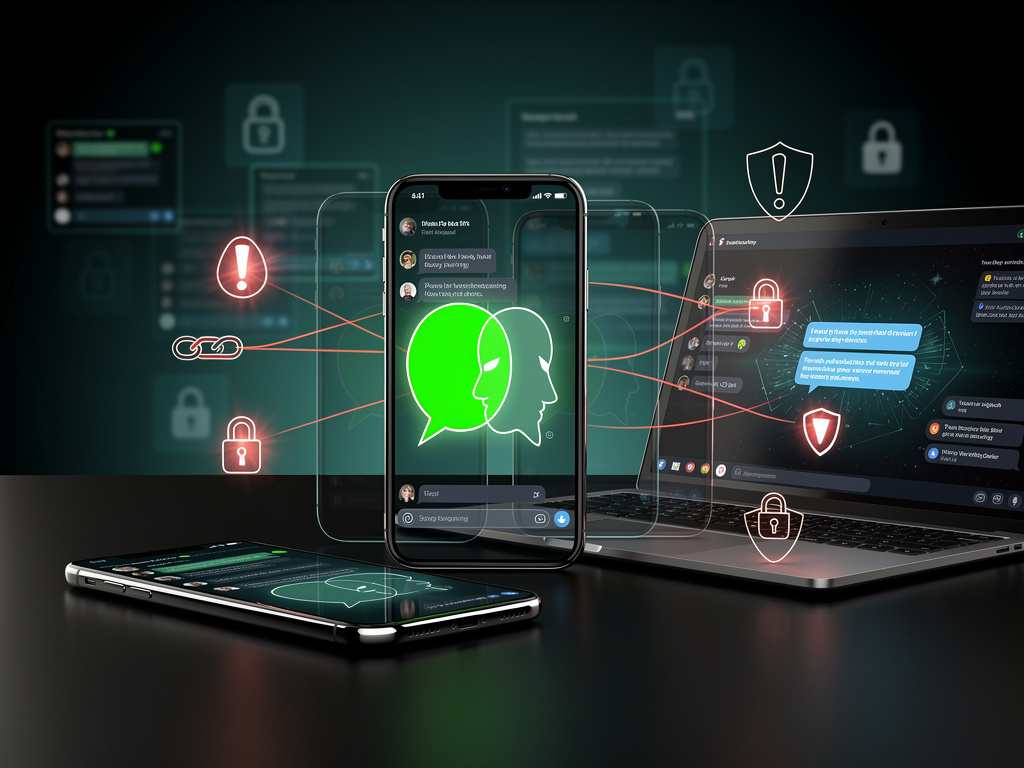
The Phantom Link: Unmasking the GhostPairing Threat to WhatsApp Security
In the ever-evolving world of digital threats, a new menace has emerged that bypasses traditional safeguards, allowing cybercriminals to hijack WhatsApp accounts without stealing passwords or one-time codes. Dubbed “GhostPairing,” this sophisticated attack exploits a legitimate feature of the popular messaging app, turning a tool designed for convenience into a gateway for unauthorized access. As billions of users rely on WhatsApp for personal and professional communication, the implications of such vulnerabilities are profound, raising alarms among cybersecurity experts and prompting urgent calls for enhanced protections.
The attack revolves around WhatsApp’s device-linking capability, which lets users connect multiple devices to a single account using a QR code or pairing code. Attackers manipulate this system through social engineering tactics, tricking victims into unwittingly granting access. According to reports from cybersecurity firms, the campaign has been active globally, with thousands of malicious URLs identified that facilitate these hijackings.
Victims often receive seemingly innocuous messages from trusted contacts, urging them to click on links or share codes under false pretenses. Once engaged, the attacker gains control, potentially accessing sensitive conversations, contacts, and even group chats used in corporate settings. This method sidesteps the need for SIM swaps or OTP phishing, making it particularly insidious.
Unveiling the Mechanics of GhostPairing
The GhostPairing campaign, first exposed by researchers at CTM360 in a detailed analysis, involves distributing malicious links disguised as legitimate photo viewers or app updates. When a user clicks, they’re prompted to enter a pairing code, effectively linking the attacker’s device to their account. As detailed in The Hacker News, this allows full access without alerting the victim immediately.
Unlike traditional hacks that require compromising phone numbers or intercepting verification texts, GhostPairing leverages trust and deception. Security Affairs highlighted in their coverage that attackers abuse the platform’s own infrastructure, turning a feature meant to enhance user experience into a liability. This approach has been linked to broader campaigns involving session hijacking and social engineering.
Industry insiders note that the attack’s stealth comes from its mimicry of normal app behavior. Users might not notice an extra linked device until it’s too late, as WhatsApp doesn’t send real-time notifications for new pairings in all scenarios. This gap has been exploited in various regions, with reports of targeted hits on employee groups in businesses.
Experts from Keepnet Labs have outlined in their blog how such hacks unfold, emphasizing the role of phishing lures tailored to 2025’s digital habits. They describe scenarios where attackers pose as tech support or friends in need, coaxing users to share codes. The rise of AI-generated messages makes these deceptions more convincing, blending seamlessly with everyday interactions.
In a recent bulletin, The Hacker News compiled stories of WhatsApp hijacks alongside other threats, painting a picture of a multifaceted assault on messaging security. Their report underscores how GhostPairing fits into a larger pattern of exploiting app features for malicious gain.
CSO Online has warned that this could penetrate corporate WhatsApp groups, potentially leaking confidential information. Their article details how attackers use hijacked accounts to spread further malware or extract data, amplifying the damage beyond individual users.
Real-World Impacts and Victim Stories
The fallout from GhostPairing extends far beyond lost access; it erodes trust in digital communication. One documented case involved a business executive whose account was compromised, leading to the exposure of sensitive merger discussions. As reported by Computing.co.uk, the victim only discovered the breach when colleagues noticed unusual activity in group chats.
Personal stories abound on social platforms, where users share experiences of sudden lockouts or strange messages sent from their accounts. Posts on X, formerly Twitter, reveal a growing sentiment of frustration and fear, with many recounting how they fell for seemingly harmless requests from “friends.” These anecdotes highlight the human element in cybersecurity failures.
Teckpath.com’s coverage of a major WhatsApp hack earlier in 2025 serves as a wake-up call, linking such incidents to broader privacy concerns. They emphasize that with over 3.5 billion users, even a small percentage of compromises represents a massive risk pool.
Analytics Insight delved into the scam’s mechanics, explaining how it hijacks without OTPs or SIM swaps. Their piece warns that the attack often begins with a casual message from a known contact, exploiting social bonds.
Bleeping Computer reported on the abuse of device-linking, noting that the only reliable detection method is checking the Linked Devices section in the app. This proactive step has saved many users, but awareness remains low.
Security Affairs reiterated the campaign’s tactics, with attackers using fake links mimicking popular services like Facebook photo viewers. Their insights align with findings from Gen researchers, who uncovered the scam in mid-December 2025.
Defensive Strategies and Expert Recommendations
To combat GhostPairing, experts advocate a multi-layered defense. First, users should enable two-step verification, adding an extra PIN requirement for new device links. WhatsApp has been enhancing this feature, but adoption is crucial.
Regularly reviewing linked devices is essential, as advised by TechRadar in their warning article. They stress that this section is the frontline for detecting unauthorized access.
Avoiding suspicious links and never sharing pairing codes are fundamental rules. Cybersecurity training, especially in corporate environments, can mitigate risks, as groups are prime targets.
India.com highlighted a new cyber threat message that can hijack accounts without traditional methods. Their report includes tips like updating apps and reporting issues promptly.
Posts on X from sources like CERT-In echo these warnings, urging users to avoid sharing codes and to stay vigilant against social engineering.
Forbes has confirmed attacks using spyware on WhatsApp, advising users not to lose their accounts by heeding agency warnings. Their coverage ties into broader spyware threats affecting multiple platforms.
Evolving Threats and Platform Responses
As threats evolve, WhatsApp’s parent company, Meta, is under pressure to fortify defenses. Recent updates include better notifications for device links and AI-driven anomaly detection, but critics argue more is needed.
The integration of advanced spyware, as warned by CISA and detailed in posts on X, complicates the scenario. Hackers deploy malware disguised as apps, targeting high-profile users like diplomats.
The Hacker News reported on state-linked hackers hijacking accounts via zero-click exploits, expanding the threat beyond GhostPairing.
Security Trybe’s older but relevant posts on X outline common hijacking methods like QR-code hijacking and spyware, which align with current trends.
Indian Infra Report’s alerts on X about massive data risks underscore the scale, with billions potentially affected by flaws exposing phone numbers and photos.
Cyber Security News on X warns of commercial spyware targeting WhatsApp, emphasizing the need for updated security practices.
Broader Implications for Digital Security
The GhostPairing saga reflects deeper issues in app design, where usability often trumps security. Industry insiders debate balancing features with safeguards, suggesting encrypted pairing processes as a future standard.
Comparisons to past breaches, like the 2025 WhatsApp hack covered by Teckpath.com, show a pattern of recurring vulnerabilities in messaging apps.
Looking ahead, regulatory bodies may impose stricter guidelines on platforms like WhatsApp, mandating transparency in security features.
Experts from Keepnet Labs predict that as AI advances, attacks will become more personalized, necessitating adaptive defenses.
In corporate spheres, CSO Online’s analysis suggests integrating WhatsApp security into enterprise risk management, treating it as critical infrastructure.
Ultimately, user education remains key. By fostering a culture of skepticism toward unsolicited requests, the community can reduce the success rate of such scams.
Toward a Safer Messaging Future
Innovation in threat detection, such as machine learning models to flag unusual linking patterns, could revolutionize defenses. WhatsApp is reportedly testing such tools, as per recent industry leaks.
Collaboration between tech giants and cybersecurity firms is vital. Initiatives like those from CTM360 expose campaigns early, limiting damage.
Global awareness campaigns, amplified by media like India.com, can empower users worldwide.
Reflecting on X posts from TechPulse Daily, the urgency is clear: hackers exploit without cracking authentication, demanding constant vigilance.
As 2025 draws to a close, the GhostPairing threat serves as a stark reminder of digital fragility. By staying informed and proactive, users and platforms can outpace evolving dangers, securing the lines of communication that connect us all.


 WebProNews is an iEntry Publication