
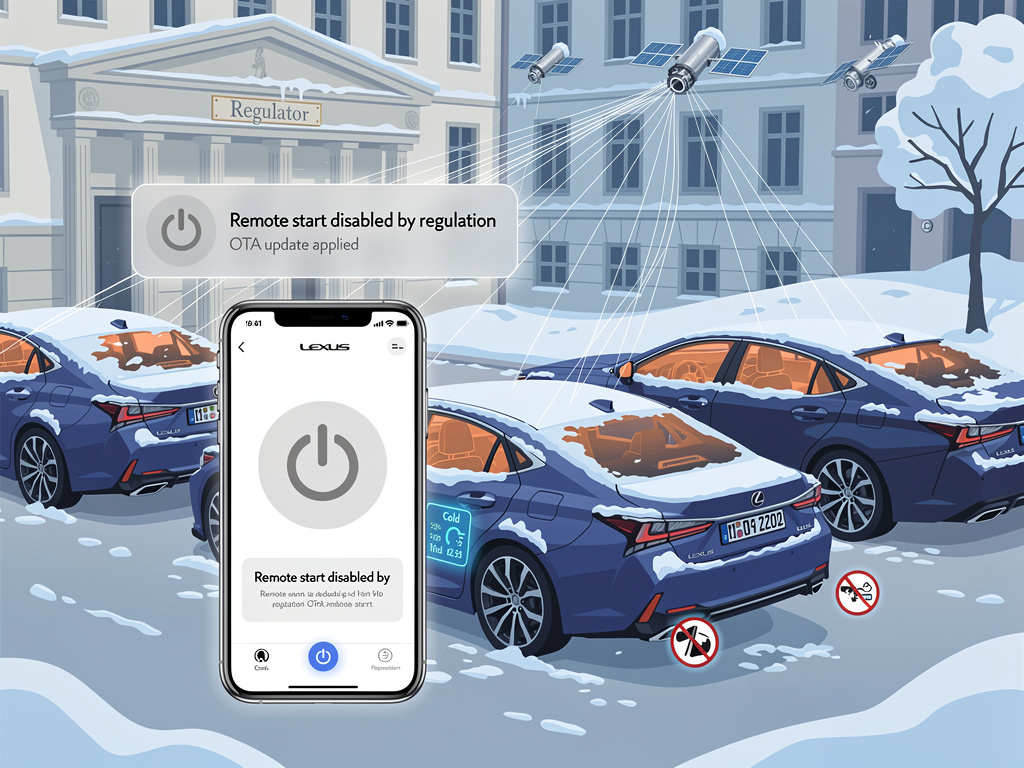
BERLIN—In a move that has ignited fury among German drivers, regulators compelled Toyota’s Lexus division to remotely disable the remote engine start function on more than 100,000 combustion-engine vehicles nationwide. The order, executed via over-the-air software updates in mid-January, targets a feature owners used to warm up cars in sub-zero temperatures, deeming it “unnecessary running” that violates anti-idling emissions rules.
German authorities view pre-warming as prohibited engine idling under strict traffic laws aimed at curbing pollution. A Toyota representative confirmed the deactivation to Yahoo Autos, describing it as necessary “compliance.” The decision affects hybrid and gasoline models equipped with connected services, leaving owners to either shiver inside cold cabins or idle engines manually—potentially worsening emissions, critics argue.
Posts on X amplified the outrage, with users like @VigilantFox decrying it as “climate authoritarianism,” warning of a slippery slope to controlling household appliances. Replies highlighted ironies: manual idling lacks automatic shutoffs, possibly extending runtime beyond the remote feature’s limits.
Regulatory Roots in EU Emissions Drive
The backdrop is Germany’s aggressive push under EU climate mandates to slash transport emissions, which account for nearly a quarter of national CO2 output. Idling bans, long enforced in cities, now extend digitally to prevent remote activation. Bild reported the remote shutdown hit the majority of affected Lexus sales, per Anadolu Agency.
This aligns with broader EU policies, including the Euro 7 standards tightening emissions further from 2025. Automakers face fines up to €15,000 per vehicle for non-compliance. Lexus, part of Toyota’s luxury arm, complied swiftly to avoid penalties, but owners report frustration in online forums like Reddit’s r/Lexus, where one user lamented losing remote climate on a leased UX300h.
Technical Mechanics of the Over-the-Air Shutdown
Lexus vehicles with the Lexus Link Connect app relied on OTA updates for features like remote start, which idled engines up to 10 minutes for cabin heating. Regulators mandated code changes blocking this, pushing a silent update fleet-wide. Gadget Review detailed how the system deems warm-up “avoidable pollution,” overriding user access without opt-out.
Industry insiders note this exploits connected car architecture: ECUs receive firmware via cellular networks, enabling remote reconfiguration. Similar capabilities power geofencing and speed limiters, raising hackability concerns. ZeroHedge warned of broader OTA risks like “speed limiting, kill switches, GPS tracking,” echoing X discussions on vulnerability.
For hybrids, the feature used gasoline engines selectively; pure EVs sidestep idling but face separate grid-demand controls. German households already endure mandatory smart meters, enabling remote power cuts, as noted by X user @torfteufel.
Owner Backlash and Practical Fallout
Winter mornings now force choices: endure frostbitten starts or risk fines for prolonged idling. In Colorado, similar bans cite theft prevention, per Westminster Police posts quoted on X. German owners, per Bild via MENAFN, face cabin temps below freezing, questioning safety on icy roads.
X reactions seethe: @JamesjmaersonIV predicted longer idling, @MissNoNocat called digital controls “the complete death of freedom.” Automakers tread carefully; Toyota’s statement emphasized regulatory alignment, but dealers report service inquiries surging.
Parallels in U.S. and Global Policy Shifts
America’s 2021 infrastructure bill mandates kill switches in new vehicles by 2026 for impaired driving detection, fueling fears of mission creep. Palantir’s AI tools, eyed for predictive enforcement, amplify dystopian visions on X. EU’s digital product passport and battery rules foreshadow feature gating by compliance.
Toyota disabled pre-heating citing idling laws, per Tarantas News. Insiders predict expansion to seat heaters or defrosters, as hinted in EADaily reports on forced cutoffs for environmental gains.
Industry Implications for Connected Mobility
Automakers now balance innovation with regulatory veto power. Subscriptions for features—like BMW’s heated seats—could emerge, renting access post-sale. Cybersecurity firms warn OTA exposes fleets to state-mandated backdoors or hacks; Germany’s BSI agency monitors such vectors.
EV transition accelerates, but hybrids bridge gaps—until rules evolve. Lexus sales dipped amid backlash; rivals like Mercedes retain workarounds via parking heaters. X user @joelmogden flagged geofencing precedents, urging analog retreats.
Future Trajectories and Resistance Strategies
Owners explore VPNs or dealer reflashes, risking warranty voids. Petitions circulate for exemptions in extreme weather. EU Parliament debates balance consumer rights against green goals, with Germany’s coalition fracturing over energy woes.
As ZeroHedge posits, this tests sovereignty in the software-defined era. Industry pivots to blockchain-secured updates or local overrides, but regulators hold the keys—for now.


 WebProNews is an iEntry Publication