
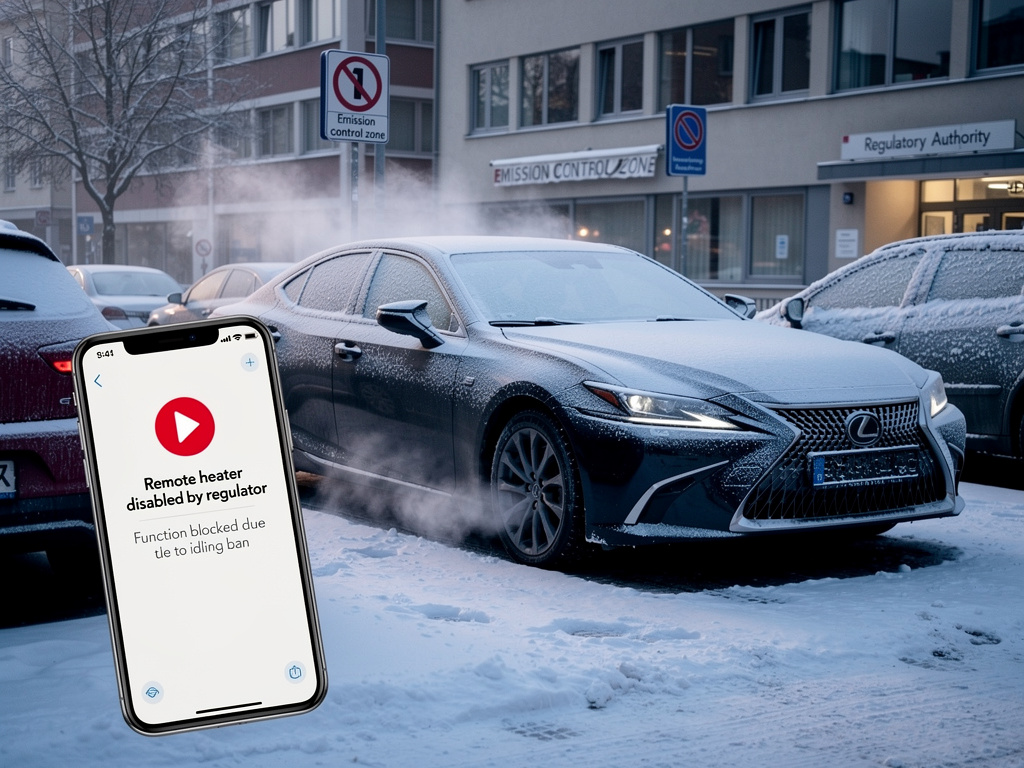
In a stark escalation of environmental overreach, German regulators have compelled Toyota’s Lexus division to remotely disable a key convenience feature on over 100,000 combustion-engine vehicles, stripping owners of the ability to pre-warm their cars during brutal winter freezes. The move, executed via over-the-air software updates in mid-January 2026, targets remote engine start functions as “unnecessary running” that generates “avoidable exhaust pollution,” according to Toyota spokesman Ralph Müller, as reported by Gadget Review.
The parking pre-heating option, once freely accessible through the MyToyota or Lexus Link Plus apps, now stands deactivated nationwide on gasoline and diesel models, affecting the bulk of Toyota’s 2025 sales in Germany—more than 100,000 units, plus prior model years. Pure electric vehicles and plug-in hybrids retain the capability, since their systems heat cabins without firing up combustion engines. Toyota framed the disablement as a shield “to protect the vehicle user from fines,” highlighting how connected-car tech has become a conduit for state intervention into private property.
BILD reader Stephan P. from Berlin discovered the cutoff on December 8, 2025, when his app notified him that remote climate control was no longer supported “due to the current legal situation.” This incident, detailed in BILD, ignited widespread outrage, with owners left scraping ice in sub-zero temperatures or risking penalties for manual idling.
Roots in Long-Standing Idling Bans
Germany’s crackdown stems from entrenched anti-idling statutes under §30 of the Road Traffic Regulations (StVO), prohibiting unnecessary engine operation for years to curb emissions. What changed is the enforcement mechanism: over-the-air updates on internet-connected vehicles, turning abstract rules into tangible remote control. Reddit users on r/Lexus confirmed the shift affects all internal combustion engine (ICE) cars with remote climate, not just Lexus, advising installation of auxiliary diesel heaters like Webasto Standheizung as workarounds.
This isn’t a new “climate law,” despite sensational claims; idling has been fined for decades, with penalties up to €40 in many municipalities. Yet the timing—dead of winter—amplifies the absurdity, forcing drivers into cold cabins or onto icy roads with compromised visibility, potentially heightening accident risks while regulators prioritize marginal pollution cuts from short warm-ups.
Auxiliary heating systems, common in German premium vehicles, run independently on fuel without full engine start, evading the ban. But app-based remote starts, idling engines for up to 10 minutes, crossed the line for authorities now leveraging digital backdoors.
Government Intrusion via Software
Toyota’s compliance reveals the perils of software-defined vehicles: features sold as standard can vanish overnight at regulatory whim. “The real question isn’t whether remote start causes pollution—it’s whether you still own the features you bought,” noted ZeroHedge, echoing backlash on forums where owners decry the loss of paid functionalities without compensation. Lexus dealers informed customers there’s “no basis for warranty claims due to defects or other compensation,” citing app terms allowing feature deactivation.
Online fury exploded, with X users labeling it “Big Brother” overreach. One post warned of expansions to seat heaters or defrosters, as speculated in EADaily. Critics argue the policy backfires: deprived of remote pre-heating, drivers may idle longer manually, netting higher emissions overall.
Germany’s solo action—no uniform EU mandate exists—underscores its aggressive stance post-nuclear shutdown, a move Chancellor Olaf Scholz called a “serious strategic mistake” amid energy woes. Broader policies like the Building Energy Act, mandating 65% renewables in new heating by 2024 and phasing out gas/oil by 2045, frame cars as extensions of the fossil-fuel purge, per Clean Energy Wire.
Industry Ramifications and Pushback
Automakers now scramble: Toyota’s OTA fix preempted fines up to €15,000 per vehicle under tightening Euro 7 standards from 2025. Yet the precedent chills innovation, as connected features risk becoming regulatory kill switches. U.S. parallels emerge in local idling bans, like Colorado’s theft-prevention rules, but lack remote enforcement scale.
Owner complaints surged to dealers, with Reddit’s r/Lexus hosting tales of leased UX300h models losing climate control mid-winter. Alternatives like block heaters or garages surface, but affordability eludes many, punishing average drivers for elite green ambitions.
Coalition talks eye heating law reforms by February 2026 for flexibility, but vehicle rules persist. As Anadolu Agency reported, the disablement drew “disappointment and confusion online,” signaling eroding trust in software-reliant autos amid climate dogma run amok.
Broader Climate Policy Fallout
This episode exposes the human cost of Germany’s Energiewende: gas heats 56% of 43 million apartments despite mandates, with slow adoption and soaring costs. Extending such zeal to cars—where remote warm-ups emit trivially compared to driving—prioritizes symbolism over sense, endangering safety on frost-slicked autobahns.
Forum debates on VW Vortex and Cadillac Owners highlight global contrasts: U.S. remote starts thrive, while Europe’s idling taboos grow via apps. Toyota’s Müller emphasized protection from “unnecessary engine work that causes emissions,” but skeptics see a slippery slope to subscription-locked basics like heated seats.


 WebProNews is an iEntry Publication