
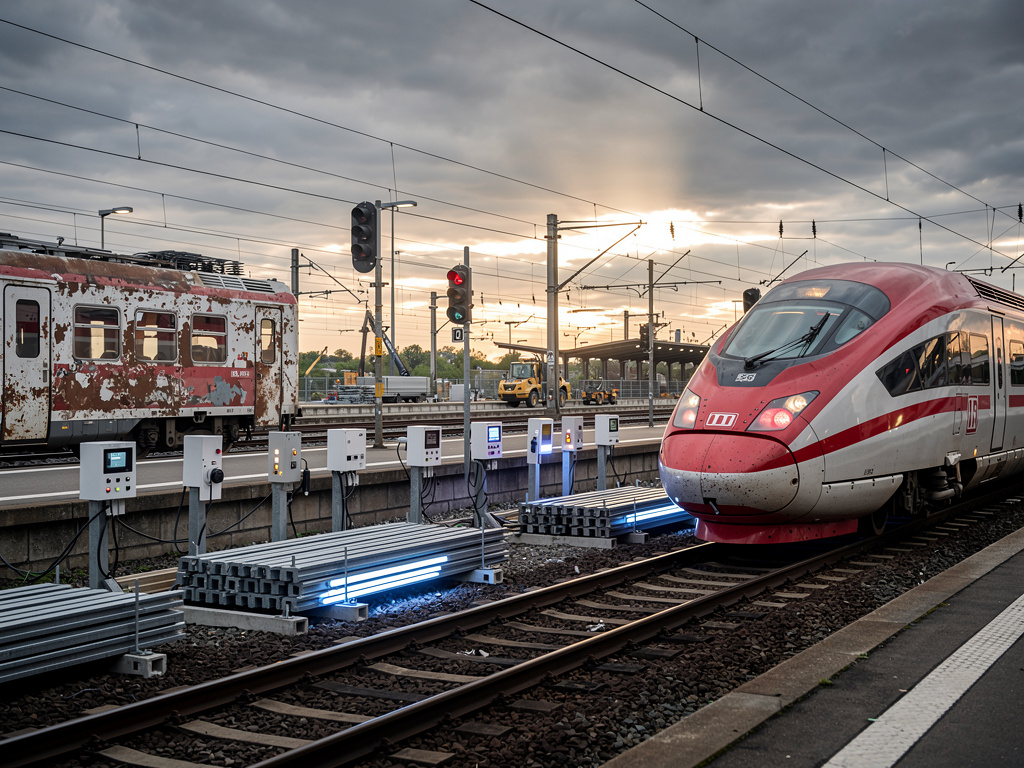
Derailment of a Nation: Inside Deutsche Bahn’s Battle to Restore Germany’s Rail Glory
In the heart of Europe, where precision and efficiency once defined a nation’s identity, Germany’s rail system is unraveling. Deutsche Bahn, the state-owned operator, has become synonymous with delays, cancellations, and frustration. Passengers endure late arrivals, lost bookings, and overcrowded cars, a far cry from the punctual service that bolstered Germany’s reputation for reliability. Recent reports highlight a crisis so profound that it has prompted the appointment of a foreign executive to steer the company back on track.
The troubles at Deutsche Bahn are not new, but they have intensified in recent years. Chronic underinvestment in infrastructure, aging tracks, and a surge in demand have converged to create what many describe as a national embarrassment. As fans flocked to Germany for Euro 2024, the rail network’s failures were on full display, with delayed trains hampering travel and drawing international scrutiny. This isn’t just about inconvenience; it’s a blow to Germany’s self-image as a powerhouse of engineering and order.
Experts point to decades of neglect as the root cause. While other European countries modernized their rail systems, Germany lagged, prioritizing other sectors. The result is a network plagued by construction delays, signal failures, and insufficient capacity. In 2023, only about 65% of long-distance trains arrived on time, a statistic that has barely improved despite promises of reform.
A Legacy of Efficiency Eroded
Deutsche Bahn’s woes stem from a complex interplay of historical, financial, and operational factors. Formed in 1994 from the merger of East and West German railways, the company inherited a patchwork of systems that were never fully integrated. Over time, budget constraints and competing priorities from the government exacerbated the issues. A Guardian analysis detailed how the operator’s unusual structure—part public service, part commercial entity—has led to conflicting goals, with profitability often clashing against the need for widespread accessibility.
Public sentiment, as captured in social media discussions on platforms like X, reflects widespread dismay. Users frequently vent about indefinite closures, such as the Munich to Oberbayern line shut down due to defective switches, or the high-speed route from Nürnberg facing massive disruptions. These anecdotes underscore a broader pattern: a system buckling under the weight of its own inadequacies. One post lamented the irony of Germany’s famed punctuality being undermined by its own infrastructure, with trains routinely 20 to 30 minutes late.
The economic impact is staggering. Delays cost the German economy billions annually in lost productivity, while the environmental toll is equally concerning. Rail travel is key to Germany’s climate goals, aiming to reduce car dependency and emissions. Yet, with unreliable service, more people opt for driving or flying, thwarting these ambitions. The coalition government has grappled with this, pledging investments but often falling short on delivery.
Foreign Leadership Steps In
In a bold move signaling the depth of the crisis, Deutsche Bahn appointed Richard Lutz’s successor from outside Germany—a rarity for such a national institution. This “foreigner,” as some media outlets have dubbed him, brings international expertise to tackle the mess. According to a recent NPR report, the new CEO is tasked with overhauling operations, from digitizing booking systems to accelerating infrastructure repairs. His arrival comes amid predictions that the company will return to profitability this year and next, per sources cited in Reuters.
This leadership change is part of a larger refurbishment program expected to span at least a decade. Major projects, like the Riedbahn corridor renovation, have already faced setbacks, with promises broken and timelines extended. Social media buzz on X highlights user frustration over these delays, with one account noting that even the last commitments for the Riedbahn project have been abandoned, fueling calls for accountability.
Financially, Deutsche Bahn reported hefty losses, including 760 million euros in the first half of the year alone, despite fare hikes. Critics argue that the state-owned giant’s reliance on government subsidies creates a cycle of inefficiency. Yet, there are glimmers of hope: plans for direct high-speed links to the UK by the early 2030s, announced in collaboration with Eurostar, could boost international connectivity and revenue.
Infrastructure Overhaul Challenges
At the core of Deutsche Bahn’s problems lies its aging infrastructure. Tracks, signals, and stations built decades ago are ill-equipped for modern demands. The Washington Post explored how this decay has triggered a national identity crisis, with Germans mourning the loss of their punctual heritage. Engineering works, while necessary, cause immediate disruptions; for instance, the Stuttgart 21 project, conceived over 30 years ago, is billions over budget and now delayed beyond its 2026 opening.
To address this, the company has launched extensive construction initiatives, detailed on its own website. These include line closures for upgrades, with replacement bus services that often fall short. Rail Europe’s help center notes ongoing disruptions, advising travelers to check statuses frequently. Such measures, while proactive, highlight the scale of the backlog—thousands of kilometers of track need urgent attention.
Government involvement is crucial here. The new coalition has committed to doubling passenger rail use by 2030 and electrifying 75% of the network, as per earlier agreements. However, posts on X from years past, like those praising these ambitions, contrast sharply with current realities, where users decry the lack of progress and increasing costs for tickets like the Deutschlandticket.
Passenger Experiences and Reforms
For everyday users, the daily grind is palpable. Commuters describe “the same daily misery,” with trains that are not only late but also uncomfortable—lacking seats, clean facilities, or reliable Wi-Fi. A Fortune Europe piece during Euro 2024 captured how these issues marred the fan experience, turning what should have been seamless travel into chaos.
Reforms are underway, with the new CEO promising safer journeys, cleaner toilets, and better on-board provisions, as reported by DW. Digitization efforts aim to prevent booking losses, a common complaint. Moreover, international deals, such as Poland purchasing used carriages from Deutsche Bahn, indicate efforts to repurpose assets efficiently, though this has sparked criticism abroad.
Industry insiders note that competition could spur improvement. Private operators nibble at Deutsche Bahn’s market share on certain routes, pressuring the giant to innovate. Yet, retaining public ownership, as pledged, ensures the network serves broader societal needs rather than pure profit.
Global Comparisons and Future Prospects
Comparing Germany’s rail to its neighbors reveals stark contrasts. Switzerland and Japan boast near-perfect punctuality through consistent investment and streamlined operations. In Germany, the fragmented approach—exacerbated by regional variations—hinders uniformity. A Monocle feature delved into how management has averted its gaze from crumbling tracks, allowing the crisis to fester.
Looking ahead, ambitious projects like the Berlin hub expansion face skepticism, with X users predicting completions not before 2035 or later. The government’s special fund for infrastructure has been diverted to operational costs, drawing ire. Still, positive news emerges: Eurostar and Deutsche Bahn’s plans for direct London-Germany links, as outlined in GOV.UK, promise greener travel options.
Economic forecasts suggest a turnaround, with Reuters sources indicating profitability by year’s end. This could fund further upgrades, potentially restoring faith in the system. However, without sustained political will and funding, these efforts risk derailing once more.
Economic and Environmental Imperatives
The stakes extend beyond convenience to Germany’s economic vitality. Rail freight, vital for industries like automotive and chemicals, suffers from the same bottlenecks, delaying shipments and inflating costs. Enhancing capacity could alleviate this, supporting exports and supply chains.
Environmentally, reliable trains are essential for meeting EU carbon targets. Germany’s push for sustainable transport hinges on shifting from roads to rails, yet current failures deter adoption. Initiatives like fare reductions in 2020, as noted in historical X posts, aimed to boost ridership but were undermined by service quality.
Insiders advocate for a holistic strategy: integrating ticketing, improving intermodal connections, and leveraging technology like AI for predictive maintenance. Such innovations could position Deutsche Bahn as a leader once again.
Voices from the Tracks
Passenger stories humanize the statistics. One traveler recounted missing a crucial meeting due to a two-hour delay, while families describe canceled vacations. On X, sentiments range from humorous jabs at “German punctuality” to calls for radical change, like nationalizing more aggressively or inviting foreign operators.
The new leadership must navigate these expectations, balancing quick wins with long-term fixes. Promises of on-time performance and modern amenities could rebuild trust, but delivery is key.
As Germany confronts this rail reckoning, the path forward demands investment, innovation, and resolve. Restoring the network’s glory isn’t just about trains—it’s about reclaiming a piece of national pride. With concerted effort, the tracks could once again run smoothly, carrying the country toward a more connected future.


 WebProNews is an iEntry Publication