
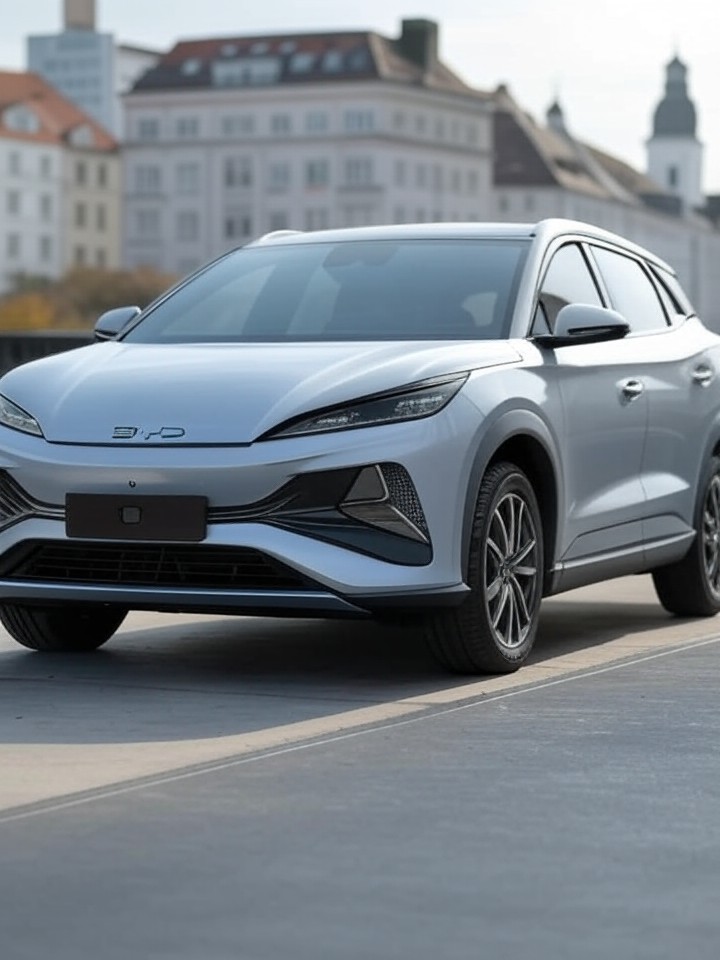
Germany’s EV Subsidy Gambit: Embracing Chinese Rivals to Recharge a Stalling Market
Germany, Europe’s automotive powerhouse, is reigniting its push for electric vehicles with a fresh €3 billion subsidy program that notably includes Chinese brands, a move signaling both desperation and pragmatism in an industry facing headwinds. Announced in early 2026, this initiative aims to revive sluggish EV sales while supporting low- and middle-income households, but it has sparked debates about fairness, competition, and the future of domestic manufacturers. Drawing from recent reports, the program is set to launch in May, offering incentives up to €6,000 per vehicle, with no restrictions based on the automaker’s origin.
The decision comes at a critical juncture for Germany’s auto sector, which has grappled with uneven demand, supply chain disruptions, and a broader economic slowdown. According to a report from Carscoops, the subsidies will apply to a wide range of electric models, including those from affordable Chinese players like BYD, which have been making inroads in Europe. This inclusivity marks a departure from earlier European Union scrutiny, such as the 2023 anti-subsidy investigation into Chinese EVs highlighted by MIT Technology Review, which raised concerns over unfair state support from Beijing.
Proponents argue that opening the door to all brands will accelerate EV adoption and help meet ambitious climate goals. Vice-Chancellor Lars Klingbeil emphasized reallocating funds from the national Climate & Transformation Fund and the EU Social Climate Fund to avoid inflating the federal budget deficit, a sensitive issue following a 2023 constitutional court ruling, as detailed in coverage from the European Alternative Fuels Observatory.
Strategic Shift in Incentive Design
The new program’s structure targets households that might otherwise be priced out of the EV market, with subsidies scaled to income levels and vehicle types. Reports indicate applications will open via a streamlined online portal starting January 1, 2026, running through 2029. This follows a previous incentive package in 2025 that introduced depreciation schemes for EVs, as noted in another update from the European Alternative Fuels Observatory, which aimed at both private and corporate buyers.
German Environment Minister Carsten Schneider has positioned the subsidies as a lifeline for the “ailing sector,” per insights from Bloomberg. By including plug-in hybrids and range extenders, the program broadens its appeal, potentially boosting overall sales in a market where pure EVs have seen demand wane without government aid. Social media sentiment on X reflects a mix of surprise and approval, with users noting how this could benefit cost-competitive Chinese models, echoing posts that highlight Germany’s non-discriminatory approach despite pressures on local luxury brands.
Critics, however, warn of unintended consequences. Allowing Chinese brands to tap into these funds could exacerbate competitive pressures on homegrown giants like Volkswagen and BMW, which are already contending with cheaper imports. A piece from CnEVPost describes this as a “major boon” for BYD and similar firms gaining ground in Europe, potentially accelerating their market share at the expense of domestic players.
Economic Pressures and Market Dynamics
The backdrop to this policy is a German auto industry in flux, with EV sales plummeting after previous subsidies ended in late 2023. Data from industry analyses show that without incentives, consumers have reverted to traditional combustion engines, stalling progress toward the EU’s 2035 ban on new fossil-fuel vehicles. The new program, valued at €3 billion (about $3.5 billion), is designed to counteract this by focusing on affordability, as outlined in a report from TradingView News.
This inclusivity contrasts with actions in neighboring countries like the UK and France, which have imposed restrictions or tariffs on Chinese EVs to protect local industries. A news update from Futunn underscores Germany’s outlier status, launching subsidies open to all while others crack down. On X, discussions often point to historical precedents, such as Germany’s 2020 EV incentives that offered up to €6,000 per vehicle and invested in charging infrastructure, drawing parallels to today’s reboot.
Moreover, the program’s timing aligns with broader EU debates on trade fairness. The 2023 investigation by the European Commission into Chinese subsidies led to proposed higher import duties, yet Germany’s latest move suggests a pragmatic pivot toward consumer-driven growth over protectionism. Industry insiders speculate this could pressure the EU to harmonize policies, avoiding a patchwork of national incentives that fragment the single market.
Implications for Global Competition
By welcoming Chinese brands, Germany is effectively acknowledging the superior affordability and technology of players like BYD, which have leveraged massive domestic subsidies to dominate globally. A Slashdot discussion, accessible via Slashdot, captures online reactions, with users debating whether this subsidizes foreign competition at taxpayers’ expense. Recent X posts amplify this, with some expressing disbelief that Germany is “subsidizing Chinese Electric Vehicles again,” reflecting a sentiment of strategic misstep.
For low-income buyers, the subsidies promise real access: up to €6,000 for qualifying households, potentially covering a significant portion of entry-level EV costs. This targeted approach, as reported by Giga Gears, includes measures like simplified applications and extended timelines, aiming to democratize EV ownership. Yet, questions linger about long-term efficacy—will this spur sustainable demand, or merely create a temporary sales spike?
Chinese automakers stand to gain substantially, building on their European expansion. BYD, for instance, has established production in Hungary and pushed aggressive pricing, making models like the Atto 3 competitive even without subsidies. The program’s openness could accelerate this trend, forcing German firms to innovate faster in battery tech and cost reduction.
Policy Challenges and Future Horizons
Implementation hurdles remain, including bureaucratic delays and ensuring funds reach intended recipients. The May launch date provides time for preparation, but past programs have faced criticism for complexity, as seen in earlier incentives that ended abruptly in 2025 per coalition agreements. X users recall how subsidies were phased out for hybrids, pushing pure EVs, but the new inclusion of plug-ins suggests lessons learned.
Economically, this ties into Germany’s broader recovery efforts. The IMF’s 2026 growth predictions, mentioned in a DW live update, forecast stronger expansion, partly buoyed by such stimuli. However, fire from opposition parties centers on the hybrid inclusion, arguing it dilutes environmental benefits.
Looking ahead, the program’s success will hinge on EV infrastructure expansion. Germany plans to allocate portions of the €3 billion to charging networks, echoing 2020 commitments that invested €2.5 billion. Industry experts, drawing from AutoNews, note that supporting range extenders could bridge the gap for rural areas with limited charging, broadening appeal.
Balancing Innovation and Protection
The subsidy’s non-discriminatory stance may invite EU-wide repercussions, potentially leading to retaliatory measures or unified tariffs. As Chinese brands like Nio and XPeng eye further European penetration, German manufacturers must adapt—perhaps through partnerships or accelerated R&D. Volkswagen’s recent crises, including plant closures, underscore the urgency, with subsidies seen as a short-term fix.
Consumer response will be key. Polls and X chatter suggest enthusiasm among budget-conscious buyers, but skepticism from those viewing it as favoring imports. If successful, this could model a collaborative approach to electrification, blending competition with climate action.
Ultimately, Germany’s embrace of Chinese brands in its EV subsidies reflects a high-stakes bet: sacrifice short-term protectionism for long-term market vitality. As the program rolls out, its ripple effects on Europe’s auto sector will be closely watched, potentially reshaping global trade dynamics in sustainable mobility. With €3 billion on the line, the initiative tests whether openness can recharge an industry at a crossroads, or if it merely accelerates the rise of Eastern challengers.


 WebProNews is an iEntry Publication