
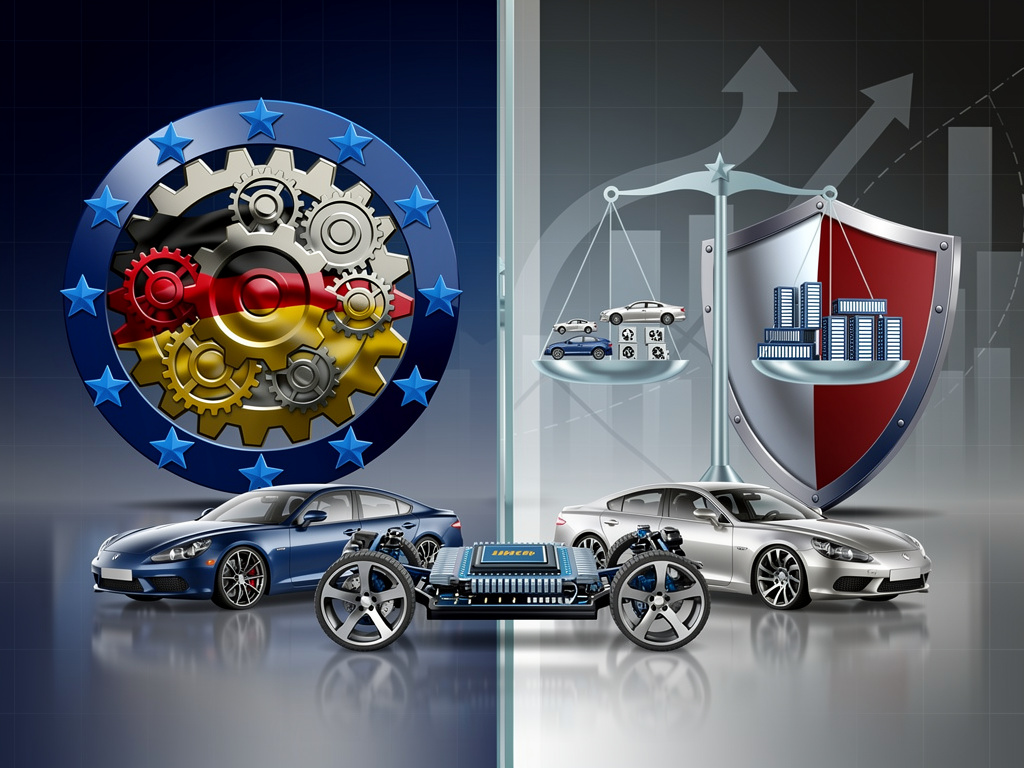
Berlin is drawing a firm line. As Washington floats new tariffs on European goods, German officials say the existing agreement between the European Union and the United States must stand. No doubts. No deviations.
The stance comes directly from a government spokesperson in a press conference reported Wednesday by Investing.com. “Our focus is on ensuring that the existing EU-US trade agreement is now implemented, we have no doubt that existing agreement will be honored,” the spokesperson declared. The comments respond to U.S. proposals for additional 10% duties on imports from the EU and dozens of other economies. Officials in Washington point to insufficient action against goods made with forced labor.
But the story runs deeper. Last summer’s framework deal, struck at a golf course in Turnberry, Scotland, capped U.S. tariffs on most EU exports at 15%. In exchange the bloc agreed to scrap duties on American industrial goods and open markets for U.S. agriculture and seafood. The pact aimed to cool tensions after President Donald Trump first threatened much steeper levies. Yet implementation has lagged. European lawmakers paused ratification more than once. Disputes over Greenland, court rulings on tariffs, and accusations of noncompliance have kept the relationship tense.
German Chancellor Friedrich Merz has repeatedly signaled relief that the initial agreement averted worse damage. German carmakers shipped $34.9 billion worth of vehicles and parts to the United States in 2024. A jump to 25% tariffs, as Trump briefly imposed in May 2026, sent shares in Volkswagen, Mercedes-Benz and BMW sliding. “The agreement has succeeded in averting a trade conflict that would have hit the export-oriented German economy hard,” Merz said after one round of talks, according to reports cited across multiple outlets.
And the auto sector sits at the center. Trump accused the EU of slow compliance and raised duties on finished passenger cars and light trucks to 25%. The move was narrow. It spared parts and vehicles assembled inside the United States by European brands. Still, the signal was clear. The U.S. side, articulated forcefully by Ambassador Andrew Puzder in a Politico analysis, insists the EU received nine months of lower tariffs without delivering its own concessions in full. Zero tariffs on U.S. industrial exports and meaningful cuts to nontariff barriers were promised. Delivery has been patchy.
By late May 2026, EU governments cleared legislation to cut import duties on many U.S. goods. A provisional deal reached in mid-May, covered by The Wall Street Journal, put the bloc on track to meet Trump’s July 4 deadline. European Parliament approval remains pending. Safeguards were written in. The EU can suspend the pact if Washington lifts tariffs above the agreed 15% ceiling.
Yet fresh friction emerged almost immediately. On the same day Germany voiced its confidence in the existing pact, a senior EU lawmaker told Reuters that any new American tariffs would prove unacceptable. The latest U.S. proposal targets countries seen as failing to curb forced-labor trade. The lawmaker dismissed American claims on that front as absurd. He questioned whether the extra duties would breach the Turnberry framework. The answer carries weight. Germany, as Europe’s largest exporter, feels every percentage point.
Trade data tells its own tale. Two-way goods trade between the U.S. and Germany topped 253 billion euros in 2024. The U.S. remains Berlin’s single biggest bilateral partner. Exports to America have already shown strain from earlier rounds of tariffs and a stronger euro. Unexpected drops in German exports surfaced in later 2025 figures. Factories that once counted on steady transatlantic demand now watch policy shifts in Washington with unease.
European officials argue the bloc has moved substantially. In return for the 15% U.S. cap, the EU pledged hundreds of billions in investment into the American economy. It offered preferential access for U.S. farm products and eliminated tariffs on broad categories of industrial imports. But politics in Brussels is rarely swift. Member states hold different priorities. France has voiced louder complaints about perceived concessions. Italy and others worry about specific sectors. Germany, dependent on its export machine, pushes hardest for predictability.
So the question lingers. Will the framework hold? Or will new disputes over forced labor, regulatory barriers, or unrelated geopolitical issues unravel it? Trump has shown willingness to adjust tariffs when partners deliver. The EU has shown it can act under deadline pressure. Yet trust remains thin. One EU diplomat described the relationship as managed friction rather than partnership.
Merz and his government continue to bet on compliance. They repeat the message. Implement the deal. Honor the commitments already made. Avoid escalation that would hurt both sides. But markets are less patient. Carmaker stocks react to every Trump post. Supply chains recalibrate. Companies debate whether to accelerate U.S. production or absorb the hit.
Recent coverage from DW captured the provisional breakthrough in May. German officials called it a step toward security and stability for businesses. The investment commitments, running to hundreds of billions of euros, were highlighted as proof of good faith. Still, the 15% tariff rate itself represents a compromise many in Europe view as painful. Even that level squeezes margins in autos, chemicals, and machinery.
Broader context matters too. The deal emerged after months of threats that once reached 30% or higher on EU goods. It followed Trump’s “Liberation Day” tariffs that upended assumptions on both sides of the Atlantic. Negotiators on both teams understood the economic size at stake. Combined, the U.S. and EU still account for a massive share of global output and trade. Disruption carries costs measured in jobs, investment, and growth.
Germany’s position looks straightforward on the surface. Stick to the agreement. Implement it fully. Expect the same from Washington. Beneath that lies recognition of political reality in the U.S. Congress, the courts, and the White House. A new administration or shifted congressional majorities could rewrite terms again. For now Berlin chooses certainty over confrontation.
Whether that bet pays off will unfold over coming months. July 4 was set as a symbolic deadline. Ratification steps continue. Additional talks on enforcement and verification are likely. And fresh proposals, like the 10% or 12.5% tariffs floated this week, test the durability of last year’s hard-won text. Both sides say they prefer negotiation to retaliation. History shows that preference can bend under pressure.
The German spokesperson’s words were measured. Focus on implementation. No doubt it will be honored. Those phrases carry weight in Berlin. They signal continuity in policy even as personalities and administrations change. For an economy built on exports, stable trade rules with its largest non-European partner are not optional. They are foundational.
Observers will watch the European Parliament’s trade committee vote and any further statements from the U.S. Trade Representative. Minor adjustments to the deal have already been negotiated. Larger breaches remain off the table for now. But the language from both capitals stays guarded. Expectations are calibrated. Delivery is monitored. And the cars keep rolling across the Atlantic, tariffs or no tariffs, until the next round of talks begins.


 WebProNews is an iEntry Publication