
Merz’s Nuclear Reckoning: Germany’s Costly Bet Against Atomic Power
Germany’s energy policy has long been a battleground of ideology, economics, and environmental ambition. But in a stunning admission this week, Chancellor Friedrich Merz labeled the country’s complete shutdown of its nuclear power plants a “huge mistake” that has inflicted severe economic damage. Speaking at the German Chamber of Commerce and Industry in Berlin, Merz highlighted how the phase-out, finalized in 2023, has left the nation grappling with soaring energy costs and diminished industrial competitiveness. This reversal comes amid mounting pressure from business leaders and a backdrop of global energy shifts, where nuclear power is experiencing a renaissance in places like France and the United States.
The decision to exit nuclear energy, known as the “Atomausstieg,” traces back to the aftermath of the 2011 Fukushima disaster in Japan. Then-Chancellor Angela Merkel accelerated the timeline, committing to close all reactors by 2022, a deadline later extended slightly due to the energy crisis sparked by Russia’s invasion of Ukraine. By April 2023, the last three plants—Isar 2, Emsland, and Neckarwestheim 2—were decommissioned, marking the end of an era that once saw nuclear providing about a quarter of Germany’s electricity. Critics, including some within Merz’s own Christian Democratic Union (CDU), argued from the start that this move was shortsighted, especially without robust alternatives in place.
Merz’s comments, delivered on January 14, 2026, underscore a growing consensus that the shutdown exacerbated Germany’s reliance on imported fossil fuels, particularly Russian gas before the war, and now on liquefied natural gas from diverse suppliers. “We have paid a high price for this decision,” Merz stated, pointing to elevated electricity prices that have hammered manufacturers. Official data from the Federal Statistical Office shows industrial energy costs have risen by over 40% since 2023, contributing to a broader economic slowdown. This admission isn’t isolated; it echoes sentiments from industry groups and international observers who have long warned of the policy’s pitfalls.
The Economic Fallout Unfolds
The immediate aftermath of the shutdown saw Germany ramp up coal-fired power generation to fill the gap, ironically increasing carbon emissions at a time when the country aimed for net-zero goals. According to a report from the Foro Nuclear, the phase-out led to higher energy prices, elevated emissions, and economic recession risks as industries struggled with the transition. Energy-intensive sectors like chemicals and steel have been hit hardest, with companies such as BASF reporting reduced output and job cuts. In 2024, Germany’s GDP growth stalled at 0.2%, partly attributed to these energy woes, per Eurostat figures.
Beyond domestic impacts, the policy has strained Europe’s energy market. Germany’s increased demand for natural gas imports has driven up prices across the continent, affecting neighbors like France, which relies heavily on nuclear for stable, low-cost power. Merz acknowledged this in his speech, noting that the shutdown created “unnecessary vulnerabilities” in supply chains. Posts on X from energy analysts highlight public frustration, with many users decrying the irony of Germany demolishing nuclear infrastructure while facing blackouts and high bills—sentiments that have amplified calls for policy reversals.
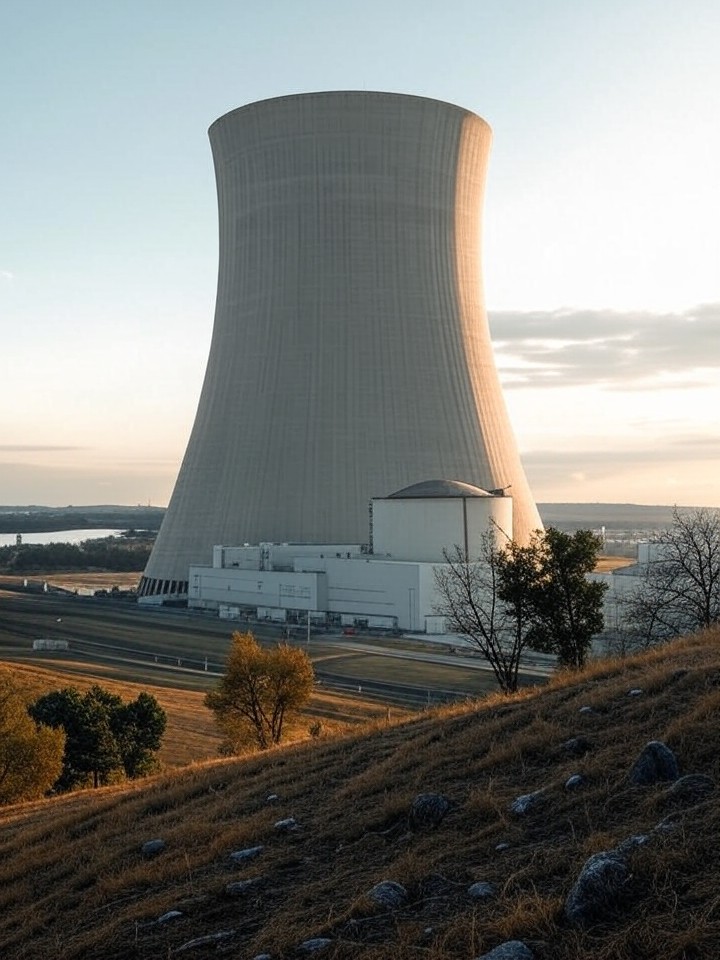
Yet, the human element can’t be overlooked. The shutdown displaced thousands of workers in the nuclear sector, from engineers to maintenance staff, many of whom transitioned to renewables but at lower wages. Communities around former plants, like Gundremmingen, have seen economic decline, with local businesses suffering from reduced activity. A 2025 demolition of cooling towers there symbolized not just the end of nuclear but a broader erosion of industrial might, as noted in various online discussions.
Ideological Roots and Policy Shifts
The anti-nuclear movement in Germany dates back to the 1970s, fueled by environmental groups and the Green Party, which gained traction after Chernobyl in 1986. The Heinrich Böll Foundation, aligned with the Greens, celebrated the 2023 closure as a “culmination of a 50-year democratic process,” according to their analysis in Understanding the German Nuclear Exit. This perspective views the phase-out as a victory for public engagement and renewable energy push, with wind and solar now comprising over 50% of the grid. However, Merz’s critique frames it as a strategic blunder, arguing that it ignored nuclear’s role in baseload power—reliable energy not subject to weather fluctuations.
Recent developments have bolstered calls for a rethink. The German nuclear association Kerntechnik Deutschland e.V. advocated in 2025 for restarting up to six shuttered reactors, deeming it a “safe, economically viable” option, as reported by World Nuclear News. Technical assessments suggest these plants could be operational within months, providing a quick fix to current shortages. Merz, while not committing to restarts, hinted at exploring “all options” to lower costs, signaling a potential pivot under his leadership.
Internationally, Germany’s path contrasts sharply with peers. France is expanding its nuclear fleet, while the U.S. has approved new reactors amid a push for clean energy. Even Taiwan, which phased out nuclear by 2025, is reconsidering amid energy needs, per Wikipedia’s entry on nuclear power phase-outs. Merz’s admission aligns with warnings from figures like former U.S. President Donald Trump, who in 2018 called Germany’s energy strategy a blunder, a point resurfaced in recent media coverage.
Global Echoes and Domestic Pressures
The ripple effects extend to climate goals. Climate scientists expressed dismay at the 2023 shutdown, as covered by CNBC, noting that nuclear’s low-carbon profile could have accelerated decarbonization. Instead, Germany burned more lignite coal, boosting emissions by an estimated 5% in 2024, according to the International Energy Agency. This has drawn criticism from environmentalists who once supported the phase-out but now question its execution without sufficient green backups.
Merz’s remarks also come amid political turbulence. As chancellor since late 2025, he faces opposition from coalition partners and a resurgent far-right, with energy policy a flashpoint. A Reddit thread from 2023 on r/germany captured early public debate, asking why the plants were closed despite energy crises—a question that persists. Recent news from Anadolu Ajansı quotes Merz calling it a “serious strategic mistake,” emphasizing the world’s costliest energy transition.
Industry insiders point to specific metrics: Electricity prices for businesses hit €0.25 per kilowatt-hour in 2025, double the EU average, per the German Energy Agency. This has prompted relocations, with firms like Volkswagen eyeing cheaper energy abroad. Merz warned that without action, Germany’s export-driven economy could face irreversible decline, a view echoed in a TVP World report.
Pathways to Revival and Lessons Learned
Looking ahead, experts advocate for a hybrid approach: bolstering renewables while reconsidering nuclear. A Deseret News article details plans to potentially rebuild capacity, inspired by global trends. China, for instance, is adding dozens of reactors, highlighting nuclear’s role in energy security. In Germany, public opinion is shifting; polls from 2025 show 60% support for restarts, up from 40% in 2023.
Challenges remain, including waste management and safety concerns that fueled the original phase-out. Yet, advancements in small modular reactors could offer safer, cheaper alternatives, as discussed in energy forums. Merz’s government is investing €10 billion in grid upgrades, but insiders argue nuclear revival is essential for stability.
The broader lesson for policymakers worldwide is the peril of hasty decisions in energy transitions. Germany’s experience, as analyzed in RT, shows how ideological commitments can clash with economic realities. Posts on X reflect a mix of schadenfreude and concern, with users noting Germany’s budget strains and industrial woes under Merz.
Navigating Uncertainty in Energy Futures
As Europe contends with geopolitical tensions, including ongoing fallout from the Ukraine conflict, energy independence is paramount. Merz’s critique, detailed in The Last Refuge, ties the nuclear exit to broader failures in securing affordable power. This has sparked debates on reinstating reactors, with economic models suggesting potential savings of €50 billion annually.
For industry leaders, the focus is on innovation: Integrating nuclear with renewables could create a resilient system. Germany’s push for hydrogen and offshore wind is promising, but without baseload support, volatility persists. Merz’s admission may catalyze change, prompting alliances with pro-nuclear nations.
Ultimately, this moment reflects a pivotal reassessment. As one energy executive posted on X, the shutdown was a “mistake” born of misplaced priorities, now costing Germany dearly. With global nuclear capacity projected to grow 20% by 2030, per the World Nuclear Association, Germany risks being left behind unless it acts swiftly. Merz’s words signal a potential turning point, but translating regret into reform will test the nation’s resolve.


 WebProNews is an iEntry Publication