
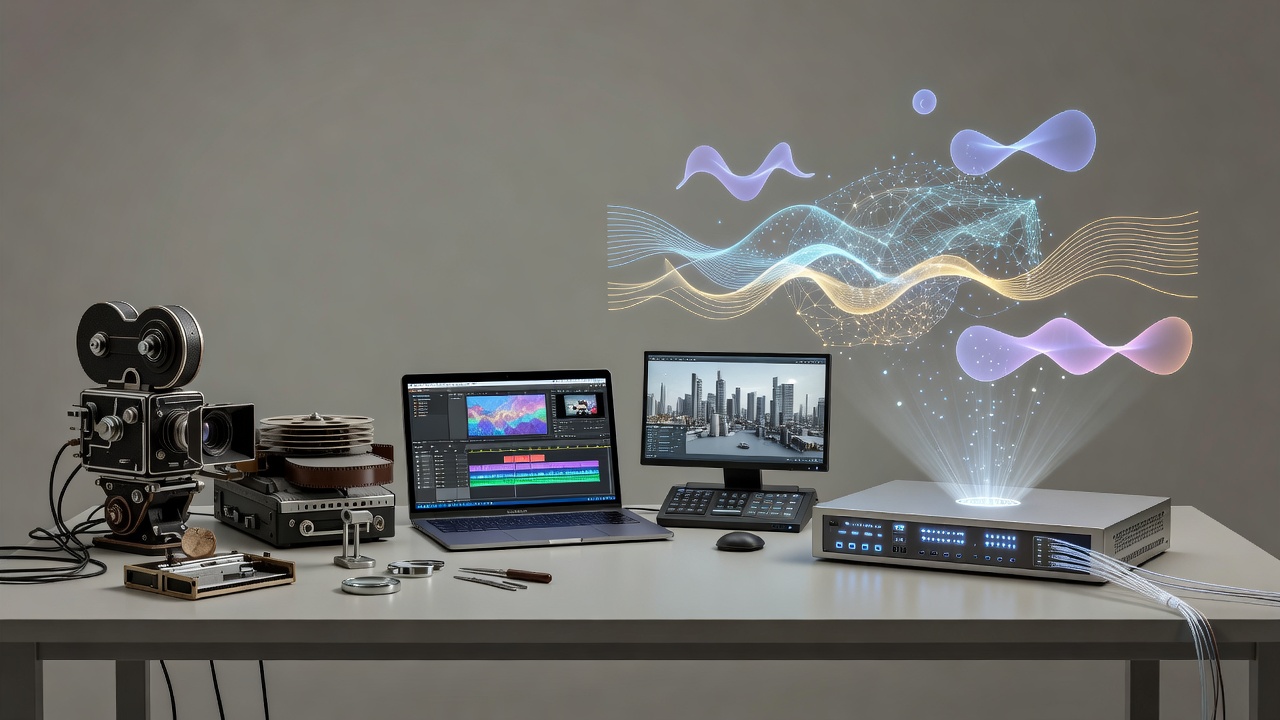
George Lucas surprised many observers recently when he voiced support for artificial intelligence tools in creative work. The director behind the Star Wars saga has long maintained a complicated relationship with technology, one that mixes deep fascination with cautious skepticism. His endorsement of AI, shared during a conversation covered by Gizmodo, fits into a pattern that stretches back decades. Rather than representing a sudden conversion, Lucas's position reflects consistent beliefs about tools, authorship, and the future of storytelling.
Lucas built his career on pushing technical boundaries. From the creation of Industrial Light & Magic to the development of THX sound standards, he treated innovation as an essential part of filmmaking. Early in his career he embraced computer graphics when most directors still relied on practical effects and miniatures. The original Star Wars trilogy benefited from techniques that were experimental at the time, including motion control cameras and optical compositing. These methods required teams of specialists to solve problems that had never been attempted in feature films. Lucas did not invent these systems himself, but he created an environment where engineers and artists could experiment until they produced results that served the story.
That same spirit appears in his current views on artificial intelligence. He sees AI as another instrument that can help creators realize ideas more efficiently. During the discussion highlighted by Gizmodo, Lucas compared modern AI systems to the early digital editing tools he adopted in the 1980s. At that time, many filmmakers resisted nonlinear editing because they feared it would destroy the craft. Lucas argued then, as he does now, that better tools simply allow storytellers to focus on narrative rather than mechanical tasks. The technology changes, but the fundamental goal of communicating emotion and wonder remains constant.
Critics who express alarm about AI often focus on the way large language models and image generators train on existing works. They worry that artists will lose control over their intellectual property and that future generations may struggle to develop original voices if machines flood the market with derivative content. Lucas acknowledges these concerns yet maintains that prohibition is not the answer. Instead he suggests that creators should shape how the technology develops. His perspective echoes arguments made by other established directors who witnessed previous waves of automation in post-production. Each new advancement, from digital color correction to automated rotoscoping, sparked similar debates about authenticity and labor.
Lucas's background in independent filmmaking adds another layer to his stance. After the success of American Graffiti, he used his earnings to fund research into computer graphics at a time when Hollywood studios showed little interest. The company that became Pixar started as the computer division of Lucasfilm. John Lasseter and others credit Lucas with giving them space to explore ideas that eventually transformed animation. This history demonstrates his willingness to invest in technologies whose full potential remained unclear. AI represents a continuation of that pattern, though on a vastly accelerated timeline.
The entertainment industry has already begun integrating artificial intelligence into various production stages. Writers use large language models to brainstorm dialogue options or overcome creative blocks. Visual effects supervisors employ AI-assisted tools to generate background elements or match lighting across complex composites. Sound designers experiment with neural audio synthesizers that can produce realistic crowd noise or alien languages from brief samples. Lucas sees these applications as extensions of the collaborative process that has always defined big-budget filmmaking. No single person writes every line or paints every background in a Star Wars film. Teams of specialists contribute under the guidance of a director who maintains the overall vision. AI simply adds another specialized contributor to that mix.
Some commentators suggest Lucas's position stems from his age and distance from day-to-day creative struggles faced by emerging artists. Now in his eighties, he no longer directs major features and instead focuses on broader questions about storytelling and technology. His comments therefore carry the perspective of someone who has already secured his legacy and financial future. Yet his track record shows consistent support for tools that democratize creativity. The original Star Wars films inspired countless young people to pick up cameras and tell their own stories. Lucas hoped digital filmmaking would continue that trend by reducing barriers to entry. He views AI as potentially accelerating that process even further.
Of course, enthusiasm must be balanced with safeguards. Lucas has not proposed specific regulations, but his career offers clues about the principles he might favor. Throughout the development of digital cinema, he advocated for open standards and interoperability. He pushed for manufacturers to adopt common file formats so that artists could move between different software packages without losing work. Similar thinking could apply to AI training data. If creators retain some control over how their material is used to train models, they might feel more comfortable with the technology. Collective licensing arrangements, similar to those used in the music industry, could provide compensation while allowing innovation to continue.
The conversation around AI also touches on deeper questions about what constitutes creativity. Lucas has always maintained that the heart of a story lies in its emotional truth rather than the specific techniques used to tell it. Whether a director employs puppets, computer-generated imagery, or artificial intelligence, the measure of success remains audience connection. This philosophy explains why he can embrace new tools without feeling that they diminish his earlier accomplishments. The original Star Wars films retain their power because they captured something essential about heroism, friendship, and wonder. Future stories created with AI assistance could achieve the same effect if storytellers guide the technology toward meaningful ends.
Industry observers note that Lucas's comments arrive at a moment of heightened tension. Several high-profile lawsuits seek to define the legal boundaries of AI training. Writers and actors have negotiated contracts that address the use of artificial intelligence in their fields. Studios experiment with AI-generated scripts and concept art while trying to avoid public backlash. In this environment, a statement of qualified support from a figure as influential as Lucas carries significant weight. It suggests that outright rejection may not represent the most productive path forward. Instead, the focus should shift toward responsible development and clear attribution standards.
Lucas's support does not mean he believes AI will replace human directors or screenwriters. He has repeatedly emphasized the irreplaceable role of personal experience and emotional insight. Machines can analyze patterns in existing films and generate variations on those patterns, but they lack the lived perspective that gives stories authentic weight. A director who has experienced loss or triumph brings that knowledge to every creative decision. AI can suggest options, but the choice of which option best serves the story still requires human judgment. This division of labor mirrors the relationship between directors and other department heads. The cinematographer proposes lighting schemes, but the director selects the approach that matches the desired tone.
Looking at Lucas's body of work reveals a consistent pattern of technological adoption followed by artistic refinement. After pioneering digital editing with the EditDroid system, he spent years perfecting his craft within those new parameters. The prequel trilogy demonstrated both the possibilities and limitations of extensive computer-generated imagery. Some sequences achieved breathtaking scope while others drew criticism for feeling artificial. Lucas learned from those experiences and adjusted his approach in subsequent projects. The same iterative process will likely apply to AI. Early experiments may produce mixed results, but thoughtful creators will discover techniques that enhance rather than dilute their vision.
The broader cultural impact of Lucas's position deserves consideration. Millions of people discovered filmmaking through his movies and the expanded universe of books, games, and animated series. When such an influential figure expresses measured optimism about new technology, it signals to younger creators that they need not fear progress. Instead they should learn to work alongside these tools while maintaining their unique voices. Educational institutions are already adapting their curricula to include AI literacy alongside traditional skills like screenwriting and cinematography. The goal is to prepare students for a future where artificial intelligence functions as a creative partner rather than a threat.
Critics rightfully point out that not all technological advances have benefited artists equally. The rise of streaming platforms increased content demand while often reducing budgets for individual projects. Many professionals find themselves working faster for less compensation. AI could exacerbate these pressures if studios use it primarily to cut costs rather than enhance quality. Lucas has not addressed these economic questions directly, but his history suggests sympathy for working artists. He maintained an independent studio structure that allowed him to retain control over his creations rather than submitting to major studio oversight. That independence permitted him to take risks that larger corporations might have avoided.
The discussion also connects to longstanding debates about authorship in collaborative media. Film has always been a team effort where credit and compensation follow complex formulas. Adding AI to the equation complicates these arrangements further. Should a neural network that generates background characters receive any form of recognition? How should training data be compensated when it includes thousands of individual contributions? These questions extend beyond any single filmmaker's opinion, yet Lucas's perspective offers one valuable data point. His willingness to experiment suggests that solutions will emerge through practical application rather than theoretical prohibition.
As artificial intelligence systems grow more sophisticated, the line between assistance and creation may blur. Tools that once simply sped up mechanical tasks now generate entire scenes from textual descriptions. This capability challenges traditional notions of craft. Yet Lucas reminds us that similar concerns accompanied the transition from silent films to talkies, from black-and-white to color, and from practical effects to digital compositing. In each case, skilled practitioners found ways to incorporate the new technology while preserving the elements that made their work meaningful. The directors who thrived were those who understood both the capabilities and limitations of their tools.
Lucas's endorsement of AI therefore fits within a larger pattern of technological pragmatism. He evaluates each innovation based on whether it serves the storyteller's goals. When tools expand creative possibilities without compromising emotional truth, he supports their development. When they risk diluting the human element that gives stories power, he expresses reservations. This balanced approach offers a model for other creators who must decide how to engage with rapidly advancing systems. Rather than rejecting artificial intelligence outright or embracing it uncritically, thoughtful engagement allows for responsible innovation that respects both tradition and progress.
The coming years will test these principles as AI tools become more integrated into production pipelines. Filmmakers will discover which applications enhance their process and which distract from their purpose. Audiences will develop preferences for content that demonstrates genuine human insight regardless of the technology used to create it. Throughout these changes, Lucas's example suggests that curiosity combined with critical judgment provides the best path forward. The technology will continue evolving, but the fundamental desire to tell meaningful stories remains unchanged. By approaching artificial intelligence as another tool in the filmmaker's kit, creators can focus on what matters most: connecting with audiences through characters and situations that resonate across generations.


 WebProNews is an iEntry Publication