
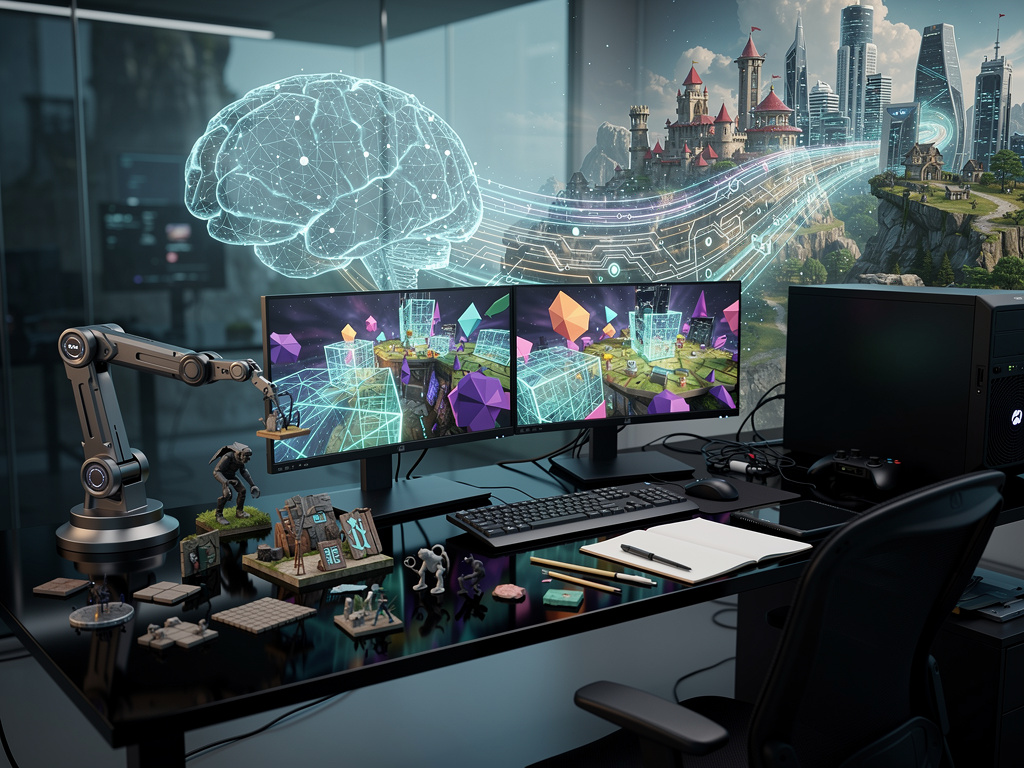
In the ever-evolving world of video games, generative artificial intelligence is emerging as both a boon and a battleground, sparking intense debates among developers, players, and executives. Recent revelations from studios like Larian, known for hits such as Baldur’s Gate 3, highlight how AI tools are being woven into the fabric of game creation, often for ideation and prototyping. Yet, this integration isn’t without controversy; backlash has been swift, with critics arguing it could dilute human creativity. Drawing from a Windows Central report, Larian’s CEO Swen Vincke has defended the use of AI as a tool for brainstorming, emphasizing that final content remains human-crafted, even as the studio faces online uproar.
This tension reflects broader shifts in the industry, where generative AI is touted for its potential to streamline workflows and enhance player experiences. For instance, tools that generate dialogue, environments, or even entire narratives promise to cut development time and costs, allowing smaller teams to compete with giants. A study published in PMC delves into how these technologies are boosting creativity by automating repetitive tasks, though it warns of risks like homogenized designs if over-relied upon. Industry insiders are watching closely as companies experiment, balancing innovation with the preservation of artistic integrity.
The push toward “living games”—dynamic titles that evolve in real-time—owes much to generative AI’s capabilities. Google’s cloud division has been at the forefront, promoting AI-driven adaptations that let games respond to player behavior on the fly. As detailed in a Google Cloud blog post, this could mean procedurally generated worlds that grow organically, creating endless replayability. Such advancements are particularly appealing in an era where player retention is key to monetization, with live-service models dominating revenue streams.
AI’s Role in Ideation and Backlash
However, not all feedback is positive. The director of The Last of Us, a landmark title from Naughty Dog, recently voiced strong opposition to generative AI, calling it a threat to authentic storytelling. According to GameRant, this sentiment echoes concerns from creative professionals who fear job displacement and a loss of soul in games. Posts on X (formerly Twitter) amplify this divide, with users debating AI’s ethical implications, from intellectual property issues to the authenticity of AI-assisted art. One prevalent view on the platform suggests that while AI excels in generating concepts, it often lacks the nuanced emotional depth humans provide.
Efficiency gains are undeniable, though. A Cubix blog outlines how generative AI is transforming asset creation, enabling rapid prototyping of characters and levels that would otherwise take weeks. This is crucial for indie developers facing tight budgets, as seen in emerging turn-based RPGs where AI helps iterate on mechanics. Yet, the “heated debates” referenced in a TechRepublic article underscore a rift: proponents see it as a democratizing force, while detractors worry about overdependence leading to formulaic outputs.
Looking ahead to 2026, platform convergence is set to amplify AI’s impact. Boston Consulting Group’s report predicts that blended ecosystems—merging consoles, mobile, and cloud—will foster AI innovations, driving growth through personalized experiences. Imagine games that adapt narratives based on real-time player data, a concept gaining traction in cloud gaming trends discussed in recent ITMunch coverage.
Ethical Considerations and Industry Sentiment
Ethical dilemmas are front and center, particularly around data usage and bias in AI models. Posts on X highlight trends like multimodal AI, which integrates text, images, and audio for more immersive designs, but users caution about potential misuse in generating inappropriate content. One X thread from industry analysts points to generative design reshaping product creation in games, yet stresses the need for oversight to avoid reinforcing stereotypes.
The hype around AI has cooled somewhat, entering what some call a “trough of disillusionment.” MIT Technology Review’s analysis notes that after breakthroughs like advanced reasoning models, expectations are being tempered by practical limitations, such as high computational costs. In gaming, this manifests as studios like Larian clarifying that AI is for ideation only, not final products, as per the Windows Central report mentioned earlier.
Player perspectives add another layer. Data from gamer research firms suggests mixed reception; while some embrace AI-enhanced realism, others prefer handcrafted elements. A Technology Org piece explores disruptions, noting AI’s role in procedural generation that keeps worlds fresh, but it also raises questions about fairness in competitive play, like AI-assisted cheating detection.
Developer Perspectives and Case Studies
Directors from titles like Kingdom Come: Deliverance 2 have weighed in, acknowledging AI’s inevitability while advocating for responsible use. In a separate Windows Central article, the lead designer describes AI as a tool that can’t be ignored, useful for tasks like texture generation without replacing artists. This pragmatic view contrasts with outright rejections, illustrating a spectrum of adoption.
Case studies illuminate successes. SapientPro’s blog details use cases where AI personalizes difficulty levels, adapting to individual playstyles in real-time. For example, in strategy games, generative AI can create unique enemy behaviors, enhancing challenge without manual scripting. Such applications are projected to grow, with market forecasts on X indicating the generative AI sector expanding to $109.4 billion by 2030, driven by gaming integrations.
Conversely, backlash against Larian for its Divinity project reveals community fractures. Gadgets 360’s coverage reports Vincke’s admission that AI hasn’t drastically improved efficiency, yet the studio persists in limited applications. X posts echo this, with users sharing insights on AI’s broader trends, like its synergy with IoT for immersive VR experiences.
Market Projections and Future Innovations
Market projections paint an optimistic picture amid the noise. An X post from a tech analyst forecasts generative AI in gaming reaching $59 billion in 2025, though many companies report minimal returns, per insights from ORF GeoTech shared on the platform. This gap between hype and reality underscores the need for strategic implementation, focusing on areas like content moderation where AI can shine.
Innovations on the horizon include AI agents that handle complex interactions, as per Gartner’s hype cycle discussions on X. In gaming, this could mean NPCs with emergent personalities, evolving based on player choices. Game Developer’s 2025 trends overview lists AI alongside platform shifts as defining forces, potentially reshaping company structures through automation.
Challenges persist, including regulatory hurdles. With AI’s rapid advancement, calls for guidelines are growing, especially in light of potential biases in generated content. Posts on X discuss multilingual generative AI expanding global reach, allowing games to adapt culturally, but warn of translation inaccuracies that could alienate players.
Balancing Innovation with Human Touch
Striking a balance is key for studios navigating this terrain. The PMC study earlier referenced suggests that while AI enhances efficiency, it may constrain innovation if it supplants human intuition. Industry leaders are experimenting with hybrid models, where AI generates drafts and humans refine them, as seen in Google’s “living games” vision.
Player engagement metrics will ultimately decide AI’s fate. Research from Boston Consulting Group indicates that converged platforms could boost growth by 2026, with AI enabling seamless cross-device experiences. Yet, sentiment on X reveals skepticism, with some users viewing AI as a fad amid the “great hype correction” described in MIT Technology Review.
As the industry matures, education on AI’s capabilities becomes crucial. Workshops and tools are emerging to train developers, ensuring AI augments rather than replaces creativity. In this dynamic environment, generative AI’s true value may lie in empowering creators to push boundaries, fostering games that are more adaptive and inclusive than ever before.
Emerging Trends and Global Impacts
Global trends are accelerating adoption. In regions like Asia, where mobile gaming dominates, AI is optimizing monetization through personalized ads and in-game purchases. X threads highlight generative design trends, reshaping how virtual economies function, with AI predicting player spending patterns.
Environmental considerations are also rising. High-energy AI models contribute to carbon footprints, prompting calls for sustainable practices. Technology Org’s article touches on this disruption, noting efforts to develop efficient algorithms that minimize ecological impact while maximizing gaming innovations.
Finally, the dialogue around AI in gaming is far from settled. With studios like Larian leading by example—using AI judiciously amid backlash—the path forward involves collaboration between technologists and artists. As posts on X suggest, the fusion of AI with emerging tech like blockchain could secure intellectual property, ensuring creators are credited in an AI-assisted future. This ongoing evolution promises to redefine not just how games are made, but how they connect with players worldwide.


 WebProNews is an iEntry Publication