
General Fusion has announced plans to go public through a merger with a special purpose acquisition company, positioning the Canadian firm as the first pure-play fusion energy business to list its shares on a major stock exchange. The move, reported by GeekWire, marks a significant milestone for a technology sector that has long promised clean, abundant power but has struggled to attract sustained commercial attention.
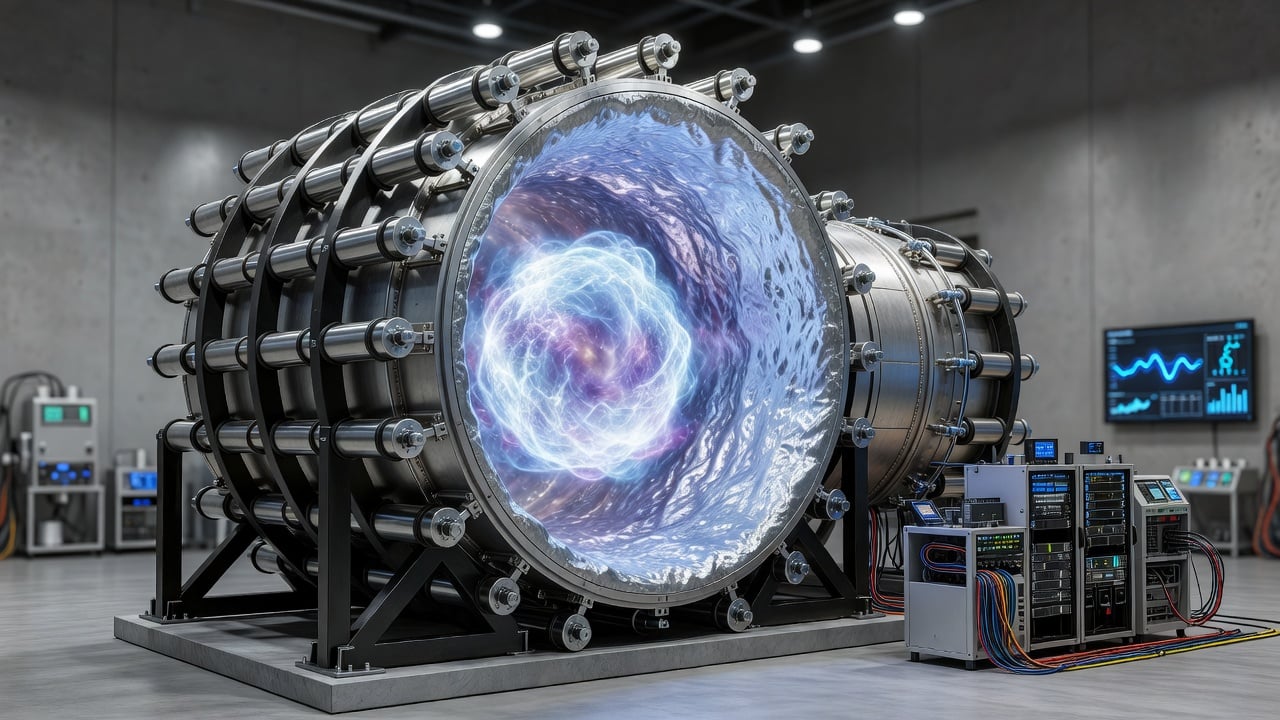
The company, based in Burnaby, British Columbia, intends to combine with a blank-check firm in a deal expected to value the post-merger entity at roughly $1.5 billion. This transaction will allow General Fusion to access public markets without the traditional initial public offering process, providing fresh capital to advance its unique approach to generating electricity from nuclear fusion. Unlike many competitors that rely on magnetic confinement or laser-based systems, General Fusion employs a method called magnetized target fusion. In this technique, hydrogen plasma is injected into a chamber lined with liquid lithium, where pistons rapidly compress the mixture to achieve the extreme temperatures and pressures needed for fusion reactions.
This piston-driven compression sets the company apart from more widely discussed approaches such as those pursued by Commonwealth Fusion Systems or TAE Technologies. General Fusion’s design draws inspiration from earlier research conducted at institutions including Los Alamos National Laboratory and draws on decades of work in inertial confinement concepts. The liquid metal lining serves multiple purposes: it protects the reactor walls from neutron damage, breeds tritium fuel, and transfers heat to a steam turbine for electricity production. Company executives argue that this architecture could lead to simpler, more cost-effective power plants compared with tokamak or stellarator designs that require massive superconducting magnets.
The path to public listing reflects growing investor appetite for fusion companies after years of skepticism. Private investment in the sector has climbed sharply since 2020, with more than $6 billion committed globally according to industry trackers. General Fusion itself has raised over $200 million to date from backers that include Jeff Bezos, the Canadian government’s Sustainable Development Technology Canada fund, and venture firms such as Braemar Energy Ventures. The upcoming SPAC merger will provide additional resources to construct a demonstration facility capable of producing net energy gain, a critical threshold the industry has yet to cross consistently.
Fusion power has long captured the imagination of scientists and engineers because it offers the potential for carbon-free baseload electricity without the long-lived radioactive waste generated by conventional nuclear fission reactors. When two light atomic nuclei combine to form a heavier one, a small amount of mass converts into enormous amounts of energy according to Einstein’s famous equation. The challenge lies in creating conditions hot enough—over 100 million degrees Celsius—and dense enough to overcome the natural repulsion between positively charged nuclei. Once achieved, the reaction can become self-sustaining, releasing energy that far exceeds the input required to initiate it.
General Fusion’s leadership believes its technology can reach this breakeven point faster and at lower cost than rival designs. The company has already demonstrated key elements of its system in smaller-scale experiments. Its current LM26 machine, located at a dedicated test facility, uses 22 pistons arranged around a spherical chamber to compress plasma. Recent test campaigns have shown encouraging results in plasma stability and compression efficiency. The next major step involves scaling these systems to a machine large enough to achieve scientific breakeven, where the fusion energy produced equals the energy used to heat and compress the fuel.
The decision to pursue a public listing comes at a time when several fusion startups have begun shifting their focus from pure research toward commercialization timelines. General Fusion now targets the mid-2030s for deployment of its first commercial pilot plant, a schedule that aligns with projections from other serious players in the field. Achieving that goal will require substantial engineering work to develop durable materials, reliable high-speed pistons, and integrated tritium handling systems. Public market access could accelerate progress by broadening the investor base and improving liquidity for early backers.
Regulatory and policy support will also play a decisive role. In recent years, both the United States and Canada have taken steps to clarify oversight frameworks for fusion devices, distinguishing them from fission reactors. The U.S. Nuclear Regulatory Commission has proposed a more flexible, risk-informed approach for fusion technology, while Canadian regulators have signaled similar openness. These developments reduce a major source of uncertainty that previously deterred investment. General Fusion has worked closely with regulators throughout its development process and views the evolving policy environment as favorable to its timeline.
Skeptics point out that fusion has repeatedly missed deadlines over the past seven decades. The massive international ITER project in France, which uses a tokamak design, has faced repeated delays and now aims to produce its first plasma in the mid-2030s. Private companies claim they can move faster by embracing different physics regimes and modern manufacturing techniques. General Fusion’s piston-based system requires precise synchronization of mechanical components operating at high repetition rates, presenting its own set of reliability challenges. The company acknowledges these hurdles but maintains that its approach avoids the complex superconducting magnets and plasma control systems that have slowed other efforts.
Financial markets will now have an opportunity to judge the company’s prospects directly. The SPAC structure has drawn criticism in recent years for sometimes bringing immature businesses to market with insufficient scrutiny. However, General Fusion enters this process with a substantial technical portfolio, multiple patents, and partnerships with established engineering firms. Its collaboration with the United Kingdom Atomic Energy Authority at the Culham Centre for Fusion Energy has provided valuable validation of its compression technology under real-world conditions.
The broader energy transition adds urgency to fusion development. Many analysts forecast that global electricity demand will double or triple by 2050 as transportation, heating, and industrial processes shift away from fossil fuels. Intermittent renewable sources such as solar and wind will require massive energy storage or firm low-carbon generation to maintain grid reliability. Fusion, if successfully commercialized, could fill that role by providing dispatchable power without greenhouse gas emissions or the fuel supply constraints that limit traditional nuclear plants.
General Fusion’s public debut will also shine a spotlight on the Canadian innovation ecosystem. The country has maintained a quiet but consistent presence in fusion research since the 1950s. Government funding, academic expertise at institutions like the University of Saskatchewan, and a supportive regulatory stance have helped nurture several private ventures. A successful public listing could encourage additional domestic investment and reinforce Canada’s position in the global race for clean energy technologies.
As the transaction moves forward, the company will need to demonstrate clear progress toward its technical milestones. Investors will look for evidence of improved compression performance, longer plasma confinement times, and successful integration of the liquid metal blanket system. Transparency around development costs and engineering challenges will become more important once quarterly reporting requirements take effect. The fusion community as a whole may benefit from this increased visibility, as public market scrutiny often drives higher standards of accountability and clearer communication of risks.
The road ahead remains difficult. No fusion device has yet achieved sustained net energy production in a form suitable for commercial power generation. Materials must withstand intense neutron bombardment for years without degrading. Economic models suggest that capital costs must fall dramatically before fusion can compete with established energy sources. General Fusion believes its simpler reactor geometry and ability to use existing supply chains for many components will provide cost advantages. Independent analysts will scrutinize these claims as more data becomes available after the listing.
The announcement also highlights the growing maturity of the private fusion sector. What began as a handful of eccentric research projects has evolved into a diverse industry with multiple competing approaches. Each concept carries different risk profiles and development pathways. General Fusion’s entry into public markets offers investors a direct way to participate in one of these paths while providing the company with a permanent source of capital and heightened credibility.
Success is far from guaranteed. Technical setbacks, unexpected engineering problems, or shifts in the broader energy market could still derail even the most promising efforts. Yet the decision to list publicly signals confidence that the technology has advanced far enough to withstand market scrutiny. For a field long associated with broken promises, this represents meaningful progress. The coming years will test whether General Fusion can translate its innovative piston-driven concept into a practical power source capable of meeting the world’s growing demand for clean electricity. The public markets will now help determine if that vision can become reality.


 WebProNews is an iEntry Publication