
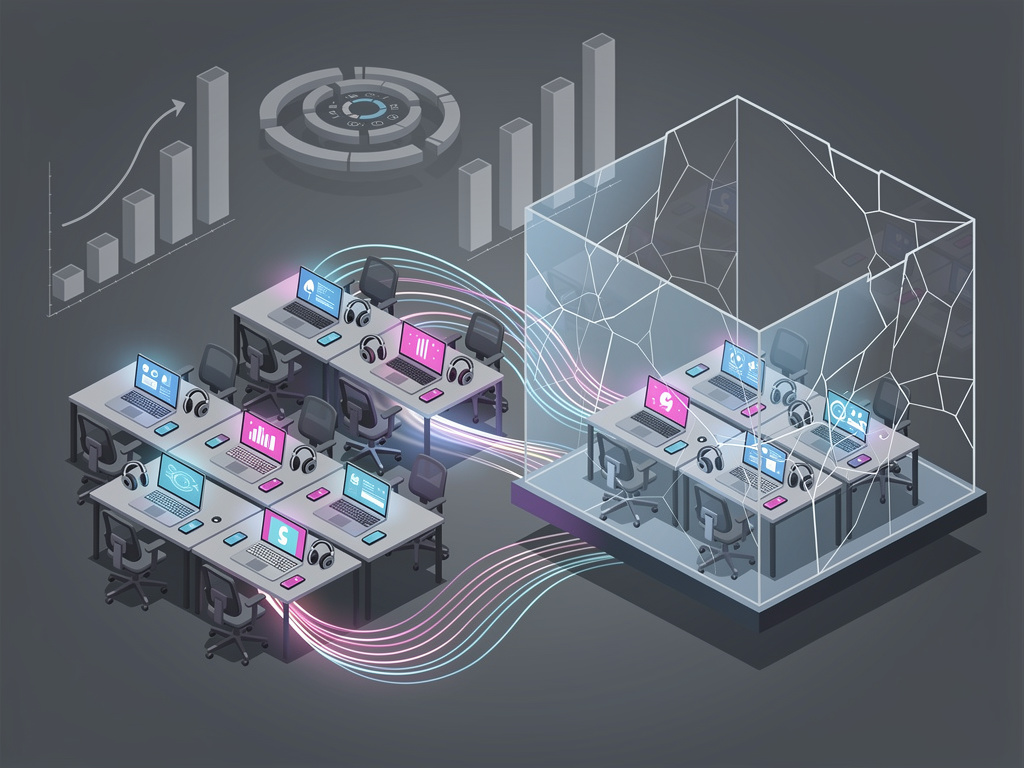
Gen Z employees stand apart in offices and on video calls. They report far higher levels of disconnection than any other age group. A new study from Workday shows they are 12 times more likely than Gen X workers to feel completely cut off from their colleagues. They are 16 times more likely to say they do not trust the people around them. And the consequences run deep.
More than four in 10 Gen Z staffers rarely or never talk with coworkers about anything beyond tasks and deadlines. Over a third say they lack colleagues they can confide in about personal matters. One in five feel lonely at work often or very often. Nearly eight times as likely as Gen X to experience that isolation. To cope, a fifth have taken time off in the past year. The numbers come from a fresh Fortune report that lays bare a generational rift managers can no longer ignore.
Carrie Varoquiers, chief impact officer at Workday, points to the obvious contradiction. “We’re living in a world where we’re hyper-connected online and yet experiencing high rates of loneliness and anxiety,” she told Fortune. “Gen Z might simply be feeling this mismatch most acutely.” They grew up with digital tools and social media. Now they sit in workplaces that offer few chances for real conversation. The gap hurts.
But the roots run deeper than any single survey. The pandemic hit at the worst possible moment. Many in this cohort began their careers from couches and bedrooms. They missed the casual rituals that once taught trust. Shadowing a manager. Overhearing a deal close. Chatting after a meeting. Without those experiences, building shared confidence feels foreign. The Workday report notes exactly that. Gen Zers “are still working through how to lean on their colleagues and build shared trust.”
Other data echo the pattern. Gallup research finds 54% of Gen Z and younger Millennials not engaged at work. A higher share than older generations. Most do not feel close to their coworkers, managers or employers. Stress compounds everything. Sixty-eight percent report feeling stressed a lot of the time. Burnout follows. So does the urge to stay home.
A separate Bingo Card Center survey of 2,000 U.S. workers, covered by the New York State Society of CPAs, adds nuance. Sixty percent of Gen Z employees wish they were closer to colleagues. That exceeds the national average of 46%. They socialize outside the office more often than older workers yet report fewer close workplace friendships and greater emotional distance. The desire for connection exists. The pathways do not.
Broader trends make the problem worse. Deloitte’s 2026 Global Gen Z and Millennial Survey, released in May, shows these generations prioritizing stability, skills and well-being over rapid advancement. More than half of Gen Z respondents, 55%, are delaying major life decisions because of financial pressure. Housing costs shape where they work and how they live. Only 25% seek fast-paced career progression. Just 6% name leadership as their primary goal. They want sustainable workloads. Clear support. Achievable paths. When those elements are missing, isolation grows.
Economic anxiety feeds the distrust. NYU professor Suzy Welch argues the “lazy” stereotype misses the point. Gen Z has “lost sight of economic security, with little hope they could ever earn as much as their parents.” Housing prices have outrun salary growth. Promotions feel scarce. AI disrupts career tracks once considered safe. Multimillionaire podcaster Mel Robbins put it plainly in a widely shared video. “The world is in chaos—and most twentysomethings had parents that lived in a very predictable, stable economy. They went to a corporate job, they reported to the office, they had a network of friends at work. That’s not the typical 20-year-old experience.”
Even preparation feels inadequate. A 2025 Criteria report found only 8% of hiring professionals believe Gen Z graduates are ready for the workplace. Less than a quarter of young people themselves think their generation is prepared. Tessa West, psychology professor at NYU, ties some of the gap to missing social practice. Those without romantic relationships often skip the friction of negotiation and mediation that builds office skills. “What seemed like an obvious norm before, how to talk to the boss, what time you need to show up, this younger generation doesn’t have ground rules for,” she told Fortune.
Remote and hybrid arrangements amplify the distance. A 2026 CoworkingCafe survey, referenced in recent analysis on Medium, found 20% of Gen Z remote workers experience high-frequency loneliness. That rate doubles the figure for Millennials. Gallup data from the prior year identified Gen Z as the loneliest cohort in the workforce. Productivity suffers. Motivation drops. Absenteeism rises. One global health-economic estimate placed annual workplace productivity losses tied to loneliness at $154 billion. The cost is no longer abstract.
Yet stereotypes persist. Some employers have given up. Six in 10 said they had fired a Gen Z worker hired straight out of college, according to a 2024 Intelligent.com study. The label sticks even as evidence mounts that structural forces, not character flaws, drive much of the behavior. Gen Z values output over hours. Work-life balance ranks high. Many see jobs as temporary situationships rather than lifelong commitments. Distrust and risk aversion accelerate exits. Almost 60% view their role as short-term in some recent informal polls shared on social platforms.
Leaders face a choice. They can blame the cohort. Or they can act on the signals. Varoquiers urges the latter. Listen to what Gen Z is saying about the modern workplace. Use AI to cut administrative friction. But do not let technology replace human exchange. Protect time for mentoring. Create space for cross-generational collaboration. Encourage real conversations that go beyond to-do lists. “It should be part of every leader’s job to protect time for mentoring, cross-generational collaboration, and real conversations,” she said.
Some organizations already experiment with solutions. Structured social events. Intentional mentorship pairings. Clear expectations paired with regular feedback. Gallup notes that younger workers respond well to those elements. They want career development. Flexibility that supports well-being. Managers who communicate realistically. When those conditions appear, engagement improves. Connection follows.
The alternative looks expensive. Higher turnover. Lower output. Persistent mental-health claims. Continued disengagement that ripples across teams. Older workers feel the strain too when collaboration falters and knowledge transfer stalls. As Deloitte warns, retiring generations risk taking institutional knowledge with them. Gen Z must absorb it. Without trust, that transfer fails.
Stanford psychologist Jamil Zaki, in research tied to the 2025 World Happiness Report, offers a broader view. Young adults crave closeness. They misjudge how much their peers want the same thing. In a polarized, online-heavy environment, hesitation wins. The result is lower happiness compared with older adults. The workplace sits at the center of that cycle. It can either reinforce isolation or break it.
Change will not come from policy alone. It demands daily habits. Managers scheduling unstructured time. Teams mixing in-person and virtual interaction thoughtfully. Companies measuring belonging with the same rigor they apply to output. Gen Z has made its priorities clear. Stability before sprinting. Relationships before relentless advancement. Well-being as a baseline, not a perk.
Whether employers meet that standard will shape retention, culture and performance for years. The data leaves little room for doubt. A generation that started work amid upheaval now signals what it needs to thrive. The question is whether leaders will respond with understanding. Or with the same old assumptions that have already widened the divide.


 WebProNews is an iEntry Publication