
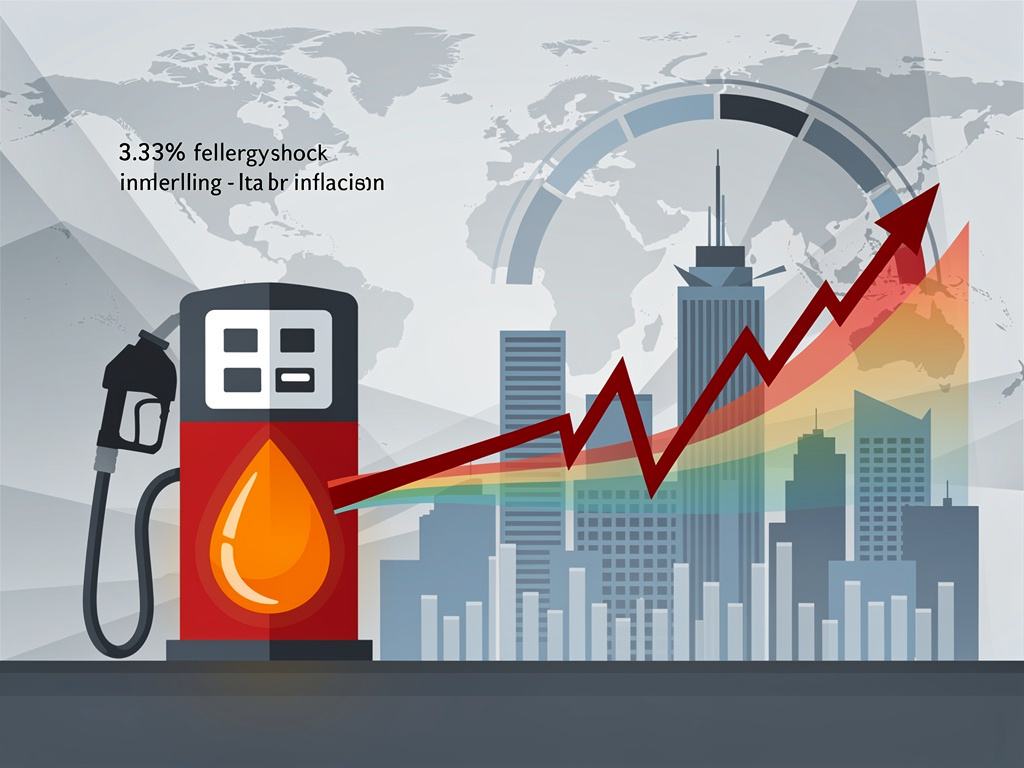
Consumer prices in the U.S. jumped 0.9% in March, the sharpest monthly rise since June 2022. That pushed the annual inflation rate to 3.3%, up from 2.4% in February and the highest since May 2024. Gasoline prices, soaring 21.2% in the month, drove nearly three-quarters of the increase. The Labor Department’s Bureau of Labor Statistics delivered the report on April 10, confirming fears that the war with Iran would jolt energy costs and ripple through the economy (BLS CPI Report).
Energy costs overall climbed 10.9% for the month. Gasoline led the charge. Diesel and fuel oils followed close behind, with fuel oil prices up 44.2% year over year. Food prices held steady, ticking up just 0.0% monthly after seasonal adjustment. Shelter costs, a persistent drag, rose 0.4%—still contributing to annual inflation of 3%. Used cars and trucks offered some relief, down 3.2% over the year.
Core CPI, stripping out food and energy, tells a different story. It advanced 0.2% monthly, below the expected 0.3%. Annually, core hit 2.6%, shy of the 2.7% forecast. Economists watch this gauge closely. It signals underlying trends less swayed by headlines like war-driven oil spikes (CNBC).
And yet. Markets shrugged. Stocks edged higher post-release. Treasury yields stayed choppy but didn’t spike. Traders had priced in the headline heat, focusing instead on tame core figures. The S&P 500 gained 0.5% that Friday. Bond futures held steady. Relief that the energy blast hadn’t ignited broader price pressures.
Why Gasoline—and Why Now?
The culprit? Iran’s role in global oil supply. U.S.-Israeli strikes disrupted flows through the Strait of Hormuz. Brent crude topped $108 a barrel. U.S. gasoline averaged over $4 a gallon nationally for the first time in three years, up from $3.06 on Biden’s last day in office. Diesel hit $5.47 by late April.
Fox Business pinned the surge directly on the conflict: “Inflation surged in March as consumer prices jumped amid the economic disruptions caused by the Iran war’s impact on the energy market” (Fox Business). CNN echoed: Gasoline rose 21.2% last month, a record monthly jump tied to the “chokehold that Iran has on global oil supply” (CNN).
Reuters broke it down: Gasoline accounted for nearly three-quarters of the CPI rise. The 0.9% headline matched expectations but marked the biggest leap since Russia’s Ukraine invasion hammered prices four years prior (Reuters). Shelter remained sticky at 3% annually. Food inflation eased to 2.7%.
Producer prices followed suit later that week. The PPI rose 0.5% in March, below forecasts but yielding 4% annual growth—the highest in three years. Energy again: war-fueled wholesale pressures building (WSJ).
Consumers feel it at the pump. And in budgets. Confidence inched up to 92.8 in April despite spiking prices, per recent surveys. But affordability strains mount. President Trump, who campaigned on slashing costs, faces blowback. X posts lit up: “March ’26 CPI: up 0.9% m/m, 3.3% y/y,” one user noted, tying it to gas at $4.30 versus $3.06 pre-term.
Fed’s Tightrope: War Heat Versus Core Calm
Federal Reserve officials face a puzzle. Headline inflation tripled monthly. Yet core stays near 2%. The Fed hiked its 2026 inflation forecast in March to 2.7% from 2.4%, core too. Dot plot signals just one 25-basis-point cut all year.
“The jump in headline CPI inflation to 3.3% in March, from 2.4%, was as expected due to the surge in energy prices,” Capital Economics wrote. They see core PCE—Fed’s preferred gauge—translating to 0.32% monthly, above target but contained (Capital Economics).
WSJ reported: Core rose 2.6%, below forecasts. Markets calm because “traders are also likely breathing a sigh of relief after the data showed only limited second-order effects from the war’s energy shock” (WSJ). Bloomberg agreed: Underlying inflation tamer amid the gas surge.
But risks linger. If oil stays high, second-round effects could hit wages, rents. New York Fed’s consumer survey saw one-year expectations at 3.4% in March, up but below peaks. Cleveland Fed nowcasts point to April CPI at 3.71%, PCE 3.58%.
Politically charged too. Joint Economic Committee flagged CPI at 3.26% y/y, core 2.60%. Gas above $4 tests promises. X chatter contrasts it with prior peaks: average under Biden 4.9%, cumulative prices up 21%.
Short term: pump pain dominates. Long term: watch core. If it climbs, rate cuts vanish. Energy eases? Relief ahead. War’s shadow lengthens. Inflation’s path hinges on Middle East peace—and oil’s wild ride.


 WebProNews is an iEntry Publication