
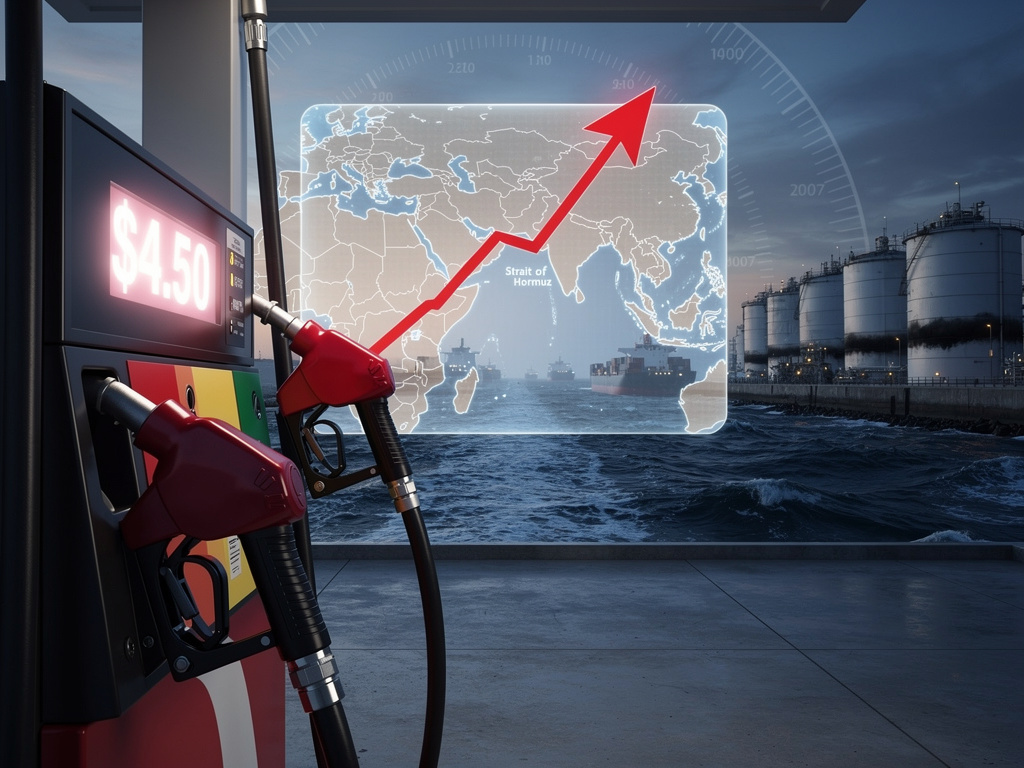
The national average for a gallon of regular gasoline now sits above $4.50. That mark arrived faster than many expected. Just weeks ago prices hovered near $4. And the climb shows no sign of easing.
Oil markets took a direct hit once fighting erupted in the Persian Gulf. Roughly one-fifth of the world’s crude passes through the Strait of Hormuz. Disruptions there sent benchmark prices soaring. The Wall Street Journal tracked the surge in real time. Its live coverage captured the moment the U.S. average crossed the threshold. California drivers face even steeper costs. Many pay more than $6 per gallon.
But the pain spreads far beyond the coasts. AAA data shows the national average reached $4.536 in early May. That figure stands 50 percent higher than before the conflict began in late February. Diesel prices have climbed to $5.67. Truckers feel the difference immediately. So do families filling up for summer road trips.
President Donald Trump has promised relief. “The gas will go down as soon as the war is over,” he said. “It will drop like a rock.” Yet his own Energy Secretary Chris Wright admitted prices may not return to pre-war levels until 2027. The mixed messages leave drivers uncertain. And markets volatile.
Recent developments add pressure. Trump rejected Iran’s latest peace proposal as “totally unacceptable.” Oil prices jumped nearly 3 percent in response. Brent crude climbed above $104 a barrel. The Associated Press reported the deadlock has kept the Strait of Hormuz partially blocked. Tanker traffic slowed. Inventories tightened.
U.S. gasoline stockpiles hit their lowest seasonal level since 2014. Economists warn of further seasonal drops. Inflation data due this week will likely reflect the energy shock. New figures from AOL highlight how the conflict continues to push consumer prices higher. One analysis projects averages could touch $5 by summer without resolution.
Drivers have already changed habits. A recent poll found nearly 80 percent say high prices strain their budgets. Forty-four percent report cutting back on driving. The economic ripple reaches retailers, airlines, and manufacturers. Shipping costs rise with diesel. Those expenses pass to consumers.
State variations tell a sharper story. Six states sit at or above $5 per gallon. California leads. Yet even traditionally cheaper markets in the Gulf Coast see double-digit percentage gains since February. NBC News mapped the increases. The graphic shows gains exceeding 50 percent in several interior states.
Secretary of State Marco Rubio offered a different perspective. He called the United States “very fortunate” that prices have not reached $8 or $9. The comment drew criticism. The Guardian quoted him directly. Rubio argued a nuclear-armed Iran would have produced worse outcomes. Few drivers find comfort in that comparison.
Trump floated suspending the federal gas tax. The move would shave about 18 cents off each gallon. Congress must approve it. Skeptics call the step symbolic. At current levels 18 cents barely registers. Still, the proposal signals recognition of voter frustration.
Global reactions vary. China scrambles to secure alternative supplies. Beijing eyes greater leverage in talks with Washington. Fox Business noted how the conflict strengthens Trump’s hand on oil even as it raises costs at home. European buyers face their own spikes. Worldwide fuel prices shifted sharply upward according to Statista charts published this week.
Refiners operate near capacity. Some Kuwaiti production cuts compounded the shortage. American stockpiles cannot fully offset lost Persian Gulf barrels. Experts point to the speed of the price rise. Thirty cents in one week. More than $1.50 since late February. No one anticipated this pace.
Yet history offers context. Prices exceeded $4 during the 2022 Ukraine shock. They later fell. Optimists cling to that pattern. Trump insists the current war will end with decisive results. Once Hormuz traffic resumes, he predicts a rapid drop. Markets remain skeptical. Futures contracts show elevated prices through 2027.
Political fallout builds. Six in ten Americans disapprove of Trump’s handling of the Iran situation according to PBS polling. High fuel costs amplify that sentiment. Democrats label the conflict a “war of choice.” They tie every pump price increase to administration decisions.
Republicans counter that pre-war diplomacy failed. They argue confrontation became necessary. The debate grows louder as summer approaches. Families plan vacations. Businesses set budgets. Everyone watches the numbers.
New inflation readings arrive Tuesday. They will capture April’s energy surge. Analysts expect headline consumer prices to reflect gasoline’s contribution. Food costs may follow if transport expenses stay elevated. The full picture emerges slowly. But early signals point to persistent pressure.
Energy Secretary Wright’s timeline offers little short-term hope. He sees no return to sub-$3 gasoline before late next year. That forecast assumes the conflict winds down. Current talks suggest otherwise. Positions remain far apart. Ceasefire prospects sit on “life support,” Trump said Monday.
Drivers in Illinois, Oregon, and Washington pay near $5. Alaska and Hawaii exceed that in many areas. The national figure masks regional hardship. Rural commuters travel farther. Urban delivery services absorb higher fleet costs.
Some analysts see opportunity amid the chaos. Domestic production could expand. U.S. shale output has room to grow. Yet permitting, labor, and infrastructure limit quick gains. The war exposed vulnerabilities in global supply chains. Those weaknesses will not vanish quickly.
So prices stay high. Markets price in prolonged uncertainty. And American wallets absorb the difference. The coming weeks may bring more volatility. Or they may deliver the relief officials promise. For now, the pump tells its own story. One that costs more every fill-up.


 WebProNews is an iEntry Publication