
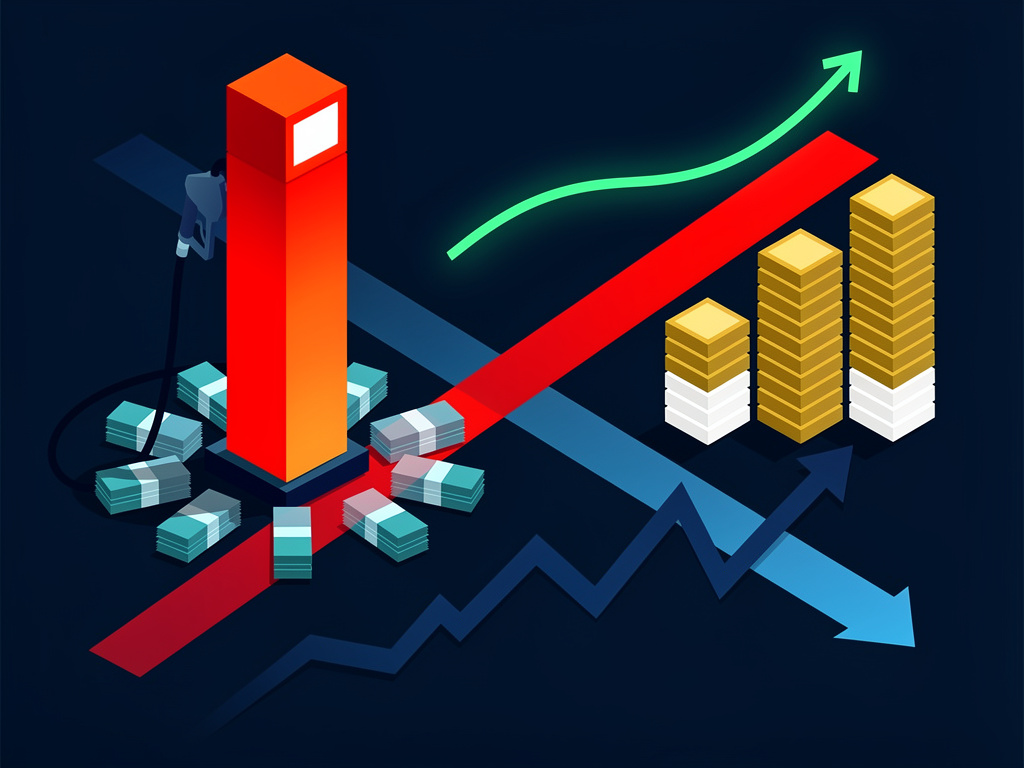
Gasoline now costs Americans an average of $4.49 a gallon. That figure marks a 51% jump since late February, before conflict in the Middle East choked oil flows through the Strait of Hormuz. Pump prices have hovered at or above $4.50 for nearly all of May. The surge has done more than sting wallets. It has reshaped spending patterns in ways that widen existing divides.
Two-thirds of consumers say they are pulling back. Many have trimmed overall purchases. Others delay big-ticket items. Plans to spend less on clothes, shoes, hobbies, toys and games have become common. Real wages tell a similar story. Average hourly earnings, after adjusting for rising prices, shrank in April compared with a year earlier. It was the first such drop in three years. Fortune reported these shifts alongside fresh readings from the Conference Board and University of Michigan surveys.
Consumer confidence slipped. The Conference Board’s index fell 0.7 points to 93.1 in May. That decline ended three months of gains. The University of Michigan’s sentiment measure hit a record low. These drops stand in sharp contrast to stock prices hovering near records. The economy keeps growing on paper. At the street level the strain shows.
Inflation climbed to 3.8% in April. That rate stands as the highest in three years and well above the Federal Reserve’s 2% target. Energy costs led the way. The Bureau of Labor Statistics recorded a 17.9% rise in the energy index over the past 12 months. Gasoline itself jumped 28.4%. April alone saw gasoline prices climb 5.4% before seasonal adjustment. Bureau of Labor Statistics data laid bare the monthly acceleration.
But the pain does not land evenly. New research from the Federal Reserve Bank of New York reveals a stark K-shaped response at the pump. Lower-income households, those earning under $40,000 a year, increased their nominal spending on gasoline by just 12% in March. They achieved that by cutting the actual amount of gas they bought by 7%. Higher-income households, those above $125,000, boosted nominal outlays by 19% while trimming real consumption by only 1%. Overall nominal gas spending across all groups rose more than 15%. Real consumption fell about 3%.
The New York Fed team analyzed data from a large consumer panel tracked by Numerator. They deflated spending figures with income-specific gasoline price indexes. The pattern echoes what happened after Russia’s 2022 invasion of Ukraine. This time the gaps between income groups proved wider. “With the sharp increases in gasoline prices in March 2026, a K-shaped pattern in gasoline consumption emerged—showing faster consumption growth for high-income households relative to low-income households,” the researchers wrote in their Liberty Street Economics post.
Lower-income drivers appear to have turned to carpooling, public transit where available, or simply driving fewer miles. Higher-income households absorbed the price increase with little change in behavior. The result? Faster real consumption growth for the affluent even amid the same external shock. CNBC highlighted how this dynamic hurts those least able to absorb higher costs. Federal Reserve Chair Jerome Powell has noted repeatedly that inflation weighs more heavily on lower-income families.
Retail sales data reinforce the picture. Spending at gas stations rose in April but far less than in March. Meanwhile purchases of furniture, cars, clothing and department-store goods declined. Americans are redirecting dollars to the tank and away from discretionary categories. CNN reported the shift in mid-May coverage of Commerce Department figures.
Goldman Sachs economists have tracked the broader consumer outlook. Kate McShane, co-head of U.S. consumer research, pointed to energy prices as the biggest change from earlier forecasts. The firm expects energy spending to grow about 14% this year. Bonnie Herzog, her counterpart, stressed the disproportionate burden. “Higher gasoline prices will disproportionately burden the bottom-income quintile, who spend roughly four times as much on gasoline as a share of after-tax income compared to the top quintile,” she said. Goldman Sachs published the analysis on May 8.
Corporate executives have echoed the warnings. On earnings calls, leaders from consumer goods companies described customers running short of cash by month’s end. Kraft Heinz CEO Steve Cahillane told Bloomberg that lower-earning shoppers are “literally running out of money.” Axios captured those comments in a May 11 report on savings drawdowns.
The New York Times framed the divide in human terms. Lower-income Americans are driving less and devoting larger shares of tight budgets to transportation. Higher-income buyers largely maintained their mileage. The paper drew directly from the same New York Fed study. The New York Times story appeared the same day as the research release.
Recent readings show little relief. As of late May the national average stood near $4.51. Memorial Day weekend prices reached four-year highs, according to AAA data. Consumer confidence surveys released this week confirmed ongoing pressure. The May decline came as gas prices stayed elevated and inflation refused to ease. Spectrum News reported the latest figures on May 26.
Wage growth once offset some of these forces. No longer. Post-pandemic price increases have outpaced hourly earnings for many. Cumulative consumer prices have risen 28% since early 2020 while average hourly earnings grew only 30%. That leaves real wages essentially flat. The gap matters most for households without financial buffers.
Economists at the New York Fed and Goldman Sachs both warn that sustained high energy costs could dampen broader spending. Lower-income cuts in discretionary categories may already be visible in retail data. Yet the economy has held up so far. Wealth effects, tax cuts and a still-solid labor market provide some cushion. How long that lasts depends on whether oil prices moderate.
Brent crude has traded near $100 a barrel in recent weeks, up sharply from $61 at the end of last year. Goldman Sachs commodities strategists see it averaging $90 in the fourth quarter. Any reopening of blocked shipping routes could ease pressure. Until then the uneven burden at the pump continues to shape consumer behavior. Lower-income families cut back first and deepest. Everyone feels the pinch. The data show who feels it more.


 WebProNews is an iEntry Publication