
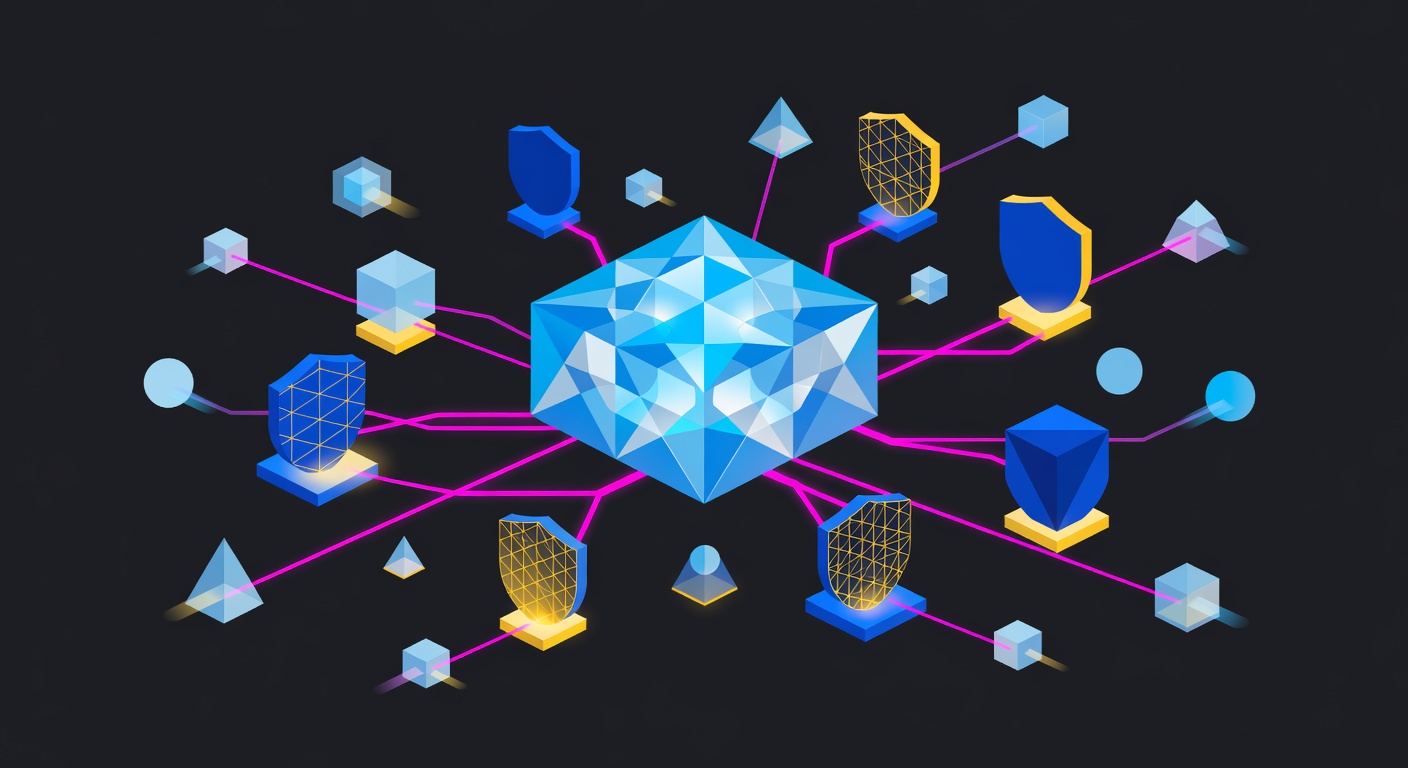
Analysts at Gartner unveiled their top 10 strategic technology trends for 2026 last fall, but the list resonates louder now amid surging AI infrastructure demands and geopolitical tensions. Enterprises face a clear mandate. Build scalable AI foundations. Orchestrate intelligent agents. Protect data amid rising threats. The trends cluster into three themes—The Architect for infrastructure, The Synthesist for orchestration, The Vanguard for defense—that demand immediate action from CIOs plotting 2026 budgets.
Start with the foundations. AI-native development platforms embed generative AI into the software lifecycle. Small teams craft applications via natural language prompts, slashing code needs and speeding iteration. Gartner notes these tools suit ‘forward-deployed engineers’ working alongside domain experts. Gartner sees them enabling tiny human-AI pairs to match larger developer groups.
AI supercomputing platforms follow. They blend CPUs, GPUs, AI ASICs, neuromorphic chips and more to tackle massive workloads. Training next-gen models demands this power. But costs mount. Energy strains grids. Gartner warns governance must curb excesses. A recent Forbes analysis echoes this: as datasets balloon, compute becomes a strategic choice, not just technical.
Confidential computing seals the base layer. It encrypts data during processing in trusted execution environments. Clouds stay untrusted. Regulated sectors cheer. Finance. Healthcare. Utilities. All gain from protection beyond storage or transit. IT leaders integrate this now to meet compliance without slowing AI.
Orchestration demands new thinking. Multiagent systems mark the pivot.
Single AI copilots fade. Enter swarms of agents collaborating on complex goals. They divide tasks. Negotiate. Adapt. Gartner predicts 40% of enterprise apps will deploy them for marketing, logistics, coding by year-end. A post from AI strategist Syed Ijlal Hussain on X highlights the shift: organizations renting cloud compute risk outsourcing execution control entirely.
Domain-specific language models sharpen focus. Tailored on industry data—legal docs, medical records, financials—they outperform general LLMs. Accuracy rises. Compliance holds. No more generic models fumbling specialized work.
Physical AI bridges digital to real. Robots. Drones. Smart gear gain intelligence for factories, warehouses, fields. Operations transform. Gartner ties this to broader synthesis: combine agents and models for tangible gains.
Protection closes the loop. Preemptive cybersecurity uses AI to block threats pre-impact. Reactivity ends. Proactive staves off attacks. Digital provenance verifies software, data, AI outputs’ origins. Trust builds. No deepfakes fooling stakeholders.
AI security platforms unify oversight. They guard third-party and custom AIs against prompt injections, leaks, rogue actions. Centralized policies. Visibility everywhere. ZDNet reports these platforms enforce guardrails across vendors, vital as AI sprawls. ZDNet.
Geopatriation rounds it out. Shift workloads to sovereign clouds amid data laws, trade wars. U.S. firms eye regional providers. Europe tightens rules. Gartner calls this risk mitigation in a fragmented world.
Why act? AI spending hits $2.52 trillion in 2026, up 44%, per Gartner forecasts cited in ZDNet. Yet 90% of projects flop without capacity, partnerships, focus. Infrastructure buildouts dominate. Agent governance emerges key.
IT managers reshape roadmaps. Infrastructure upgrades first—supercomputing, confidential tech. Dev teams adopt AI-native tools. Security stacks preemptive layers. Agent pilots test multiagent flows in logistics, compliance.
Challenges loom. Energy shortfalls pinch U.S. grids by 18 gigawatts. X discussions note Bitcoin sites converting to AI via gas turbines. Compute scarcity favors owners. Renters lag.
But winners emerge. Firms owning stacks control speed, scale. They align AI with business. Scale securely. Forrester and others track composable architectures aiding shifts, as CIO.com notes in SAP contexts. CIO.com.
Gartner stresses interconnection. Trends reinforce each other. Supercomputing powers agents. Provenance secures physical AI. Geopatriation fits confidential needs. Ignore one, others falter.
CIOs prioritize. Assess current stacks. Pilot multiagents. Map data sovereignty risks. Budget for supercompute. 2026 roadmaps hinge here. Delay cedes ground.
Fragment. Yes.
But executable.


 WebProNews is an iEntry Publication