
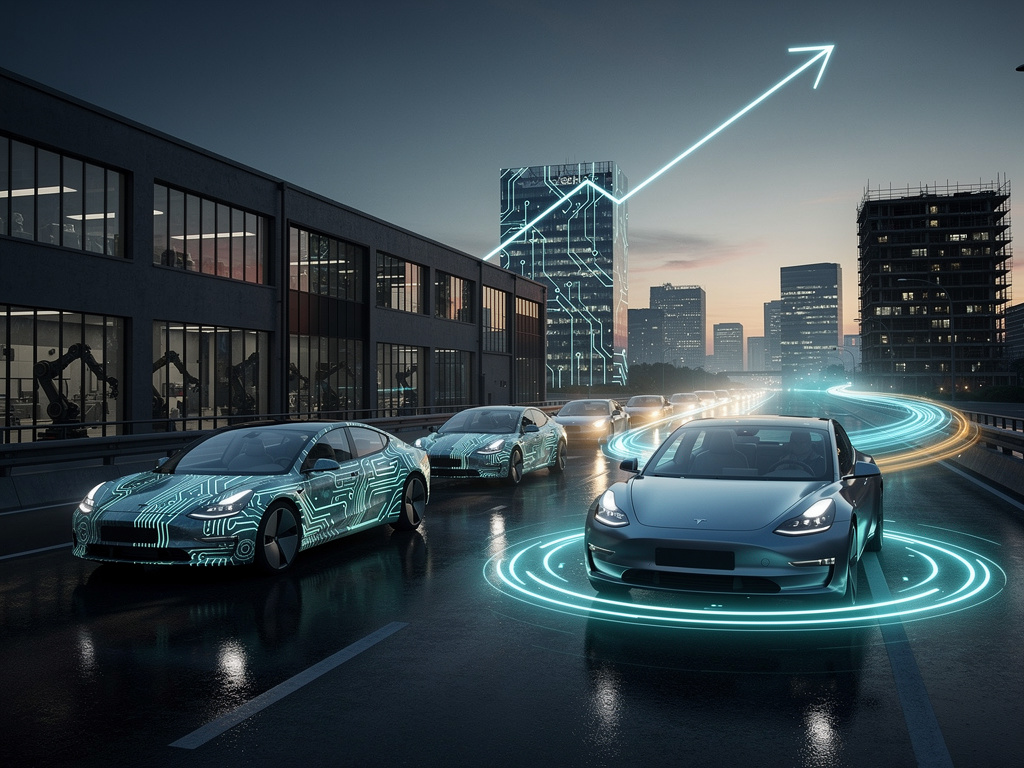
The Fading Glow of Automotive AI: A Looming Investment Retreat
In the high-stakes world of automotive innovation, artificial intelligence has sparked a frenzy of investment, with companies pouring billions into technologies promising smarter vehicles, autonomous driving, and streamlined manufacturing. Yet, a recent report from Gartner paints a stark picture of an impending slowdown. According to the analysis, while over 95% of automakers are currently ramping up AI spending, only a scant 5% are expected to maintain that momentum by 2029. This dramatic shift raises critical questions about the sustainability of AI initiatives in an industry grappling with legacy systems and shifting priorities.
The report, highlighted in a TechRepublic article, underscores how the initial euphoria surrounding AI may give way to pragmatism as returns on investment fail to materialize quickly enough for many players. Gartner analysts point to internal challenges, such as outdated organizational structures and a lack of software expertise, as key barriers. For traditional manufacturers, the transition to AI-driven operations isn’t just a matter of funding—it’s a fundamental overhaul of corporate culture and capabilities.
This prediction comes at a time when the automotive sector is already navigating turbulent waters, including supply chain disruptions, regulatory pressures on emissions, and intensifying competition from electric vehicle upstarts. Gartner’s insights suggest that only those with robust software foundations and forward-thinking leadership will thrive, potentially widening the gap between tech-savvy leaders like Tesla and laggards in the field.
The Divide Between Visionaries and Stragglers
Tesla, often cited as a frontrunner, exemplifies the kind of company poised to sustain AI investments. With its integrated approach to software and hardware, the company has leveraged AI for features like Full Self-Driving, amassing vast datasets from its fleet to refine algorithms continuously. In contrast, legacy giants like Volkswagen face steeper climbs. As noted in a Reuters report, Volkswagen’s engineering heritage, while storied, doesn’t easily translate to the digital agility required for AI dominance.
Gartner’s Pedro Pacheco, a senior analyst, emphasizes the need for “digital-first” organizations. This means breaking down silos, ensuring software leaders report directly to CEOs, and fostering a long-term commitment to AI beyond short-term hype. Posts on X, formerly Twitter, echo this sentiment, with users discussing how companies like NVIDIA are capitalizing on AI hardware demands, projecting massive growth in related markets. One such post highlighted Gartner’s forecast of a 140% CAGR for AI applications, reaching $150 billion by 2029, underscoring the broader opportunity that automakers might miss if they falter.
The competitive dynamics are further complicated by geopolitical tensions. Trade frictions between China and the West, particularly in the electric vehicle space, add layers of uncertainty. A Gartner press release from earlier this year noted uncertainties in emission regulations, which could divert resources away from AI toward compliance efforts.
Internal Hurdles and the Software Imperative
Delving deeper, the challenges for legacy automakers are multifaceted. Many have built their empires on mechanical engineering prowess, but AI demands proficiency in data management, machine learning, and cloud computing—areas where tech natives hold the edge. BYD, the Chinese EV giant, is another example of a company blending manufacturing scale with software innovation, positioning it well for sustained AI growth.
According to an Investing.com piece, traditional players struggle with “outdated mindsets” that hinder transformation. Pacheco explains that success requires eliminating internal barriers and prioritizing technology at the executive level. This isn’t merely about hiring data scientists; it’s about embedding AI into every facet of operations, from design to supply chain optimization.
Recent news on X reflects a mix of optimism and caution. Discussions around Gartner’s predictions warn of an “AI euphoria” set to collapse, with posts noting how only a handful of manufacturers will push ahead while others “hit the brakes.” This social media buzz aligns with broader industry chatter, where analysts debate whether the current investment surge is a bubble or a genuine paradigm shift.
Broader Implications for Innovation and Market Share
The ramifications of this projected slowdown extend beyond individual companies. If only 5% of automakers sustain heavy AI spending, the sector could see a consolidation of innovation among a elite few, potentially stifling competition and slowing overall progress toward autonomous mobility. Gartner anticipates that by 2029, the divide will deepen, with winners pulling ahead in areas like predictive maintenance, personalized in-car experiences, and advanced driver-assistance systems.
A The Register article frames this as manufacturers “hitting the brakes,” suggesting that ROI concerns will force many to scale back. This is particularly poignant given the hype around AI agents and AI-ready data, as outlined in Gartner’s 2025 Hype Cycle for Artificial Intelligence, which identifies these as rapidly advancing technologies.
Moreover, the integration of AI with electric vehicles adds another dimension. Gartner’s forecasts predict 116 million EVs on roads by 2026, with AI playing a crucial role in battery management and autonomous features. Yet, if investments wane, this could delay widespread adoption, affecting everything from urban planning to energy grids.
Case Studies in AI Perseverance
Examining specific examples illuminates the path forward. Tesla’s consistent focus on AI has not only enhanced its vehicles but also created new revenue streams through software updates and robotaxi ambitions. Posts on X frequently tout Tesla’s data advantage, with one noting its potential in a self-driving market projected to hit $200 billion by 2030.
On the other hand, companies like General Motors and Ford have made bold AI pledges but face skepticism about long-term commitment. Their partnerships with tech firms, such as GM’s collaboration with Cruise for autonomy, show promise, but internal restructuring is essential to avoid the predicted pullback.
Gartner’s report, as covered in an ETAuto article, stresses that tech-savvy leadership is non-negotiable. Leaders must view AI not as a buzzword but as a core competency, investing in talent and infrastructure to build resilient systems.
Navigating Uncertainty in a Tech-Driven Future
As the automotive industry stands at this crossroads, strategic pivots could determine survival. For instance, embracing open-source AI tools or forming alliances with tech giants might help laggards catch up without prohibitive costs. However, the clock is ticking, with Gartner’s timeline suggesting that decisions made now will echo through the decade.
News from Automotive World reinforces that legacy automakers’ struggles with software could lead to a “collapse” of current enthusiasm. This is echoed in X conversations, where users speculate on winners like Waymo (under Alphabet) and Uber’s platform plays in autonomy.
Ultimately, the sector’s AI trajectory hinges on balancing ambition with realism. While the initial rush has driven breakthroughs, sustaining it requires more than capital—it demands vision. As one X post put it, companies like NVIDIA are set to benefit from AI’s growth, but automakers must adapt or risk being left in the digital dust.
Strategic Shifts and Long-Term Horizons
Looking ahead, automakers might diversify AI applications to justify continued investment. Beyond autonomy, AI can revolutionize supply chains by predicting disruptions or optimize factories through predictive analytics. Gartner’s broader trends, including AI agents, suggest untapped potential in these areas.
Yet, economic pressures, such as rising interest rates and material costs, could accelerate the slowdown. Analysts on X discuss how generative AI spending is surging overall, with forecasts of $644 billion by next year, but automotive’s slice may shrink if ROI lags.
For industry insiders, this report serves as a wake-up call. Rethinking organizational structures, investing in upskilling, and fostering innovation cultures are imperative. As Pacheco notes in various outlets, the path to AI leadership is paved with persistence, not just promises.
Emerging Opportunities Amid the Retreat
Even in retreat, opportunities abound for nimble players. Startups specializing in AI for automotive could fill gaps left by retreating giants, partnering on niche solutions like edge computing for vehicles. Gartner’s Hype Cycle, referenced in a press release, highlights AI-ready data as a fast-mover, enabling real-time insights that could differentiate products.
Geopolitically, China’s dominance in EVs and AI might pressure Western firms to accelerate, despite trade barriers. Posts on X speculate on BYD’s edge, blending cost efficiency with tech prowess.
In essence, while Gartner’s forecast tempers expectations, it also spotlights a roadmap for those willing to commit. The automotive world’s AI journey is far from over—it’s just entering a more discerning phase, where only the prepared will accelerate ahead.


 WebProNews is an iEntry Publication