
Developers once summoned Claude Code with a single terminal command. They fed it a task, watched it poke through files, and waited while it churned out changes. The process felt personal. One AI, one job, one long conversation that grew heavier with every decision logged in its context window.
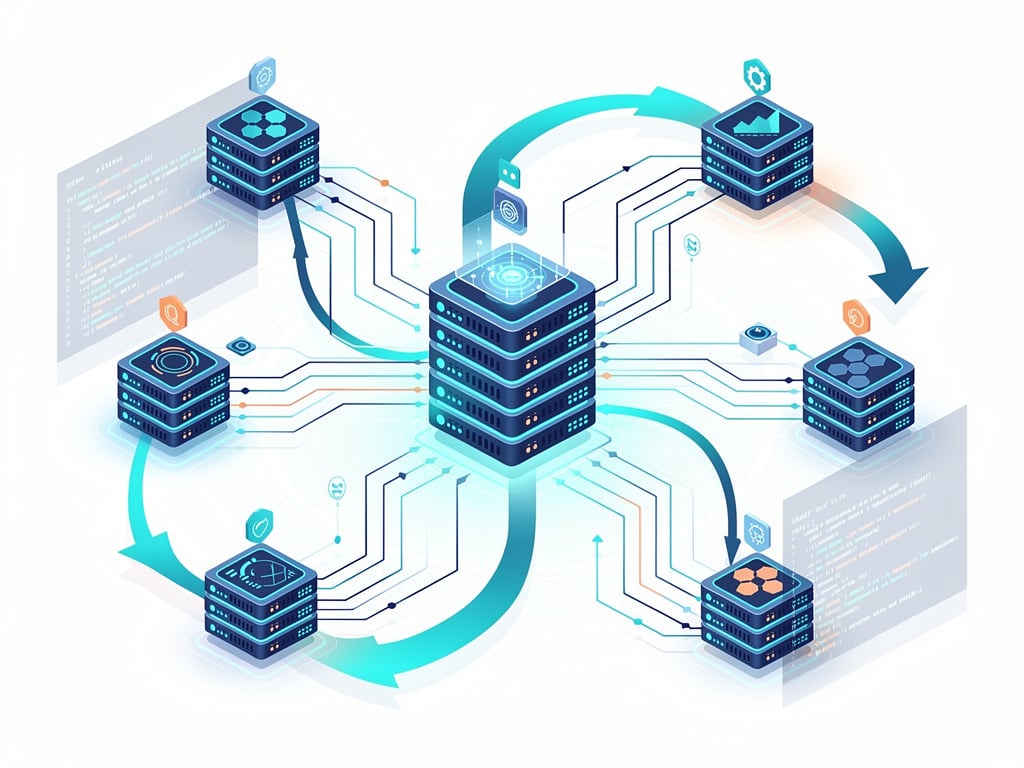
That approach still works. But a growing cohort of engineers has moved past it. They treat the tool as something larger. A coordinator. A lead that spins up specialized helpers, hands off narrow missions, and collects results while everything runs at once. The shift didn’t require new software licenses or exotic infrastructure. It started with better prompts, extra terminal tabs, and a willingness to manage more than one thread of thought.
MakeUseOf first highlighted the pattern in early June. Author Raghav Sethi argued that the single-agent habit hits a wall on any project with moving parts. One session refactoring authentication can’t simultaneously write tests or update documentation. Context swells. Attention drifts. Progress slows to a crawl. Sub-agents fix both bottlenecks. The main session stays lean. Each helper operates in its own clean context. Work happens in parallel.
Sethi laid out the mechanics. Sub-agents live as Markdown files in either a global ~/.claude/agents directory or a project-specific .claude/agents folder. Each carries YAML frontmatter that declares a name, a crisp description that acts like routing instructions, a preferred model, and an explicit list of allowed tools. A test-writing agent gets read and write access but never delete. A reviewer might get read-only. The descriptions matter most. Vague rules produce vague delegation. Specific triggers such as “use this when SwiftUI views or async networking appear” guide the lead agent accurately.
Once those files exist, the main prompt changes. “Spawn three subagents in parallel,” Sethi showed. One builds the login screen. Another stands up API endpoints. A third writes tests for both. The lead waits, gathers outputs, and integrates. No single context window balloons with every intermediate result. Speed improves. Quality holds steadier.
Yet sub-agents represent only the beginning. Practitioners soon graduate to full parallel instances. Simon Willison described his own evolution in an October 2025 post. He keeps multiple terminal windows open, some running Claude Code, others Codex CLI. He launches background agents from his phone. For isolation he often checks out fresh copies of the repository into /tmp rather than risk file conflicts. He runs confident tasks in YOLO mode, skipping approvals, because he trusts the scoped instructions.
“I can only focus on reviewing and landing one significant change at a time,” Willison wrote on his personal site, “but I’m finding an increasing number of tasks that can still be fired off in parallel without adding too much cognitive overhead to my primary work.” Small maintenance items, exploratory research, deprecation fixes, proof-of-concept spikes. These become background noise that no longer interrupts his main flow.
Anthropic itself has leaned into the trend. In May 2026 the company released Opus 4.8 alongside a new dynamic workflows capability inside Claude Code. The model can now plan enormous jobs, dispatch hundreds of parallel sub-agents, let them run longer than before, verify outputs, and return a synthesized result. A single session can tackle codebase-scale migrations measured in hundreds of thousands of lines, using the existing test suite as the sole acceptance bar. The announcement noted double-digit gains in tool-calling accuracy and planning reliability compared with earlier versions.
Official support arrived earlier. Claude Code documentation details an experimental Agent Teams feature, enabled by setting CLAUDE_CODE_EXPERIMENTAL_AGENT_TEAMS=1. A lead session creates a team. It spawns teammate instances, each with its own context window. A shared task list lets teammates claim work. A mailbox allows direct peer-to-peer messages that bypass the lead. The lead assigns, monitors, and synthesizes. Documentation recommends three to five teammates for most jobs. Parallel code review from distinct perspectives works well. So does exploring competing hypotheses about a bug. Sequential changes to the same file do not. Those stay on the main thread or use simpler sub-agents.
Engineers have built their own scaffolding on top of these primitives. Some rely on git worktrees to give each instance a clean working directory without duplicating the entire history. Others orchestrate through tmux sessions, custom dashboards, or small open-source wrappers such as Claude Squad and CCManager. A few run agents inside isolated containers or cloud sandboxes so that even YOLO mode carries limited blast radius. Token spend rises, sometimes dramatically. Yet many report that the acceleration justifies the cost when applied to the right problems.
Real results have started to appear in public benchmarks and company reports. Rakuten fed a 12.5-million-line codebase to Claude Code and saw the system complete an activation vector extraction task autonomously in seven hours with 99.9 percent accuracy, according to Anthropic’s 2026 Agentic Coding Trends Report. Other organizations describe shifting from weeks of cross-team coordination to hours of orchestrated agent time. The pattern repeats. One lead agent decomposes. Many workers execute. One reviewer, usually human, integrates.
But the approach carries sharp edges. Review burden grows when agents ship code faster than any single person can absorb it. Context amnesia can still strike if inter-agent messaging fails to carry critical details. Security questions multiply when agents hold broad tool access or run without approval gates. Recent Claude Code updates quietly adjusted how cross-session messages carry user authority, a change that alters the threat model for anyone orchestrating multiple instances, as one engineer noted on X in early June 2026.
Cost matters too. Parallel setups consume tokens at a linear or worse rate. Free local model pairings help for experimentation, yet production-scale work on frontier models adds up. Engineers learn to reserve the swarm for exploration, test generation, multi-angle analysis, and large refactors. They keep atomic changes on the main session.
The community has coalesced around a few repeatable habits. Start small. Give agents explicit, self-contained missions. Use clear role descriptions. Monitor early and often. Reserve parallel capacity for work that truly decomposes without tight dependencies. And treat the lead session as the single source of truth that ultimately ships to the repository.
That last point explains why the technique has spread so quickly among experienced developers. They aren’t abdicating responsibility. They are scaling their own capacity. The human still sets direction, judges trade-offs, and accepts accountability for the final output. The agents simply remove the queue. They turn serial effort into concurrent progress.
Look across recent discussions on X and developer forums and the same sentiment surfaces. Engineers who once waited on one Claude Code instance now keep several running without breaking stride. They fire off a research swarm while they review output from yesterday’s refactor. They spin up specialized reviewers that attack a pull request from frontend, security, and performance angles simultaneously. They watch the terminal fill with parallel progress bars and realize the old single-threaded workflow feels oddly limited.
Anthropic continues to invest. Later model releases have strengthened judgment, reduced tool errors, and extended the practical length of autonomous runs. The company positions these gains as exactly what teams need when they move from one-on-one pairing with agents to managing cohorts of them. The tools are catching up to the behavior developers invented months earlier through nothing more than clever prompts and extra shell sessions.
The result is a quiet but meaningful change in daily practice. Coding no longer feels like a conversation with a single very fast intern. It feels like standing in a control room where specialists handle their lanes, report status, and wait for the next directive. The lead still makes the calls. But the team gets far more done before lunch.
Plenty of work remains. Better visualization of parallel state, automatic conflict detection, cheaper long-running agents, and standardized patterns for handoff and verification will arrive in time. Until then, the engineers who have already adopted the swarm approach report the same outcome. They ship more. They context-switch less. And they spend their own cycles on the problems that actually require human taste and accountability.
Single agent was the gateway drug. The army came next. And once developers learned how to command it, few showed interest in going back.


 WebProNews is an iEntry Publication