
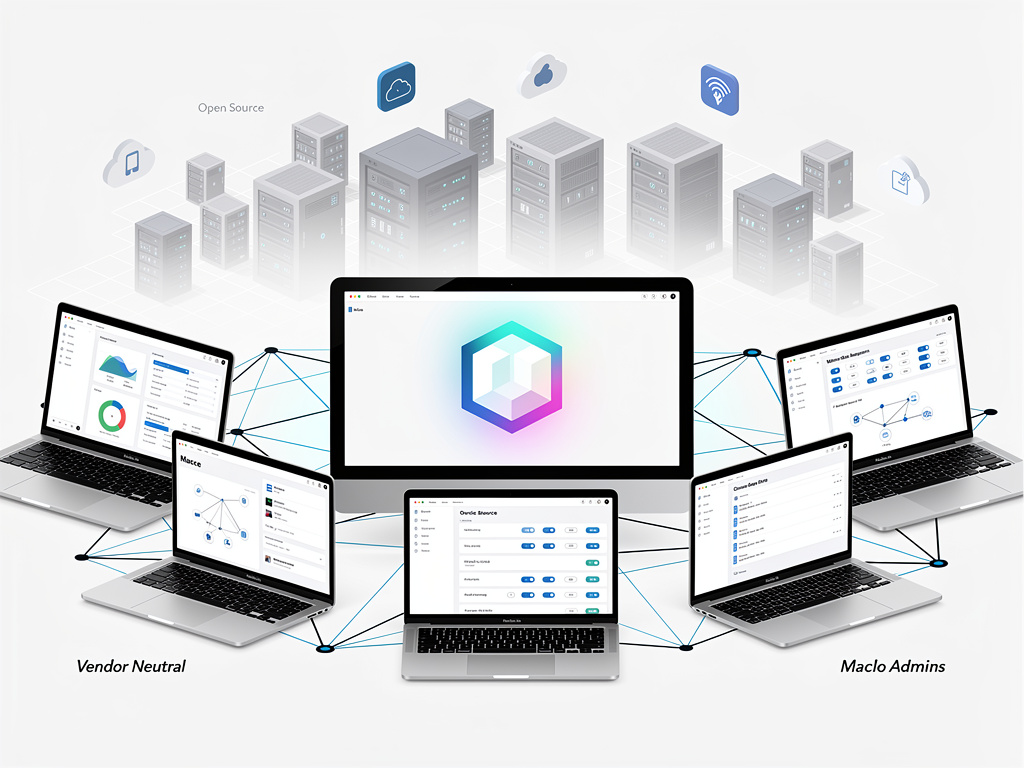
In the polished world of corporate IT, where billion-dollar vendors often dictate the tools of the trade, a quiet revolution is taking place. It isn’t happening in the boardrooms of Cupertino or the sales offices of major software firms, but in the collaborative channels of a global Slack workspace and the code repositories of GitHub. The latest product of this movement is an elegant application named Mace, a tool designed to empower employees and simplify life for the administrators who manage their corporate Macs. More than just a piece of software, Mace represents a significant milestone for the grassroots, community-driven force that is increasingly influencing the direction of Apple device management in the enterprise.
Mace is a user-facing, self-service application born from the collective effort of the Mac Admins Foundation, a non-profit organization dedicated to supporting the global community of Apple-focused IT professionals. For the end-user, it presents a clean, intuitive interface to perform tasks that once required a help-desk ticket: running maintenance scripts, checking for software updates, or accessing internal resources. For the administrator, it is a highly customizable and modern tool that can be deployed to an entire fleet, serving as a friendly front-end for the powerful but often invisible management systems working in the background. It is a prime example of a community identifying a shared need and building a solution for itself, a phenomenon detailed in a recent analysis by 9to5Mac which highlights the app as a testament to the community’s collaborative power.
A Modern Answer to an Enduring Challenge
For years, Mac administrators have relied on a mix of vendor-provided tools and open-source scripts to bridge the gap between powerful back-end management and the user experience. While Mobile Device Management (MDM) platforms like Jamf, Kandji, and Mosyle are essential for enforcing security policies and deploying software, their user-facing components, such as Jamf’s Self Service, can sometimes feel dated or overly restrictive. On the open-source side, tools like `depnotify` have been invaluable for communicating with users during device setup, but they were not designed as persistent, full-featured self-service applications.
Mace enters this environment as a purpose-built, modern alternative. Developed in SwiftUI, Apple’s latest framework for building user interfaces, the application is fast, efficient, and feels native to macOS. This technical underpinning is not merely an aesthetic choice; it ensures longevity and compatibility with the future direction of Apple’s operating systems. According to the official project page hosted by the Mac Admins Foundation, Mace was explicitly designed to be a lightweight, vendor-neutral tool that puts the organization’s brand and the user’s needs first, offering a level of customization that is often difficult to achieve with off-the-shelf products.
The Foundation Forged in Community
The story of Mace is inseparable from the story of the Mac Admins Foundation. The foundation itself is a formalization of the informal community that has existed for over a decade, centered around the Mac Admins Slack workspace, which boasts tens of thousands of members worldwide. This digital gathering place has become the de facto hub for Apple IT professionals to trade scripts, troubleshoot obscure problems, and share best practices. The foundation’s mission is to advance the profession by providing educational resources, fostering community, and supporting open-source projects that benefit all members.
Mace stands as the foundation’s flagship software project, demonstrating the power of this professionalized community model. The development process, visible to all on its public GitHub repository, is a transparent and collaborative affair. Contributions come not from a single company’s payroll, but from a diverse group of administrators and developers volunteering their time and expertise. This decentralized approach allows for rapid iteration and ensures the tool is built by the very people who understand the real-world challenges of managing Macs at scale, a critical advantage over software designed with a primary focus on sales metrics rather than user utility.
Beyond Vendor-Supplied Toolkits
The existence of a tool like Mace signals a maturing market where organizations are increasingly looking for flexibility beyond the walled gardens of their primary MDM vendors. While MDM remains the core of device management, Mace acts as a complementary layer, providing a consistent user experience regardless of the back-end system. An organization could, for example, switch from one MDM provider to another with minimal disruption to its employees, as the familiar Mace interface for requesting software or running diagnostics would remain unchanged. This decoupling of the user-facing experience from the back-end infrastructure gives organizations greater negotiating power and operational agility.
This approach also addresses a common pain point in IT: user perception. Complex management frameworks can often feel intrusive or confusing to employees. Mace is designed to soften that interaction. By giving users a sanctioned, easy-to-use application to solve their own common issues, IT departments can reduce their ticket load, improve user satisfaction, and foster a sense of empowerment among employees. The app becomes a trusted touchpoint for IT, transforming the department from a remote authority into a helpful partner.
An Open-Source Model for the Enterprise
The open-source nature of Mace is perhaps its most disruptive feature in the enterprise software space. For a sector accustomed to hefty licensing fees and proprietary code, a free, community-maintained tool of this caliber is a significant development. The transparency of the code allows security-conscious organizations to audit the application thoroughly, a benefit rarely afforded by closed-source products. Furthermore, the barrier to entry is virtually non-existent; any administrator with the requisite skills can download the code, customize it with their own branding and scripts, and deploy it to their fleet without a purchase order or a sales call.
This model is a direct challenge to the status quo, suggesting that for certain classes of utility software, a collaborative, non-commercial approach can produce results superior to those of traditional vendors. The Mac Admins Foundation provides the crucial organizational structure—managing the code repository, handling project governance, and ensuring its long-term viability—that allows such a project to thrive. It proves that a motivated and organized community can produce enterprise-grade software that is not only free of cost but also more aligned with the direct needs of its users.
The Road Ahead for Community-Driven IT
The initial reception to Mace within the Mac Admins community has been overwhelmingly positive, with IT professionals on platforms like X and the Mac Admins Slack actively discussing implementation strategies and contributing to its development. The project’s roadmap includes features like deeper plugin support and enhanced localization, further extending its utility for global organizations. The success of this initiative will likely embolden the Mac Admins Foundation to tackle other common challenges, potentially leading to a suite of open-source tools that become standard issue for the profession.
Ultimately, Mace is more than an application. It is a powerful symbol of a paradigm shift in enterprise IT, where the collective expertise of practitioners is being harnessed to create the very tools they need to succeed. It demonstrates that when a community of experts organizes, it can produce solutions that are not only technically excellent but also perfectly attuned to the nuanced realities of their field. For the vendors and organizations in the Apple enterprise ecosystem, the message is clear: the most valuable innovations may not come from the top down, but from the community up.


 WebProNews is an iEntry Publication